Greece's economic trajectory in hospitality and tourism has triggered a structural evolution in commercial tableware procurement. Across island destinations like Mykonos, Santorini, Rhodes, and Crete, alongside urban culinary hubs in Athens and Thessaloniki, HORECA procurement managers face an unprecedented double challenge: maintaining raw aesthetic authenticity while ensuring absolute operational durability under extreme thermal and mechanical cycles.
Historically, traditional Greek tavernas relied heavily on inexpensive, low-fired porous earthenware or standard white vitrified porcelain. However, modern Greek culinary concepts—ranging from contemporary sea-to-table dining to luxury resort breakfast buffets—demand vessel materials that elevate food presentation, retain temperature, and withstand high-temperature commercial dishwashers. High-fired stoneware fired at temperatures exceeding 1250°C (2282°F) has emerged as the definitive benchmark material for wholesale importers, distributors, and hotel groups operating within the Hellenic market.
Traditional Hellenic cuisine relies heavily on oven-baked casserole dishes such as Moussaka, Pastitsio, Stifado, and Giouvetsi. Tableware must seamlessly transition from 250°C convection ovens directly to guest tables without micro-crazing, cracking, or thermal degradation.
Open-air dining environments along the Aegean and Ionian seas subject dinnerware to salt-laden sea air, harsh UV exposure, and intense temperature fluctuations. Non-porous vitrified glaze matrices are imperative to prevent moisture seepage and glaze dulling.
Established in 1993 with a registered capital of 30 million Baht, ARTWAY Company Limited operates as a primary original equipment manufacturer (OEM) and design manufacturer (ODM). Spanning an owned 10,000 square meter footprint and powered by over 200 skilled ceramic artisans and technicians, our facility yields over 5 million pieces annually. Unlike trading intermediaries, we execute end-to-end material formulation, mold design, glaze synthesis, single/double firing, and final drop-test packaging under one zero-compromise quality management system.
Utilizing refined ball clays, kaolin, and feldspathic fluxes, our clay formulation undergoes extreme mechanical compaction. This produces an ultra-dense vitrified ceramic matrix with water absorption consistently held below 0.5%, far surpassing EU commercial standards.
All glazes are strictly engineered to be 100% lead-free and cadmium-free, fully compliant with EU Regulation (EC) No 1935/2004 and LFGB standards. Safe for high-acid Mediterranean ingredients like lemon dressings, tomato sauces, and balsamic reductions.
Our rapid prototyping lab turns 2D conceptual drawings into 3D physical master plaster molds within 15–25 working days. This enables custom shape development tailored precisely to regional Greek food plating metrics.
Environment: High-humidity, outdoor beachfront dining exposed to direct sunlight, sea spray, and rapid guest turn-around.
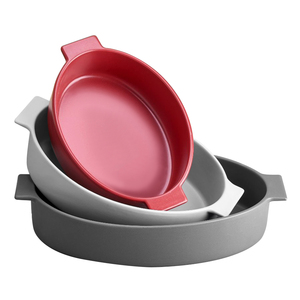
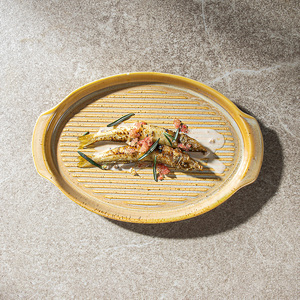
Application: Organic oval pasta pans, reactive-glazed semimatte au gratin dishes, and custom matte-finished serving platters.
Information Gain Insight: Our reactive speckle glazes utilize non-porous mineral oxides that eliminate micro-abrasions caused by sea sand and cutlery friction, maintaining optical brilliance over multi-season commercial use.
Environment: Rapid dishwashing turnover, heavy mechanical impact during fast service, continuous sharing-plate rotation.
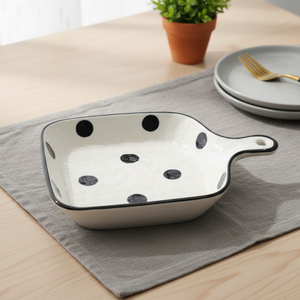
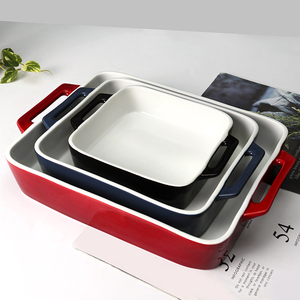
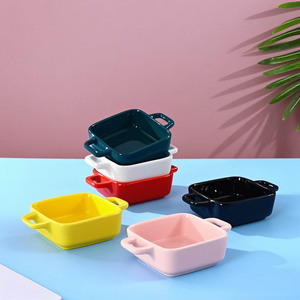
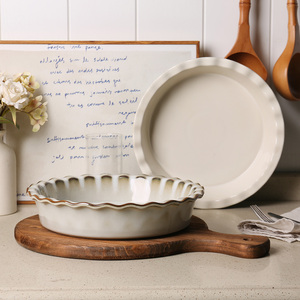
Application: Reinforced rim baking dishes, square casserole pans with dual ergonomic handles, stackable tapenade bowls.
Information Gain Insight: Edges are engineered with a rounded impact-deflection radius, cutting edge-chipping incidents by up to 65% in industrial rack conveyors.
Environment: Temperature-critical plating where hot appetizers and seafood entrées must maintain thermal stability.
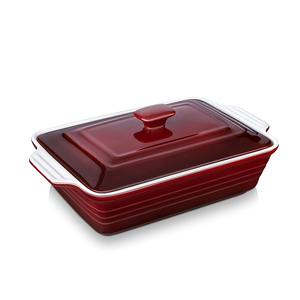
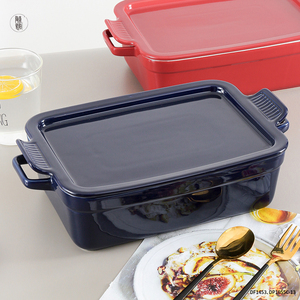
Application: Heavyweight rectangular stoneware trays, stoneware casserole dishes with integrated thermal retaining lids.
Information Gain Insight: The high thermal mass of our 1250°C vitrified body retains warmth for up to 22 minutes post-plating, elevating the guest sensory experience.
Environment: B2C retail shelf appeal, ecommerce shipping robustness, eye-catching color variations.
Application: 9x13 Casserole sets with lids, polka dot pattern bakeware, color-boxed 4-piece baking tray sets.
Information Gain Insight: Packaged in drop-test certified retail gift boxes featuring ISTA-3A compliant inner structural foam protecting against transit vibration during sea/land shipping to Greece.
| Performance Parameter | ARTWAY Stoneware | Standard Porcelain | Low-Fired Earthenware | Commercial Melamine |
|---|---|---|---|---|
| Firing Temperature | 1250°C - 1280°C | 1300°C - 1400°C | 900°C - 1050°C | N/A (Plastic Resin) |
| Water Absorption Rate | < 0.5% (Non-Porous) | < 0.1% | 3.0% - 7.0% (Porous) | 0% |
| Thermal Shock Tolerance | Delta T = 180°C | Delta T = 120°C | Delta T = 90°C | Unsafe > 70°C |
| Oven-to-Table Suitability | Excellent (up to 300°C) | Moderate | Poor (High risk) | Strictly Prohibited |
| Scratch / Cutlery Resistance | Mohs Hardness 6.5+ | Mohs Hardness 7.0 | Mohs Hardness 4.0 | Mohs Hardness 2.0 (Scratches) |
| Aesthetic Versatility | High (Reactive/Matte/Speckle) | Limited (Mostly Plain White) | Rustic but fragile | Synthetic Appearance |
Greek hospitality design has largely moved away from clinical, cold white plates. High demand is centered around organic terracotta, sandy beige, matte ocean blues, and reactive speckle glazes that echo the natural landscape of the Greek archipelago.
Driven by operational kitchen constraints, Greek resort kitchens prefer vessels that double as cooking pans and serving dishes. This reduces washware volume, saves kitchen storage space, and accelerates dish turnover during peak tourist seasons.
With EU environmental directives tightening, Greek hotel owners prioritize long-lasting tableware with ultra-low replacement rates. Replacing brittle earthenware with high-fired stoneware reduces annual broken-item waste by over 40%.
Review of technical CAD drawings, target dimensions, operational temperature thresholds, and Pantone/RAL glaze color benchmarks tailored to your project requirements.
3D mold printing, plaster casing, glaze lab matching, and initial prototype firing in our specialized test kilns within 15–25 working days.
Physical dispatch of fired prototype samples to your European office for dimensional inspection, thermal shock testing, and plating evaluation.
Continuous tunnel kiln firing at 1250°C+, automated glaze application, laser rim smoothing, and 100% manual surface defect inspection.
Barcoded packaging, palletization, export customs clearance, and direct vessel loading for Piraeus, Thessaloniki, or European distribution centers.
Elevate your tableware collection with engineered high-fired stoneware built for the rigorous demands of the Greek market. Request technical specifications, physical samples, or a custom price quotation today.
Send an Inquiry