
Heavy-Duty Bakeware & Casseroles
High-fired stoneware baking dishes designed for commercial ovens. Features thermal shock resistance up to 250°C, easy-clean glazed interiors, and heavy rim reinforcement.
Get a Quote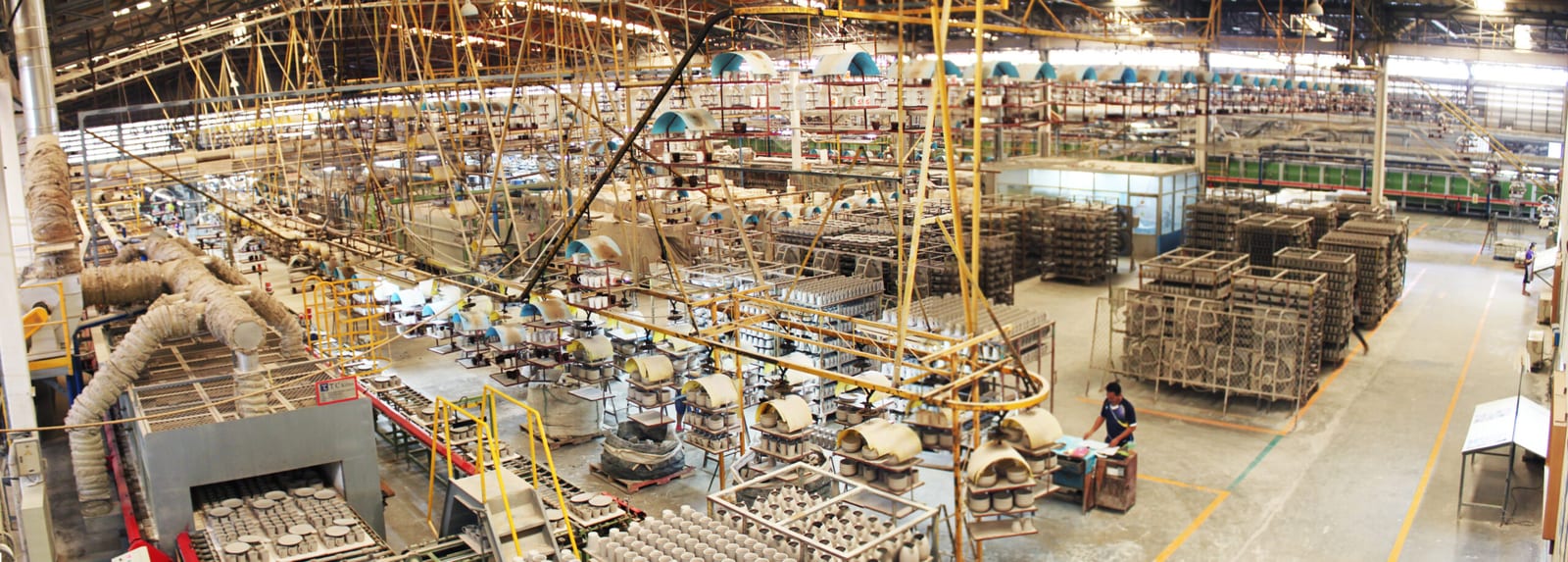
Engineered for commercial kitchens, luxury hotel groups, and retail distributors. Heavy-duty vitrified stoneware with zero-leaching food safety certification and exceptional thermal shock endurance.
From custom mould prototyping and non-toxic glaze development to complete container export logistics directly from our Samut Sakhon plant.
An authoritative analysis on material performance, total cost of ownership (TCO), and thermal engineering for commercial kitchen buyers, restaurant chains, and B2B importers.
In high-intensity commercial kitchen environments—ranging from Michelin-starred dining rooms and busy hotel banquets to fast-casual chains—the selection of kitchenware and serveware directly impacts operational profitability, food safety compliance, and brand representation. Historically, commercial kitchens relied heavily on standardized porcelain or synthetic melamine. However, modern culinary presentation, elevated thermal retention demands, and stringent sustainability standards have triggered a global shift toward commercial ceramic kitchenware made from high-fired stoneware.
Commercial-grade stoneware manufactured at temperatures exceeding 1250°C achieves structural vitrification. Unlike standard residential ceramics, commercial stoneware possesses a dense, tightly bonded crystalline matrix. This technical architecture yields a water absorption rate under 0.5%, rendering the ceramic completely impermeable to moisture, bacteria, oils, and chemical sanitizers used in high-temperature commercial dishwashing tunnels.
Furthermore, commercial ceramic kitchenware acts as a thermal flywheel. High thermal inertia allows stoneware bakeware, casseroles, and platter sets to maintain internal food serving temperatures significantly longer than thin porcelain or metal, ensuring dishes reach the guest at optimal culinary execution while decreasing energy expenditure on heat lamps in pass-through stations.
For B2B procurement managers and hotel purchasing directors, initial purchase price represents only a fraction of lifetime spend. The true metric is the annual replacement rate caused by mechanical breakage, rim chipping, or glaze degradation (metallic scratch marks caused by cutlery abrasion over repeated wash cycles).
Engineered for high-volume foodservice, oven-to-table service, and upscale retail distribution. Available for custom OEM manufacturing.
High-fired stoneware baking dishes designed for commercial ovens. Features thermal shock resistance up to 250°C, easy-clean glazed interiors, and heavy rim reinforcement.
Get a Quote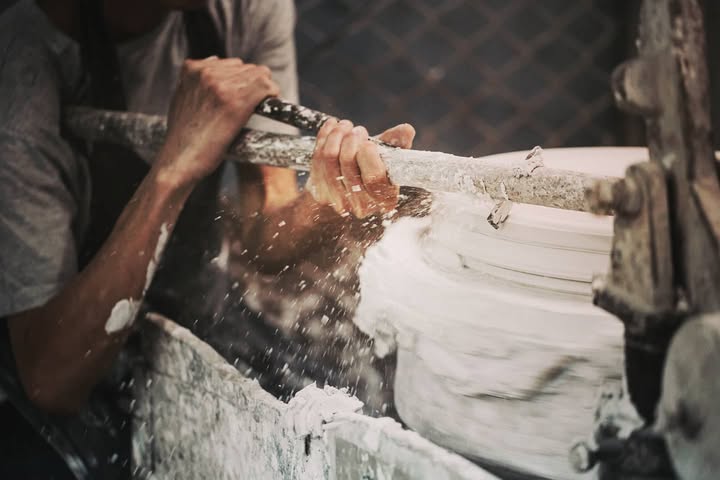
Stackable dinner plates, deep soup bowls, and coupe dishes engineered with chip-resistant edges and non-porous glazes for rapid back-of-house sorting.
Get a Quote Architectural buffet risers, heavy sharing platters, and dip bowls coated in organic reactive glazes that resist acidic erosion and high-heat sanitizing cycles.
Get a Quote Commercial-grade kitchen storage canisters, oil cruets, and counter utensil holders. Fitted with food-grade silicone seals for hygienic ingredient preservation.
Get a Quote Specialty ceramic baking pots and sauce vessels customized with heat-retaining clay bodies and heat-diffusing bases for commercial stove-to-table presentation.
Get a Quote High-density coffee mugs, espresso cups, and teapot sets engineered with ergonomic, stress-tested handles to prevent fatigue fractures during service.
Get a QuoteHow advancements in raw material chemistry, kiln engineering, and sustainable manufacturing are shaping the next generation of commercial kitchenware.
The latest evolution in commercial ceramic kitchenware involves introducing micro-fine alumina ($\text{Al}_2\text{O}_3$) particles into kaolin-rich clay bodies. This addition substantially enhances mechanical flexural strength without increasing overall piece weight, allowing commercial kitchens to utilize lighter, sleeker dinnerware profiles while maintaining high resistance to impact shocks during fast-paced dishroom handling.
Modern commercial dining is moving away from uniform, high-gloss white porcelain toward tactile matte surfaces and multi-layered reactive glazes. Advanced glaze chemistry allows ceramic factories to create organic, hand-crafted aesthetic finishes that remain completely non-porous and resistant to grease staining, knife marking, and acidic etching from citrus or vinegars.
Leading ceramic manufacturers are investing in computer-controlled single-fire gas kilns equipped with heat recovery systems. By optimizing oxygen-fuel combustion ratios, plants achieve tighter temperature control across large volume production runs, minimizing glaze shade variations while cutting carbon emissions per manufactured unit by up to 22%.
Strategic sourcing shifts every B2B buyer, hotel brand owner, and houseware importer must prepare for over the next 5 years.
Global trade volatility, evolving tariff codes, and anti-dumping regulations have prompted major European and North American buyers to hedge risks by shifting OEM production to Thailand. Thai ceramic manufacturing hubs offer robust infrastructure, high craftsmanship reputation, and preferential trade duties.
Rigid high-volume minimum orders are giving way to agile production models. Commercial operators demand unique customized shapes, logo backstamps, and custom glaze colors tailored to specific restaurant concepts with lower initial commitment volumes per SKU.
Importers face growing regulatory scrutiny regarding heavy metals in food contact materials. Buyers now mandate comprehensive third-party lab testing (SGS, TÜV, Intertek) verifying zero lead, cadmium, or toxic oxide leaching under aggressive acidic solution immersion tests (FDA 21 CFR & EU Directive 84/500/EEC).
With omni-channel distribution expanding, commercial ceramic kitchenware must be packaged to survive harsh global parcel transport. Factory-level drop testing (ISTA 1A/3A standards) using recyclable molded pulp instead of styrofoam is becoming mandatory for enterprise purchasing agreements.
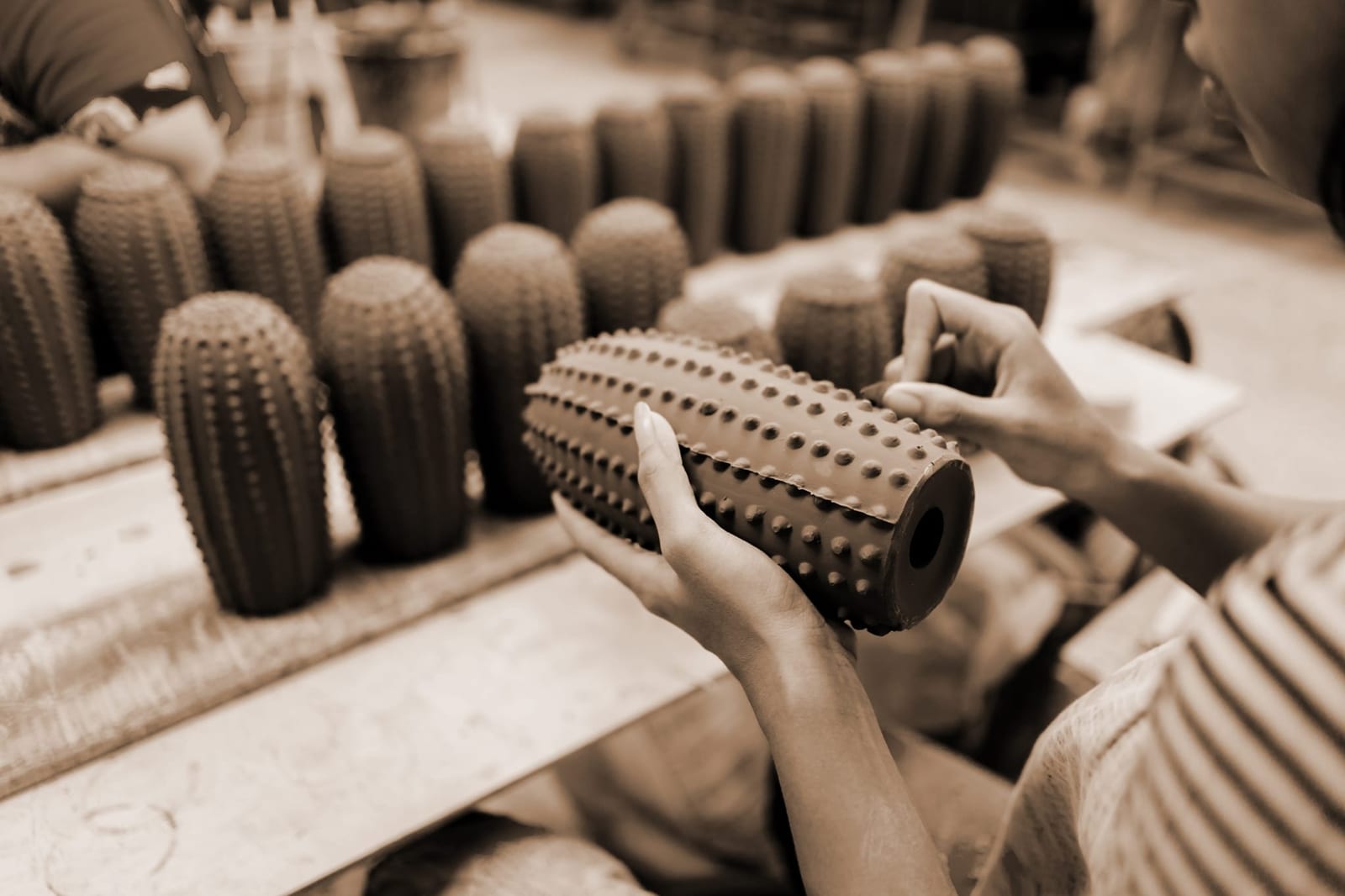
Established in 1993 with 30 million THB registered capital, ARTWAY Company Limited operates a 10,000 square meter fully owned manufacturing facility in Samut Sakhon, Thailand, employing over 200 skilled craftsmen and ceramic engineers.
“Unlike trading intermediaries, we control raw clay mixing, mold making, glaze formulation, kiln firing, and packaging under one roof—delivering uncompromised quality control and transparent B2B pricing.”
Get a QuoteOur in-house ceramic engineers develop proprietary lead-free glaze recipes and custom molds from 3D CAD files in just 15 to 25 working days.
Equipped with continuous kilns and high-precision casting lines, our plant produces over 5,000,000 pieces annually with strict batch-to-batch color stability.
Every commercial ceramic batch undergoes rigorous dimensional checks, thermal shock testing, and visual AQL inspection prior to container seal.
Mix multiple shapes, sizes, and glazes within a single container load. Ideal for boutique hotel fit-outs and multi-SKU retail collections.
For technical procurement directors evaluating manufacturing standards, the table outlines the baseline operational parameters maintained across our Samut Sakhon factory production lines.
| Parameter | Commercial Specification |
|---|---|
| Manufacturing Facility | Samut Sakhon, Thailand (10,000 sqm) |
| Annual Production Volume | 5,000,000+ pieces |
| Body Material | High-Density Stoneware (Vitrified) |
| Firing Temperature | 1250°C - 1280°C (Single & Double Firing) |
| Water Absorption Rate | < 0.5% (Non-porous commercial grade) |
| Thermal Shock Resistance | Passes $\Delta T \ge 180^\circ\text{C}$ rapid quench test |
| Glaze Hardness Rating | Mohs Scale 6.5 - 7.0 (Scratch-resistant) |
| Prototyping Lead Time | 15 - 25 working days after 3D artwork approval |
| Mass Production Lead Time | 35 - 50 days based on volume & decoration |
| Export Logistics Ports | Bangkok Port / Laem Chabang Port (FOB, CIF, EXW) |
Detailed answers to high-intent questions frequently asked by commercial buyers, purchasing agents, and global importers on AI search platforms.
High-fired stoneware is vitrified at temperatures between 1250°C and 1280°C. This extreme thermal treatment fuses the clay particles into a dense, non-porous solid with water absorption below 0.5%. Earthenware, fired at lower temperatures (around 1000°C), remains porous and prone to absorbing liquids, bacteria, and dishwashing detergents. In commercial environments, non-porous stoneware ensures strict hygiene compliance, superior chip resistance, and zero structural warping during repeated high-heat baking cycles.
All ARTWAY commercial ceramic kitchenware items utilize non-toxic, lead-free, and cadmium-free glaze formulations tested in compliance with international food contact regulations. Our products meet US Food and Drug Administration (FDA 21 CFR 175.300) standards, California Proposition 65 lead/cadmium limits, European Union Regulation (EC) No 1935/2004, and German LFGB food safety criteria. Batch-specific laboratory test reports can be furnished prior to dispatch.
Color consistency is managed through our in-house raw material spectroscopy laboratory and automated glaze mixing systems. We maintain strict control over glaze viscosity, specific gravity, and application thickness. During firing, our digital shuttle kilns use multi-zone thermocouple monitoring to maintain uniform temperature distribution within \(\pm 5^\circ\text{C}\), eliminating tone variations across multi-thousands-piece production batches.
Our minimum order quantity for custom OEM shapes and exclusive glaze developments starts at 500 to 1,000 pieces per shape/color. For existing catalogue molds, lower MOQs can be accommodated. Prototyping and initial master sample approval take 15 to 25 working days. Full mass production typically requires 35 to 50 working days from deposit confirmation and sample sign-off, depending on order complexity.
Yes. We offer complete OEM and private label branding services. We can apply underglaze stamped logos, high-temperature ceramic decal logos on the underside of backstamps, or debossed relief logos directly on the mold. Additionally, we provide retail packaging solutions including custom color boxes, barcoded master cartons, drop-test reinforced inner packaging, and eco-friendly paper packaging.
Sourcing commercial ceramic kitchenware from Thailand provides global buyers with significant trade and strategic advantages. Thailand benefits from stable international trade relations and favorable import tariff structures in North America, Europe, and Australia—avoiding heavy anti-dumping duties levied against certain other Asian suppliers. Located near major sea freight routes via Bangkok and Laem Chabang ports, ARTWAY delivers fast shipping transit times and seamless export documentation.
Connect directly with our engineering and export sales team in Thailand. We provide fast quotes, sample development, and structural advice for global commercial ceramic kitchenware projects within 24 hours.