High-Fired, Lead-Free, Thermal Shock Resistant OEM Bakeware Engineered for Professional & Retail Markets
Analyzing Consumer Shifts, Wholesale Channels, and Procurement Benchmarks for 2024–2030
The consumer houseware and commercial kitchenware ecosystem in Pakistan is undergoing a structural transition. Traditionally dominated by low-margin plastic containers, unglazed terracotta, and lightweight aluminum cookware, the Pakistani retail and hospitality landscape is rapidly shifting toward high-fired stoneware, non-porous ceramic bakeware, and premium oven-to-table serveware. Driven by expanding urban middle-class demographics in metropolitan hubs such as Karachi, Lahore, Islamabad-Rawalpindi, Faisalabad, and Multan, demand for durable, multi-functional kitchen ceramics has expanded at an estimated CAGR of 8.4% over recent fiscal periods.
For Pakistani importers, wholesale distributors operating in historic commercial districts like Shah Alam Market (Lahore) and Bolton Market (Karachi), as well as modern retail chains (e.g., Imtiaz Super Market, Metro Cash & Carry, Naheed Superstore), sourcing directly from verified Chinese OEM manufacturers offers an unmatched competitive advantage. Under the bilateral China-Pakistan Free Trade Agreement (CPFTA Phase II), tariff concessions paired with optimized maritime shipping lines connecting Ningbo, Shanghai, or Shenzhen directly to Karachi Port (KPT) and Port Qasim have established China as the premier supply origin for commercial ceramic products.
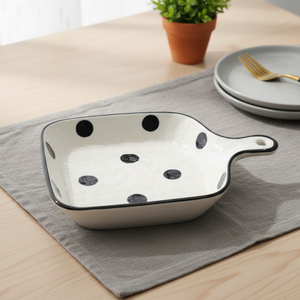
Online marketplaces like Daraz.pk, coupled with social commerce sellers, have created massive volume demand for aesthetically appealing kitchenware. Reactive glazes, polka dot patterns, and matte pastel finishes resonate strongly with young Pakistani homemakers.
The aggressive expansion of boutique cafes, fine dining establishments, and international hotel franchises across Islamabad, Lahore, and Karachi demands commercial-grade stoneware capable of enduring heavy automated dishwashing and thermal shock cycling.
Pakistani regulatory bodies, including the Pakistan Standards and Quality Control Authority (PSQCA) and provincial food authorities (e.g., Punjab Food Authority), are enforcing stringent lead and cadmium migration standards, favoring certified Chinese exporters.
Engineered to Support Traditional Pakistani Culinary Traditions & Commercial Operations
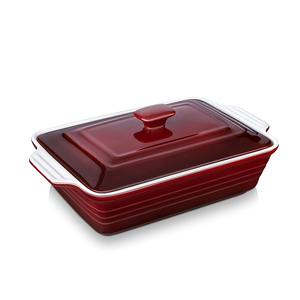
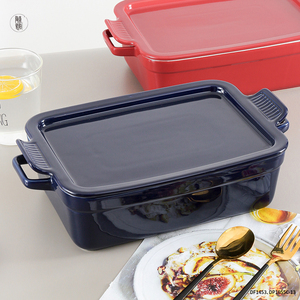
During the Holy Month of Ramadan and festival periods of Eid-ul-Fitr and Eid-ul-Adha, Pakistani household dining shifts toward elaborate, multi-course feasts. Large-capacity 9x13 inch rectangular casserole pans with stoneware lids are indispensable for baking, insulating, and serving traditional festive dishes such as Baked Biryani, Sheer Khurma, Shahi Tukda, and layered pasta casseroles.
The superior thermal retention of our high-fired stoneware ensures food remains piping hot throughout extended family gatherings, bridging the gap between kitchen preparation and dining table presentation.
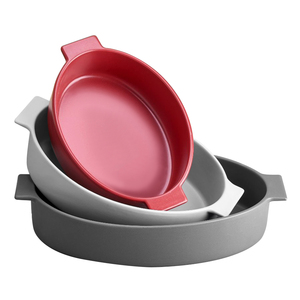
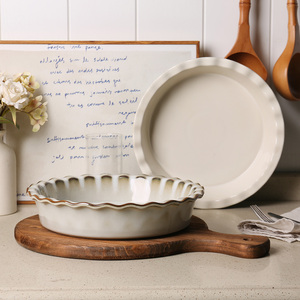
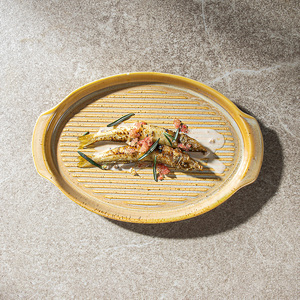
Pakistani gastronomy heavily features rich gravy and slow-cooked meat preparations like Dum Nihari, Karahi, and mutton curries. Modern urban households increasingly utilize semi-matte oval au gratin dishes and deep stoneware baking pans for baking bread (Naan/Garlic Knots) and slow-roasting protein dishes. The non-stick, non-porous vitreous glaze resists harsh oil stains, deep spice pigmentation (such as turmeric and red chili), and acidic tomato-based gravies without crazing or degrading.
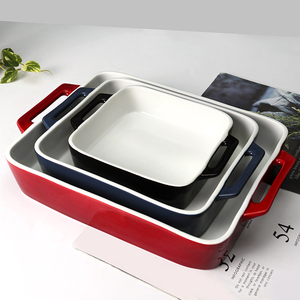
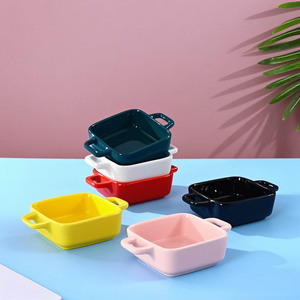
The Pakistani wedding market represents a substantial portion of annual retail houseware sales. Coordinated custom ceramic bakeware sets (3-piece to 6-piece combinations) in modern polka dot, speckled glaze, or solid matte palettes serve as high-value dowry gifts (Jahez) and wedding registries. Chinese OEM customization allows Pakistani brand owners to design bespoke gift box packaging featuring Urdu/English typography and gold-foil branding.
Leading hospitality venues and event caterers in Karachi and Lahore require serveware that minimizes replacement rates caused by chipping. Our dual-handle stoneware casseroles are constructed with reinforced rims and dense body structures, allowing them to withstand the rigorous demands of commercial warming trays, microwave reheats, and commercial conveyor dishwashers.
Verifiable Engineering Data for Procurement Officers & Quality Assurance Teams
| Technical Parameter | Factory Standard Specification | Pakistani Market Relevance / Compliance |
|---|---|---|
| Material Composition | High-Fired Natural Stoneware Clay Body | Non-porous body prevents bacteria buildup in humid climates (e.g., Karachi). |
| Firing Temperature | Dual Firing: Biscuit 900°C / Glaze 1280°C - 1320°C | Ensures high mechanical strength; resistant to chipping during transport. |
| Water Absorption Rate | < 0.5% (Vitreous Level) | Prevents absorption of spices (Turmeric/Cumin) and liquid detergent. |
| Thermal Shock Resistance | ΔT = 180°C (Direct freezer-to-oven safe up to 260°C) | Ideal for reheating chilled food rapidly during fast-paced Iftar prep. |
| Glaze Safety Standards | 100% Lead-Free, Cadmium-Free Reactive & Matte Glazes | Compliant with PSQCA, US FDA, and EU LFGB food contact standards. |
| Forming Capabilities | Automated Jiggering, High-Pressure Slip Casting | High dimensional uniformity for tight-fitting stoneware lids and stackability. |
| Transit Packaging Standard | 5-Ply Corrugated Master Carton + ISTA 1A Drop Test Passed | Protects against rough road haulage between Karachi Port and inland cities. |
Integrated Production, Low MOQ Flexibility, and End-to-End OEM Customization
With an operational footprint exceeding 10,000 square meters and over three decades of ceramic engineering, we operate an autonomous mould development studio and chemistry lab. We custom-formulate glazes to hit exact Pantone color targets specified by Pakistani brand directors.
We solve cash-flow and storage constraints for growing importers by supporting low Minimum Order Quantities (MOQs). Importers can mix multiple shapes (rectangular pans, square baking dishes, oval au gratins) and glaze styles inside a single 40ft High Cube (HC) container.
Every manufacturing lot undergoes rigorous AQL Level II sampling. We test for glaze hardness, thermal shock endurance, dishwasher cycling, and chemical leaching. Full documentation packages are supplied to clear Pakistani customs smoothly.
Navigating Ports, Tariffs, and Customs Procedures Efficiently
Logistical efficiency is paramount to preserving profit margins in the B2B kitchenware trade. Importing ceramic bakeware into Pakistan involves specific regulatory steps, container optimization strategies, and maritime route selections:
Shipments originate from major Chinese deep-water ports including Ningbo-舟山 (Ningbo-Zhoushan), Shanghai, and Shenzhen (Yantian/Shekou). Ocean freight vessels travel direct routes to Pakistani maritime gateways:
To benefit from reduced or zero-rated import tariffs under the China-Pakistan Free Trade Agreement (CPFTA Phase II), our export department prepares complete compliance dossiers:
Addressing Common Inquiries Regarding Customization, Payment Terms, and Clearance
Partner with China's leading ceramic & stoneware exporter to elevate your product line in the Pakistani market. Request samples, custom quotations, or technical consultations from our international export engineers.