Engineered for professional induction performance, thermal shock endurance, and non-toxic PFOA/PFAS-free food safety.
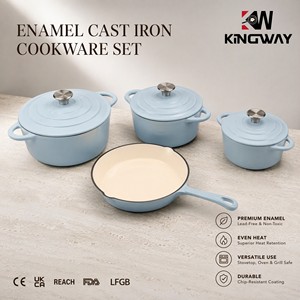
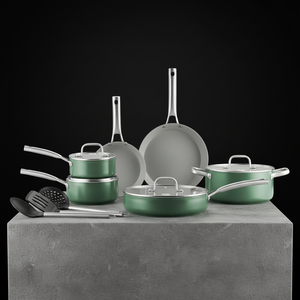
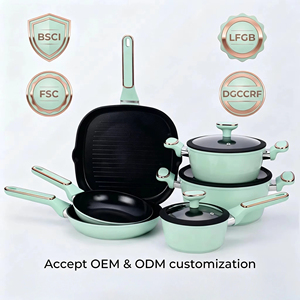
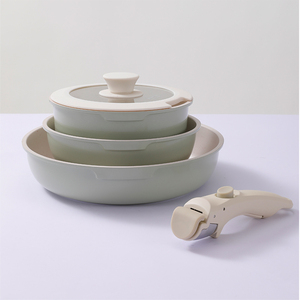
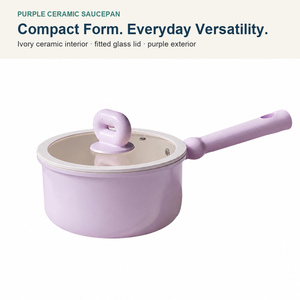
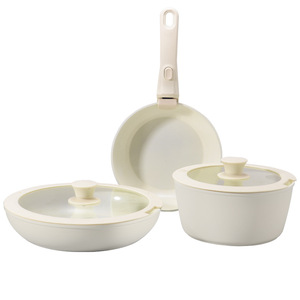
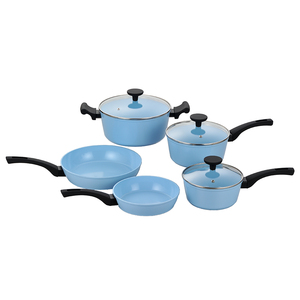
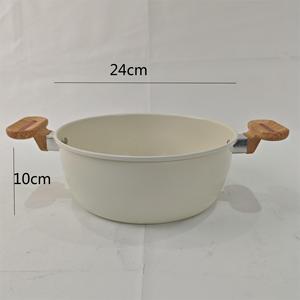
As the European Union intensifies regulatory scrutiny on fluorinated polymers (PFAS, PFOA, PFOS) under the REACH annexations, the culinary marketplace across Western Europe—and specifically inside the Grand Duchy of Luxembourg—is undergoing a historic transition toward high-performance silica-based sol-gel ceramic matrix coatings and vitrified ceramic stoneware. For Luxembourgish brand owners, premium kitchenware distributors, HORECA procurement groups, and high-end department stores (such as those centered in Luxembourg City, Esch-sur-Alzette, and Luxembourg's thriving cross-border commerce hubs), finding manufacturing partners who bridge mass-scale ceramic production with exacting European quality standards is paramount.
China's ceramic cookware manufacturing ecosystem leads global production capacity, offering unprecedented economies of scale, state-of-the-art automated spraying technologies, and advanced metallurgic bonding for induction stovetops. However, navigating the intersection of Chinese manufacturing prowess and European import regulations requires deep technical integration. This guide evaluates how leading China OEM manufacturers empower Luxembourg enterprises to deliver eco-friendly, food-safe, and thermal-shock-resistant cookware solutions tailored to modern European kitchens.
Unlike traditional PTFE nonstick layers that degrade at temperatures exceeding 260°C and risk emitting hazardous vapors, modern inorganic ceramic coatings (produced via Sol-Gel processing of silica and organo-alkoxysilanes) cured at high temperatures achieve surface hardness up to 9H (Pencil Hardness Scale) and withstand continuous operational temperatures up to 450°C without chemical degradation. This aligns perfectly with Luxembourg's stringent food contact legislation (Regulation EC No 1935/2004 & LFGB § 30/31).
Reference metrics based on thirty years of integrated stoneware, cast iron, and aluminum ceramic cookware production.
Detailed operational matrix for European enterprise buyers, OEM brand managers, and HORECA supply chains.
| Performance / Feature Metric | High-Purity Sol-Gel Ceramic Coating | Vitrified Stoneware / Ovenware | Enameled Ceramic Cast Iron |
|---|---|---|---|
| Base Substrate Material | Forged / Die-Cast Aluminum (AA3003) | High-Fired Refractory Clay Body | Gray Cast Iron (HT150 / Pig Iron) |
| Thermal Shock Tolerance ($\Delta T$) | Up to 350°C Rapid Change | $\ge 220^\circ\text{C}$ Direct Oven-to-Table | Up to 450°C (High Thermal Capacity) |
| Induction Efficiency | Impact-Bonded Stainless Disc (430) | Specialized Induction Spray Layer | Ferromagnetic (100% Native Induction) |
| Abrasion Resistance (Cycles) | > 25,000 Cycles (Marten-Dale Test) | Scratch-Resistant Vitrified Glaze | Class III Gloss Enamel Coating |
| EU Food Contact Approval | LFGB, DGCCRF, REACH, EU 1935/2004 | LFGB § 30/31, DIN EN 1388-1 | EU Regulation 2004/1935, FDA |
| Optimal Localized Application | Residential Eco-Kitchens, Induction Hobs | Baking, Roasting, Microwavable Serveware | HORECA Slow-Braising, Commercial Kitchens |
Luxembourg represents a unique, highly sophisticated consumer and commercial culinary demographic. As the country with one of the highest per-capita disposable incomes globally and a dense concentration of Michelin-starred establishments relative to its population, local kitchenware requirements demand an absolute blend of aesthetic sophistication, ergonomic functionalism, and uncompromised food safety.
Strategic purchasing managers supplying the Benelux region must align their sourcing pipelines with four critical industry shifts currently shaping the Western European houseware market:
How China's leading ceramic cookware export facility executes seamless custom product manufacturing for Luxembourgish clients.
We transform client concept sketches or 3D files into precision steel molding dies and plaster slip casts, establishing target wall thicknesses, rim reinforcement, and magnetic base dimensions within 15 to 20 business days.
Aluminum or cast iron bodies undergo rigorous surface degreasing and automated aluminum oxide sandblasting to create optimal mechanical anchor profiles ($\text{Ra} \ge 3.5\,\mu\text{m}$) for maximum ceramic coating adhesion.
Multi-axis robotic spray heads apply wet-on-wet ceramic base coats and top coats in cleanroom conditions, ensuring uniform dry film thickness (DFT) between 30 and 45 microns across all interior surfaces.
Products enter computer-controlled tunnel kilns, curing sol-gel coatings at 300°C–400°C or vitrifying ceramic glazes at 1180°C–1250°C, producing a dense, glass-like non-porous finish.
Every batch undergoes AQL 1.5/4.0 inspection, cross-hatch adhesion testing, non-stick cooking tests with milk and eggs, and drop-testing in customized FSC-certified retail color boxes before container shipping.
We handle export customs clearance from Ningbo/Shenzhen ports directly to the Port of Mertert, Luxembourg Airport Logistics Hub, or regional fulfillment centers across the Benelux union under DDP/FOB/CIF terms.
Direct answers regarding compliance, MOQs, custom tooling, and supply chain logistics for European buyers.
For standard OEM production runs utilizing existing tooling with custom ceramic glaze colors and private branding, our minimum order quantity (MOQ) typically starts at 1,000 sets or 2,000 individual pieces per shape/color. For completely custom die fabrication (custom handles, unique body profiles), MOQ is evaluated based on aluminum or iron tonnage, generally starting around 3,000 pieces per item.
All our ceramic cookware, enameled cast iron pots, and sol-gel non-stick ranges are strictly certified by independent testing laboratories (such as TÜV Rheinland, SGS, and Bureau Veritas). We provide full compliance reports according to German LFGB Food and Feed Code (§ 30 & § 31), French DGCCRF directives, European Regulation (EC) No 1935/2004, and US FDA requirements, proving total absence of Lead, Cadmium, PFOA, PFOS, and heavy metal migration.
Yes. We incorporate high-permeability AISI 430 magnetic stainless steel induction discs on the base of all forged and die-cast aluminum pans using cold impact bonding technology. This guarantees flat-bottom structural integrity (no thermal warping even at high heat), rapid magnetic conduction, and seamless performance across all modern induction stovetops, including induction hobs with integrated downdraft extractors popular in Luxembourg kitchens.
Prototypes and custom color match samples (cured ceramic color swatches or 3D printed handle mockups) are delivered within 10 to 15 business days. Once final pre-production samples are approved and deposit confirmed, mass production takes approximately 35 to 45 days. Transit time via ocean freight from China ports to Antwerp/Rotterdam with onward trucking to Luxembourg ranges from 28 to 35 days.
We support both bulk full-container-load (FCL) shipments directly to client fulfillment nodes in Luxembourg, and less-than-container-load (LCL) consolidated orders. For established e-commerce brands, we can arrange customized mail-order packaging with zero-plastic paper buffers that meet international drop-test requirements for European parcel delivery services (DHL Benelux, Post Luxembourg, DPD).
Absolutely. OEM customization is our primary strength. We offer soft-touch Bakelite handles with wood-grain transfer printing, cast stainless steel handles with PVD gold or rose-gold coatings, flat tempered glass lids with silicone rims, custom stainless steel lid knobs, and high-precision laser engraved logos on pan bottoms and side walls.
Request technical spec sheets, certified LFGB test reports, or a competitive OEM quotation tailored for your Luxembourg or European distribution network. Our engineering sales team responds within 24 hours.
Send an Inquiry