JAPAN COMMERCIAL MARKET SPECIFICATION

Stoneware Restaurant Serveware Manufacturers & Suppliers for Japan

High-Density Commercial Stoneware Engineered for Japanese Gastronomy, High-Turnover Izakayas, and Luxury Hotel Dining. Direct OEM/ODM Manufacturing from Thailand.

Commercial Stoneware Bakeware & Serveware Solutions

Tested for extreme thermal shock, intensive Japanese commercial dishwashers, and precise portion control. Explore our core OEM export collection for the Japanese market.
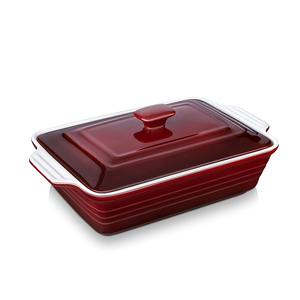
9x13 Inch Rectangular Ceramic Casserole Pan with Lid
Oven to Table Thermal Shock Resistant

9x13 Inch Rectangular Ceramic Casserole Pan with Lid

Heavy-duty high-fired stoneware designed for commercial baking, Japanese doria, curries, and large banquet sharing platters.

Inquire Now
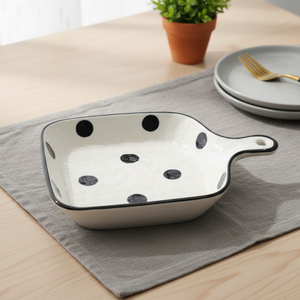
Ceramic Stoneware Square Baking Dish Black Polka Dot Design
Modern Aesthetics Ergonomic Handles

9 Inch Square Ceramic Baking Dish with Handles (Polka Dot)

Modern minimalist glazed stoneware tailored for Shibuya and Harajuku dessert cafes, fusion bistros, and baking presentations.

Inquire Now
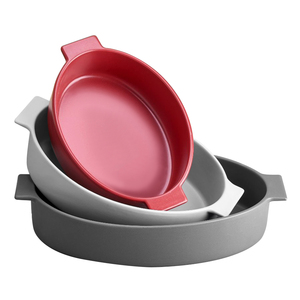
Stoneware Oval Semimatte Au Gratin Dish Baking Pan
Semimatte Finish Yoshoku Dining

Stoneware Oval Semimatte Au Gratin Dish Baking Pan Set

Classic oval profile with semimatte tactile glaze, optimized for Japanese Western-style (Yoshoku) gratin and hamburg steak service.

Inquire Now
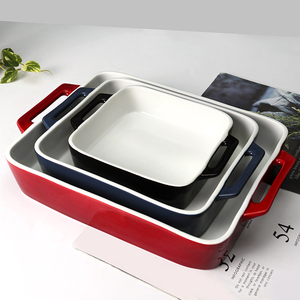
Custom Kitchen Bakeware Set Rectangular Casserole Stoneware
Modular Set Buffet & Hotel

Custom Kitchen Bakeware Set Rectangular Casserole Stoneware

Nest-able and stackable rectangular stoneware dish collection engineered for hotel breakfast buffets and high-volume catering.

Inquire Now
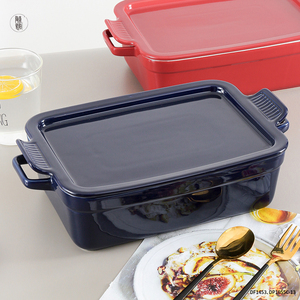
Rectangular Baking Pan Stoneware Tray with Platter Lid
Dual Purpose Lid Heat Retention

Rectangular Baking Pan Stoneware Tray with Platter Lid

Innovative dual-function lid that serves as an independent serving platter, maximizing kitchen versatility and table space efficiency.

Inquire Now
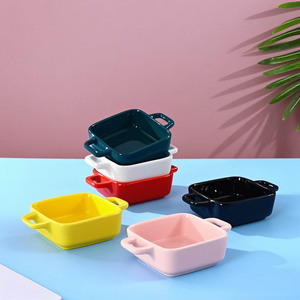
Modern Dual Handle Design Colorful Stoneware Ceramic Baking Pan
Dual Safety Grip Reactive Glaze

Modern Dual-Handle Colorful Stoneware Ceramic Baking Pan

Vibrant matte and reactive glaze finishes featuring ergonomic dual handles designed for effortless service in fast-paced dining environments.

Inquire Now
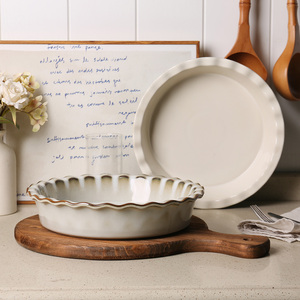
Wholesale Custom Stoneware Ceramic Bakeware Set Kitchen Baking Tray
High Volume OEM Commercial Grade

Wholesale Custom Stoneware Ceramic Bakeware Set & Trays

Scalable OEM solution for restaurant chains and hotel groups requiring uniform vitrified body strength and custom glaze branding.

Inquire Now
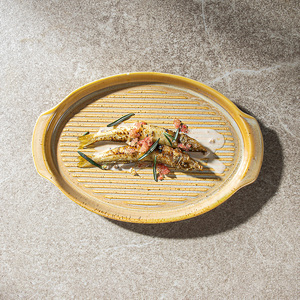
Premium 11 Oval Stoneware Bakeware Ceramic Baking Pasta Pan
Speckle Glaze Wabi-Sabi Vibe

Premium 11" Oval Stoneware Bakeware Speckle Glaze Pasta Pan

Artisanal speckle-glazed stoneware tailored for Ginza and Kyoto fine-dining establishments, ideal for craft pasta and roasted proteins.

Inquire Now
30+
Years Industry Craft
5,000,000+
Annual Piece Capacity
10,000 m²
Owned Thai Facility
100%
Japan Food Safety Compliant

Strategic Market Insights: Stoneware Serveware Trends in Japan

A Deep-Dive Whitepaper Analysis for B2B Procurement Managers, Importers, and Hospitality Groups

The Evolving Demands of Japanese Food Service Tableware

The food service landscape in Japan—spanning Izakayas in Shinjuku, high-end Kaiseki establishments in Kyoto, and modern Western-style (Yoshoku) bistros across Osaka—demands a delicate balance between sensory aesthetics and industrial durability. Traditionally, Japanese dining relied heavily on delicate earthenware (Tōki) and porcelain (Jiki). However, modern hospitality economics have driven a massive structural shift toward **high-fired vitrified stoneware**.

Commercial stoneware offers water absorption rates below 0.5%, making it exceptionally resistant to chipping, bacterial absorption, and severe mechanical stress from high-speed commercial dishwashers commonly used in compact Japanese restaurant kitchens. Restaurant operators no longer want to compromise on tactile beauty for the sake of utility; they require serveware that embodies the spirit of *Wabi-sabi* (natural imperfection and organic texture) while surviving thousands of thermal cycles.

Key Localized Aesthetic & Technical Trends (2025–2030)

  • **Organic Reactive & Semimatte Glazes:** Japanese diners favor muted earth tones, sesame speckles (*Goma-fu*), and Sumi-black matte finishes over high-gloss white porcelain.
  • **Oven-to-Table Ergonomics:** With labor efficiency being paramount in Japan’s food sector, serveware that transitions seamlessly from 250°C ovens directly to the customer’s table cuts dishware handling times by up to 35%.
  • **Compact Nesting & Stacking Footprints:** Kitchen space in urban Japanese centers is notoriously constrained. Tableware must feature precise foot-rim geometry to stack securely without tilting or scratching upper glaze layers.
  • **Lead and Cadmium Free Purity:** Strict adherence to the Japan Food Sanitation Act (Ministry of Health, Labour and Welfare) requires zero toxic metal elution under acidic cooking conditions.
SEO & Market Growth Note for Japanese Buyers: Sourcing stoneware directly from Thailand offers Japanese buyers substantial tariff advantages under the Japan-Thailand Economic Partnership Agreement (JTEPA) and CPTPP, delivering premium ceramic craftsmanship at significantly lower landed costs compared to domestic production or alternative regional suppliers.

Localized Application Scenarios in Japanese Gastronomy

How Technical Stoneware Elevates Culinary Presentation and Kitchen Efficiency Across Dining Formats

1. Modern Izakayas & Craft Taprooms

In vibrant Izakaya districts such as Yurakucho or Roppongi, high-turnover sharing dishes are the norm. Our **9x13 Inch Casseroles** and **Dual-Handle Pans** excel at bubbling hot dish service like Seafood Doria, Baked Curry, and Cheese Dak-galbi. The thick stoneware walls retain heat for up to 20 minutes at the table, ensuring food stays piping hot during long drinking sessions.

2. Yoshoku (Western-Japanese) Gratin Houses

Yoshoku dining remains a cornerstone of Japanese comfort culinary culture. The **Oval Semimatte Au Gratin Dish** is dimensionally engineered to fit standard commercial oven conveyors. Its non-porous glazed interior prevents cheese crust burned-on residues from adhering, shortening dishwashing pre-soak times in busy commercial kitchens by half.

3. Luxury Hotel Buffets & Kaiseki Fusion

In international hotel dining rooms in Kyoto and Tokyo, presentation is paramount. Our **Speckled Glaze Pasta Pans** and **Modular Bakeware Sets** feature subtle organic textures that complement both delicate Japanese plating and robust Western buffet spreads, bridging the gap between traditional aesthetics and modern utility.

Technical Specification & Enterprise Quality Framework

Why Leading Japanese Hospitality Brands Partner with ARTWAY Thailand (Established 1993)

Vitrified Stoneware Engineering

At our 10,000 square meter wholly-owned manufacturing facility in Samut Sakhon, Thailand, every stoneware piece undergoes a precise firing process above **1,250°C (2,282°F)**. This extreme heat fully vitrifies the clay body, bonding raw minerals into an ultra-dense matrix. The resulting ceramic structure exhibits zero water porosity (<0.2%), preventing moisture penetration that causes cracking in lower-grade ceramics during microwave or oven heating.

Unlike trading vendors who outsource production to unverified artisanal cottages, ARTWAY maintains complete internal oversight—from raw clay slurry refinement and automated jiggering/slip-casting to hand-painted decoration, glaze formulation, and final tunnel kiln firing.

Compliance with Japan Food Sanitation Law

Exporting ceramic foodware to Japan requires absolute compliance with the **Japan Food Sanitation Act (Specifications and Standards for Foods, Food Additives, etc.)**. Heavy metal leaching, specifically Lead (Pb) and Cadmium (Cd), poses significant health risks when exposed to acidic Japanese sauces (such as Ponzu, Soy sauce, or Vinegar dressings).

ARTWAY Technical Quality Guarantees:
  • Lead & Cadmium Safe: Formulated using 100% lead-free non-toxic glazes, tested to ISO 6486 and Japanese MHLW notification standards.
  • Thermal Shock Delta T: Certified thermal shock resistance exceeding 180°C to 220°C temperature shifts without crazing or structural fracture.
  • Dishwasher & Microwave Safe: Glaze surface hardness engineered to resist scratching from stainless steel cutlery and high-pressure commercial spray nozzles.

Frequently Asked Questions (FAQ) for Japanese B2B Buyers

Direct Answers Regarding OEM Customization, Tariff Agreements, Sampling, and Quality Control

Q1: What are the minimum order quantities (MOQ) for custom OEM stoneware orders destined for Japan?
ARTWAY provides flexible MOQ options structured for both established restaurant chains and boutique hospitality brands. For existing open-line shapes with custom glazes, MOQs start as low as 500 to 1,000 pieces per item/color. For completely custom OEM shapes requiring new plaster molds and 3D prototyping, typical production runs start at 2,000 pieces per design, allowing mixed shape combinations to fill standard 20ft or 40ft export containers efficiently.
Q2: How does ARTWAY ensure compliance with Japan’s Food Sanitation Law for ceramic imports?
Every batch of stoneware manufactured for the Japanese market utilizes proprietary lead-free and cadmium-free glaze formulations developed in our in-house laboratory. Before mass shipment, we provide full chemical migration test reports issued by accredited third-party laboratories (such as SGS or Bureau Veritas) demonstrating zero heavy metal leaching under 4% acetic acid immersion tests, fully satisfying Japanese Quarantine Station regulations.
Q3: What are the trade tariff advantages of sourcing stoneware from Thailand to Japan?
Under the Japan-Thailand Economic Partnership Agreement (JTEPA) and the Comprehensive and Progressive Agreement for Trans-Pacific Partnership (CPTPP), qualifying ceramic products manufactured in Thailand enter Japan under preferential reduced or zero-duty tariffs upon submission of an official Form JTEPA Certificate of Origin. This provides Japanese buyers a distinct cost advantage compared to non-FTA sourcing origins.
Q4: What is the lead time for custom sample prototyping and mass production?
Once technical CAD drawings or reference samples are approved, 3D mold development and first-fired physical samples take 15 to 25 working days. After sample sign-off and glaze color master approval, mass production lead times generally range between 35 and 50 days, depending on glaze complexity (e.g., hand-applied reactive glazes) and peak factory scheduling.
Q5: Can you apply custom backstamps, bottom logos, and retail packaging for Japanese brands?
Yes. We offer complete private label branding options. Logos can be laser-engraved into the mold, debossed on the foot rim, or applied via high-temperature underglaze decals before firing for permanent durability. Furthermore, we support complete Japanese retail-ready packaging including individual color boxes, JAN barcode labeling, inner cushioning, and drop-test certified master shipping cartons.
Q6: How does stoneware handle the extreme temperatures of Japanese commercial kitchen equipment?
Our stoneware body composition incorporates high-alumina clay minerals fired at 1,250°C+, granting superior mechanical strength and thermal stability. Our bakeware and serveware safely withstand oven temperatures up to 260°C (500°F), direct microwave heating, salamander broilers, and rapid cooling cycles without thermal shock stress or structural failure.

Ready to Elevate Your Restaurant Serveware Lineup in Japan?

Partner directly with Thailand's premier ceramic manufacturer. Get expert technical consultation, custom glaze matching, and competitive OEM quotes for your business today.

Inquire Now