
China Wholesale Decorative Ceramic Home Decor & Stoneware: Industry Whitepaper for the Poland Market
As the logistics and retail distribution hub of Central Eastern Europe (CEE), Poland presents a highly sophisticated landscape for decorative ceramics, tableware, and high-performance bakeware. Driven by rising domestic disposable income, a boom in residential interior design projects across major urban centers like Warsaw, Kraków, Wrocław, and Gdańsk, alongside an expanding HORECA (Hotel, Restaurant, Catering) market, Polish procurement teams require ceramic supply partners who can fuse high-aesthetic appeal with robust technical parameters.
This whitepaper delves into the structural dynamics of sourcing decorative ceramic home decor and stoneware products from China, providing actionable intelligence on ceramic material science, localized consumer preferences in Poland, logistics optimization via the New Silk Road rail network, and strict adherence to European Union safety frameworks.
Localized Consumer Trends & Design Directions in Poland
1. The Shift Toward Warm Organic Minimalism & Earthy Reactive Glazes
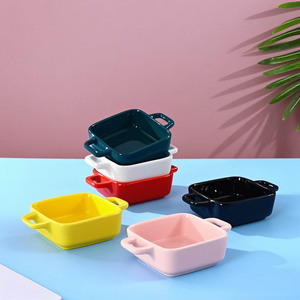
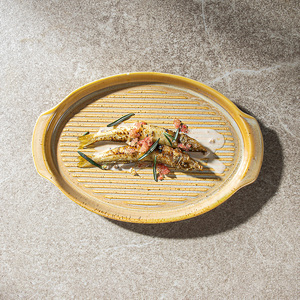
Modern Polish interior aesthetics have evolved rapidly from rigid industrial design toward "Wabi-Sabi" and "Scandi-Japandi" modernism. Consumers in Silesia, Masovian, and Pomeranian voivodships increasingly favor organic silhouettes, matte-satin touch textures, and reactive speckle glazes. Products featuring earthy tones—terracotta red, sage green, deep basalt black, and warm beige—are consistently outperforming traditional high-gloss white ceramics on platforms like Allegro, Amazon.pl, and in physical retail chains such as Home&You and Agata Meble.
2. Dual-Purpose Oven-to-Table Utilitarian Decor
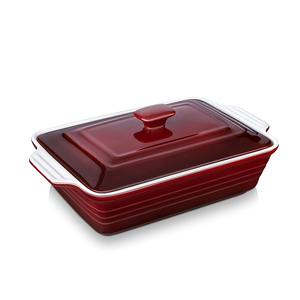
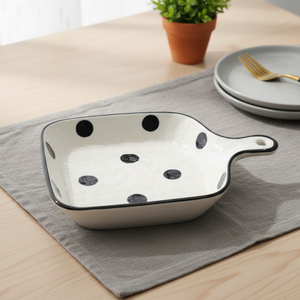
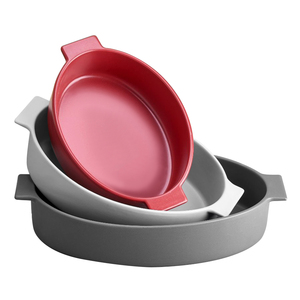
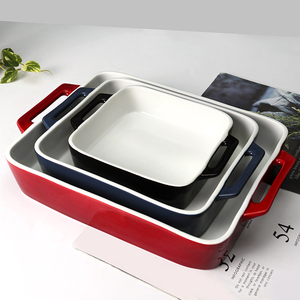
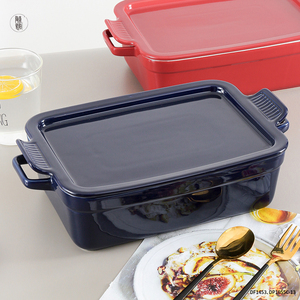
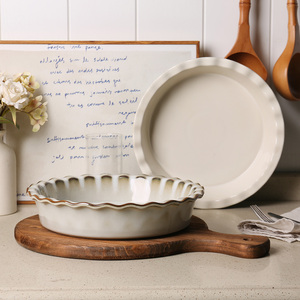
Urban apartments in Warsaw and Poznań prioritize space efficiency and functional multi-use homeware. High-density stoneware casseroles, oval au-gratin dishes, and rectangular baking trays with integrated ergonomic handles double as elegant serving pieces directly on the dining table. Our factory specifically engineers low-porosity ceramic formulations to retain heat during long Polish family meals while protecting surface tabletops when paired with cork or wooden trivets.
3. Eco-conscious Sourcing & Sustainable Tableware Demand
Polish consumers are among the most environmentally vigilant in CEE. There is a growing rejection of single-use kitchen items and low-grade plastic containers in favor of reusable, non-toxic, eco-friendly ceramic bakeware and decorative vases. High-fired stoneware manufactured in our facility utilizes natural, inert mineral clays and non-leaching mineral oxides, satisfying both green consumer demands and stringent European circular economy principles.
Material & Engineering Standards: Stoneware vs. Porcelain vs. Earthenware
To assist Polish sourcing directors, procurement agents, and private-label brand owners in optimizing their product lines, the technical matrix below outlines the performance characteristics of various ceramic bodies manufactured in our facility:
| Performance Metrics | High-Fired Stoneware (Our Standard) | Commercial Porcelain | Basic Earthenware / Terracotta |
|---|---|---|---|
| Firing Temperature | 1250°C – 1280°C | 1300°C – 1350°C | 1000°C – 1100°C |
| Water Absorption Rate | < 0.5% (Non-porous) | < 0.1% (Vitrified) | 3.0% – 10.0% (Porous) |
| Thermal Shock Endurance ($\Delta T$) | Safe for 180°C rapid shift | Safe for 140°C rapid shift | Prone to thermal cracking |
| Mechanical Chip Resistance | Exceptionally High | High (Brittle on edges) | Low to Moderate |
| Glaze Versatility | Reactive, Matte, Crackle, Speckle | Predominantly Smooth Gloss | Basic Cold-Painted / Soft Glaze |
| EU Food Contact Compliance | 100% Food Safe, Lead/Cadmium Free | 100% Food Safe | Requires heavy glaze sealers |
Optimized Supply Chain & Freight Logistics to Poland
Shipping ceramic goods from our China factory to Polish distribution centers requires careful logistics planning due to the weight and fragile nature of vitrified stoneware. We offer flexible shipping modalities tailored to your lead-time requirements and margin targets:
1. Rail Freight (Yiwu / Chengdu / Xi'an to Małaszewicz Dry Port)
The China-Europe Railway Express provides the optimal balance between cost and speed for mid-to-high-tier Polish importers. Transit times from our plant consolidation hubs to the Małaszewicz rail terminal in eastern Poland range from 14 to 18 days. This fast rail connection is ideal for seasonal product launches (e.g., Q3 inventory build-up for the Q4 Christmas gift trade).
2. Direct Maritime Freight (Port of Ningbo/Shenzhen to Port of Gdańsk DCT)
For high-volume bulk orders, sea freight directly to the Baltic Hub Container Terminal in Gdańsk offers the lowest landed cost per unit. Ocean transit typical takes 32 to 38 days. We optimize master carton dimensions and pallet loading diagrams to ensure 40ft HQ containers maximize cubic space while preventing stack-crushing during sea transit.