High-fired stoneware, lead-free reactive glazes, and thermal-shock resistant kitchenware tailored for Ethiopian commercial & retail supply chains.
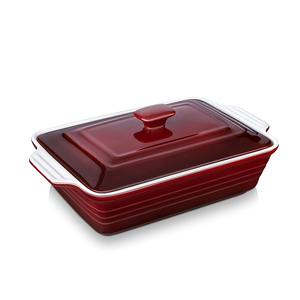
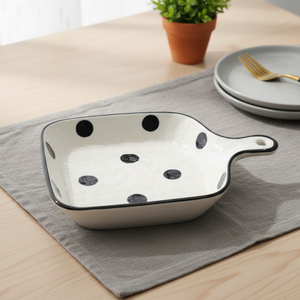
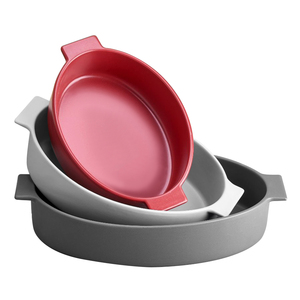
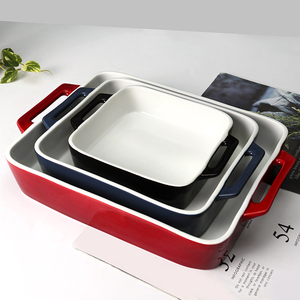
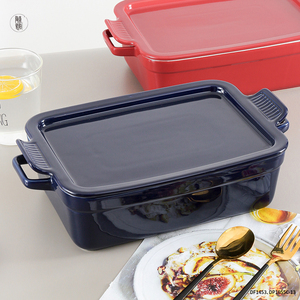
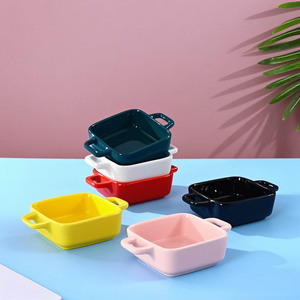
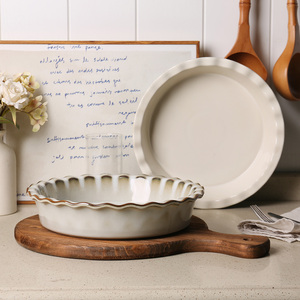
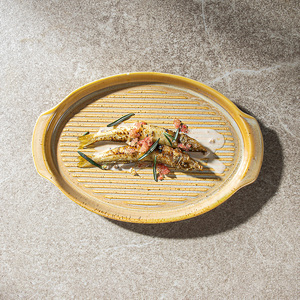
The Federal Democratic Republic of Ethiopia represents one of Africa’s most dynamic and rapidly evolving consumer markets. Driven by ongoing urbanization in economic hubs such as Addis Ababa, Dire Dawa, Mekelle, and Hawassa, the demand for high-durability, food-safe, and aesthetically refined ceramic tableware and stoneware bakeware has escalated exponentially. As hospitality projects, international hotel chains, modern residential developments, and organized retail markets expand across the Horn of Africa, commercial procurement managers are increasingly moving away from cheap, low-temperature earthenware and melamine products in favor of CE-certified, high-fired custom stoneware.
Navigating the Ethiopian ceramic import landscape requires a nuanced understanding of local culinary habits, climatic variations, and stringent import regulations enforced by the Ethiopian Conformity Assessment Enterprise (ECAE) and national customs authorities. Importers face distinct operational challenges, including extended transit corridors via the Port of Djibouti, inland container freight haulage across varying thermal environments, and high consumer expectations regarding product durability and thermal shock resistance. Partnering with an established, direct-manufacturing ceramic factory provides Ethiopian buyers with the structural guarantee of quality, competitive FOB/CIF pricing, and customized mold development designed specifically for East African culinary demands.
Full adherence to EU Directive 84/500/EEC and Regulation (EC) No 1935/2004. Zero heavy metal leaching (lead-free, cadmium-free) certified for safe food contact in high-frequency commercial kitchens.
Engineered body formulations designed to endure sudden temperature shifts up to 250°C. Seamlessly transitions from deep freezer storage directly into high-heat convection ovens without micro-cracking.
Reinforced 5-ply corrugated export cartons, edge-corner protectors, and custom palletization designed specifically to survive rough maritime and overland transit along the Djibouti-Addis corridor.
For Ethiopian importers, distributors, and brand owners, verifying CE certification is not merely a marketing label—it is a critical legal and commercial threshold. CE marking demonstrates that the ceramic products comply with fundamental European health, safety, and environmental protection standards, which serve as the benchmark for quality verification across African customs checkpoints.
Ceramic tableware and bakeware manufactured with sub-standard glazes pose severe health risks due to potential lead (Pb) and cadmium (Cd) leaching, particularly when exposed to acidic local foods such as Ethiopian sauces (Wat), tomato-based stews, and fermented dishes. Low-quality factories frequently utilize lead-bearing frits to reduce kiln firing temperatures and save energy costs. In contrast, our manufacturing process employs exclusively 100% lead-free, cadmium-free ecological glaze frits.
Category 1 (Utensils & Deep Ware): Lead limit < 1.5 mg/L; Cadmium limit < 0.1 mg/L.
Category 2 (Cooking Ware & Casseroles): Lead limit < 0.5 mg/L; Cadmium limit < 0.05 mg/L.
Testing Method: 4% Acetic Acid immersion test at 22°C for 24 hours followed by Atomic Absorption Spectroscopy (AAS).
Lead Content: Undetectable (< 0.01 mg/L).
Cadmium Content: Undetectable (< 0.002 mg/L).
Vitrification Quality: Non-porous stoneware body fired at 1280°C to ensure zero chemical leaching even under continuous microwave and dishwasher exposure in commercial hotel operations.
To assist procurement directors in evaluating material suitability for commercial vs. retail distribution in Ethiopia, the following technical matrix outlines key structural parameters across common ceramic categories:
| Technical Metric | Our High-Fired Stoneware | Low-Fired Earthenware | Commercial Porcelain | Soda-Lime Glassware |
|---|---|---|---|---|
| Firing Temperature | 1250°C – 1280°C | 900°C – 1050°C | 1300°C – 1400°C | 1000°C (Molded) |
| Water Absorption Rate | < 0.5% (Vitrified) | 5.0% – 12.0% (Porous) | < 0.1% (Vitrified) | 0.0% |
| Thermal Shock Tolerance | Up to 250°C ΔT | Up to 120°C ΔT | Up to 180°C ΔT | Up to 80°C ΔT |
| Edge Chipping Resistance | Exceptionally High | Low (Prone to flaking) | High | Moderate (Shatter risk) |
| Microwave & Oven Safety | Fully Certified | Not Oven Safe | Fully Certified | Limited Oven Safety |
| Custom Glaze Aesthetics | Reactive, Matte, Silk Touch | Basic Glossy Decal | Monochrome / White | Transparent / Tinted |
| Freight Durability (Djibouti Route) | Superior Structural Integrity | High Breakage Rate | Good Integrity | High Packaging Cost |
As a specialized ceramic manufacturer established in 1993, our factory represents a complete end-to-end manufacturing complex built across a 10,000 square meter owned facility with over 200 skilled ceramic artisans and technical engineers. We do not operate as a trading intermediary; every ceramic dish, stoneware casserole, and custom platter is produced directly within our controlled production lines in Samut Sakhon, Thailand, offering direct-factory pricing and rigorous quality oversight.
We maintain an advanced plaster mold laboratory capable of translating 2D design sketches, 3D CAD models, or physical samples into production-ready working molds within 15 to 25 working days. Our engineering team calculates exact body shrinkage factors (typically 10-12% during high firing) to ensure dimensional precision across massive order volumes.
Our in-house ceramic chemists develop bespoke glaze formulations matching Pantone references, semi-matte finishes, organic reactive drips, or modern polka dot patterns. Every batch undergoes viscosity testing, specific gravity measurement, and firing trials to guarantee color consistency across production runs.
Utilizing a combination of high-pressure slip casting for intricate bakeware handles and automated jigger-joindex machinery for symmetrical oval and rectangular baking trays, we maintain high density uniformity. This eliminates internal air pockets that cause thermal stress fractures during oven cooking.
Our facility operates modern, computer-controlled gas tunnel kilns with multi-zone temperature monitoring. This precise thermal regulation ensures complete vitrification of the clay body, permanently fusing the glaze to the stoneware mass and eliminating surface crazing over years of commercial use.
Analyzing the Ethiopian market requires segmenting demand into distinct commercial channels, each presenting specific technical requirements and product preferences:
The booming hospitality sector in Addis Ababa, driven by diplomatic missions, international conferences, and luxury hotel developments (e.g., Bole area developments), demands heavy-duty stoneware dinnerware and au gratin pans. These items must endure continuous high-temperature commercial dishwashing without glaze dulling or rim chipping.
Modern retail outlets and department stores in major Ethiopian cities are expanding their home cookware sections. Complete bakeware sets featuring rectangular casserole dishes with lids, dual-handle baking pans, and colorful stoneware bowls in attractive gift boxes offer high retail margin appeal.
Corporate gifting, real estate development furnishing packages, and institutional catering suppliers require standardized, mass-producible ceramic items with durable underglaze branding or debossed factory backstamps that retain crisp detail through decades of heavy usage.
With over three decades of continuous manufacturing excellence, our organization offers global buyers a combination of traditional craftsmanship, advanced ceramic engineering, and reliable export logistics. Our commitement to quality is governed by strict ISO-aligned operational protocols:
Unlike trading agencies that outsource production to unverified third-party cottage kilns, every stage of our manufacturing process—from raw clay body refining and slurry prep to mold making, glaze formulating, automated forming, high-temperature firing, and final packing—is conducted exclusively within our owned 10,000 sqm plant.
Every single piece of pottery undergoes manual visual and physical inspection before carton loading. We evaluate shape symmetry, surface glaze smoothness, backstamp clarity, weight tolerances, thermal shock resistance, and packaging drop testing (ISTA standard) to eliminate transit defect risks.
Connect directly with our engineering and export team to request physical product samples, custom mold technical feasibility reviews, or container-load FOB/CIF price quotes.
Inquire Now