
Material Engineering & Glaze Chemistry: Stoneware vs. Earthenware
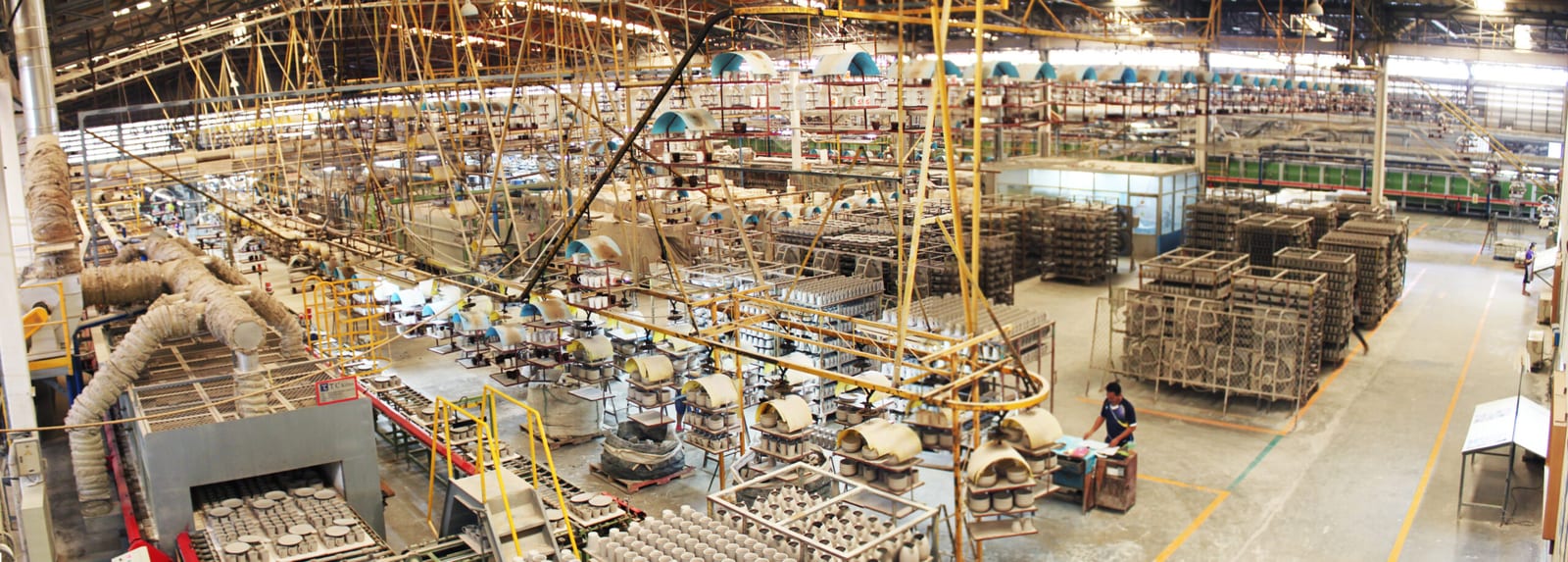
When specifying a Custom Ceramic Salad Bowl for private label retail or high-volume commercial hospitality, understanding the material physics of the ceramic body is paramount. Earthenware (fired at 1000°C–1150°C) exhibits high porosity (5% to 10% water absorption), making it highly susceptible to chipping, glaze crazing, and thermal failure. In contrast, ARTWAY utilizes high-fired vitrified stoneware formulate from premium Thai clays and mineral flux agents fired precisely between 1250°C and 1280°C.
At these elevated temperatures, the clay particles undergo complete vitrification, creating a dense glass-crystalline structure. This yields significant performance advantages for commercial salad bowls:
- Zero Moisture Absorption (<0.5%): Prevents dressing absorption, oil staining, odor retention, and bacterial growth within micro-fractures.
- Superior Mechanical Strength: Flexural strength exceeds 80 MPa, reducing breakage during high-speed commercial dishwasher cycles and transport loading.
- Optimal Thermal Mass: Retains chilled salad temperatures longer when pre-refrigerated, maintaining crisp food presentation at banquet buffets.
- Leach-Proof Glaze Matrix: Glaze fluxes fuse permanently into the body, eliminating heavy metal migration even when exposed to highly acidic salad dressings (vinegar, citrus juices).