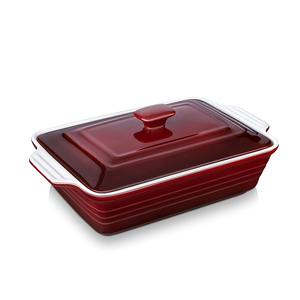
Explore our premium selection of OEM high-fired stoneware and ceramic bakeware engineered for extreme thermal shock resistance, food safety compliance, and commercial kitchen durability. Every piece is customizable by dimensions, glazes, decal branding, and custom packaging configurations.
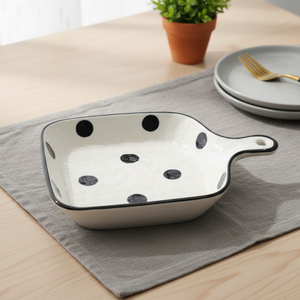
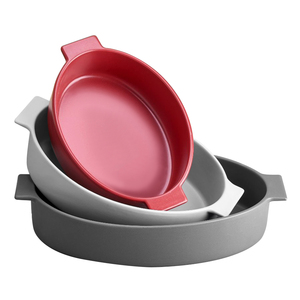
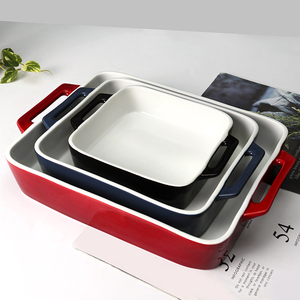
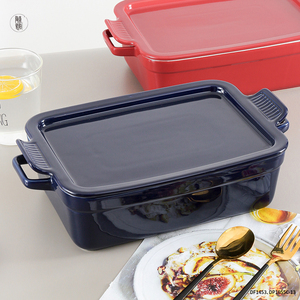
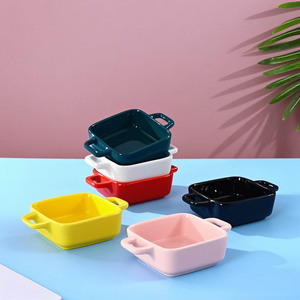
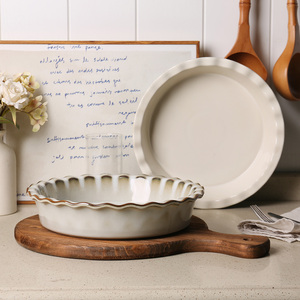
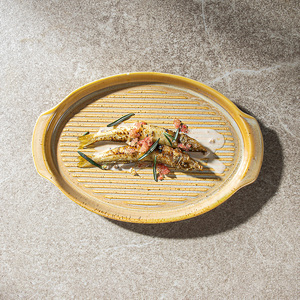
Founded in 1993 in Samut Sakhon, Thailand, ARTWAY Company Limited has established itself as an authoritative global manufacturer of high-grade stoneware, ceramic tableware, and commercial bakeware. Spanning an owned industrial facility of over 10,000 square meters with registered capital of 30 Million THB, our facility integrates vertical manufacturing workflows from raw material preparation to advanced kiln firing.
We maintain a dedicated plaster modeling and case mold production facility. This allows us to convert 2D technical drawings or 3D CAD files into functional ceramic prototypes within 15–25 working days, ensuring precise dimensional tolerances and structural integrity before mass production.
Our chemical engineers specialize in formulating custom reactive glazes, matte finishes, silk-screen decals, and hand-painted glaze effects. All glazes are strictly non-toxic, lead-free, and cadmium-free, complying fully with international food safety standards including FDA CPG 7117.06/07 and EU Directive 84/500/EEC.
Unlike high-volume automated porcelain plants with restrictive order thresholds, ARTWAY offers flexible order quantities. Importers and retail distributors can mix multiple shapes, sizes, and glazes within a single FCL container, lowering inventory carrying costs without sacrificing OEM pricing benefits.
Selecting a reliable OEM bakeware factory requires an understanding of ceramic material science, vitrification dynamics, and structural geometry. Industrial ceramic bakeware must endure extreme thermal cycling—moving seamlessly from freezer storage (-20°C) to preheated conventional ovens (+250°C) without micro-cracking, crazing, or catastrophic thermal fatigue.
High-fired stoneware manufactured at 1250°C to 1280°C achieves a water absorption rate under 0.5%. This zero-porosity state prevents moisture retention within the clay body. Absorbed moisture is the primary root cause of cracking during rapid thermal expansion in commercial baking environments.
Understanding raw material composition allows procurement directors to evaluate supplier quotes accurately:
| Technical Parameter | ARTWAY High-Fired Stoneware | Standard Earthenware | Commercial Porcelain |
|---|---|---|---|
| Firing Temperature | 1250°C – 1280°C | 1000°C – 1150°C | 1300°C – 1400°C |
| Water Absorption Rate | < 0.5% (Non-porous) | 5% – 10% (Porous) | < 0.1% (Vitrified) |
| Thermal Shock Tolerance ($\Delta T$) | 200°C to 220°C Differential | 120°C to 140°C Differential | 160°C to 180°C Differential |
| Mechanical Flexural Strength | High (Ideal for Heavy Pans) | Low (Prone to Chipping) | Very High (Thin Wall Focus) |
| Glaze Hardness (Mohs Scale) | 6.5 – 7.0 (Scratch Resistant) | 4.5 – 5.5 (Scuffs Easily) | 7.0+ (Utensil Proof) |
| Safe Applications | Oven, Microwave, Dishwasher, Freezer | Microwave/Dishwasher Only | Oven, Microwave, Dishwasher |
The physical geometry of a casserole dish or baking tray dictates how heat disperses during baking. Premier OEM factories employ refined engineering principles:
The global houseware and commercial kitchen sector is experiencing shift driven by consumer aesthetics, environmental regulations, and direct-to-consumer (D2C) logistics challenges. OEM bakeware buyers must align with factories capable of meeting these evolving market expectations.
Modern consumers favor "oven-to-table" serveware that doubles as high-end dining decor. Demand is shifting away from stark monochromatic gloss glazes toward artisanal reactive glazes, matte speckles, and two-tone color ways. Advanced OEM factories utilize precise metallic oxide reactions inside gas tunnel kilns to create one-of-a-kind surface variations while maintaining color consistency within a single production lot.
With the rapid growth of e-commerce channels, fragile ceramic items face high return rates due to shipping damage. Leading OEM partners now co-develop drop-test certified inner packaging—utilizing molded pulp trays, honeycomb cardboard, and drop-tested mailer boxes engineered to survive 1.5-meter drop tests without excessive plastic wrapping.
Environmental, Social, and Governance (ESG) criteria are moving to the forefront of brand sourcing audits. European and North American buyers prioritize factories utilizing heat-recovery waste energy systems, solar-assisted drying facilities, and closed-loop clay recycling programs that reuse unfired greenware scrap, reducing landfill waste to near-zero levels.
To safeguard brand reputation and prevent costly product recalls, procurement teams must implement rigid Quality Assurance (QA) checks during factory vetting. At ARTWAY, our quality management framework follows international Acceptable Quality Limit (AQL Level II, Normal Inspection, AQL 1.5/4.0 criteria):
Chemical composition testing of incoming kaolin, ball clay, quartz, and feldspar. X-ray fluorescence (XRF) testing ensures lead and cadmium contamination levels are below detection thresholds before slip mixing begins.
Following jiggering or casting, greenware items are manually inspected for air bubbles, seam line smoothings, and wall symmetry prior to initial drying. Substandard pieces are reclaimed into the slip mixture.
Finished batch sampling undergoes destructive thermal shock testing (200°C oven into 20°C ice water bath for 5 cycles), autoclave crazing resistance tests, and microwave radiation absorption checks.
Below are detailed responses to common operational, technical, and logistical questions encountered by commercial buyers and product development managers.
ARTWAY provides flexible order terms relative to industry standards. For custom OEM shapes requiring new tooling, typical minimums start at 1,000 to 2,000 pieces per shape/glaze. For existing running molds with custom glaze variations, standard runs start from a few hundred pieces per SKU. Orders can be combined across tableware, bakeware, and home decor items to achieve an economical 20ft or 40ft container load.
Once 2D/3D CAD models are signed off, original plaster master molds and initial fired physical samples require 15 to 25 working days. Upon sample approval and deposit confirmation, standard mass production lead time is 35 to 50 days, depending on glaze complexity, decal application, and seasonal kiln capacity.
All glaze formulations engineered in our laboratory utilize raw frits and stains that are 100% free of lead, cadmium, and toxic heavy metals. We perform in-house leaching tests and partner with third-party testing agencies (such as SGS, TÜV Rheinland, or Bureau Veritas) to provide item-specific certificates for FDA, California Proposition 65, LFGB, and EU Regulations.
Yes, full OEM/ODM branding customization is available. Logos can be laser-engraved into the mold, applied as high-temperature underglaze stamps, or affixed as overglaze decals. For packaging, we manufacture custom full-color offset printed gift boxes, e-commerce mailers, barcode labels, and palletized bulk packaging according to your exact retail specifications.
Our facility in Samut Sakhon is conveniently located near Thailand’s major shipping nodes: Bangkok Port and Laem Chabang Deep Sea Port. We support standard shipping terms including FOB Bangkok/Laem Chabang, CIF destination port, EXW, and DDP for select markets. Our export documentation team manages container loading, certificate of origin (Form E/Form D), bill of lading, and custom commercial invoices.
Ready to develop custom ceramic bakeware lines, request physical sample tiles, or obtain factory-direct OEM quotations? Contact our engineering and export team today.