Top China Hotel Serveware Manufacturers & Factories
An Executive Engineering & Sourcing Guide for Global Hospitality Procurement, OEM Tableware Distributors, and High-Volume Hotel Chains (2026–2030)
Product Catalog Showcase
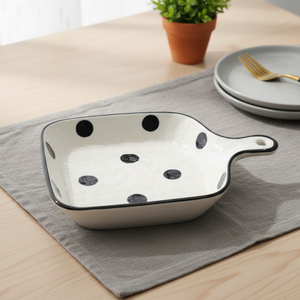
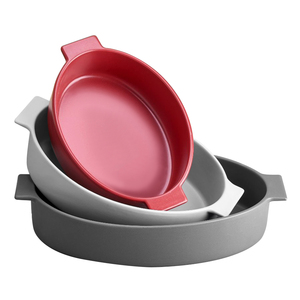
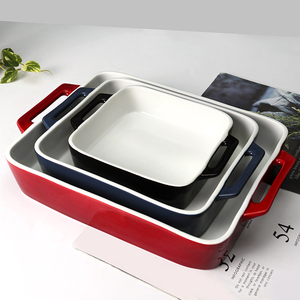
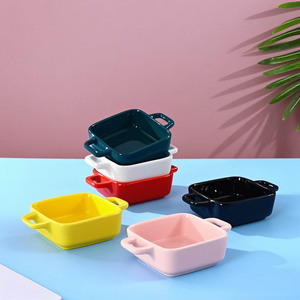
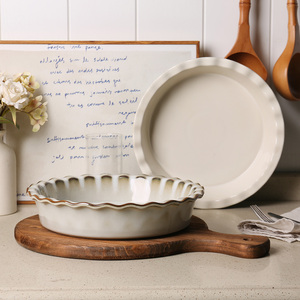
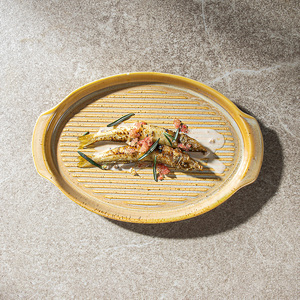
Featured Commercial Hotel Bakeware & Serveware Lines
Engineered specifically for high-intensity commercial hotel dining, banquet catering, and oven-to-table service. All featured items utilize ultra-dense stoneware bodies, thermal-shock resistant formulas, and commercial dishwasher-safe glazes.
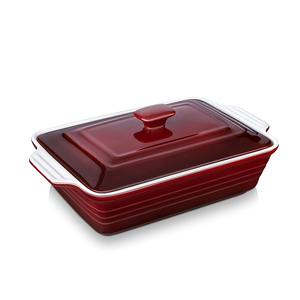
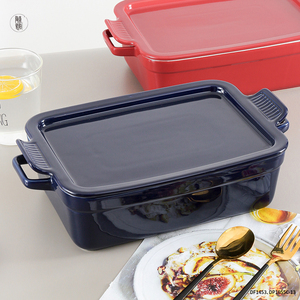
9x13 Inch Rectangular Ceramic Casserole Pan Oven Safe Stoneware Casserole Dish with Lid
Architecting the Next Generation of Commercial Hotel Serveware Sourcing
In the hyper-competitive global hospitality industry, ceramic serveware, bakeware, and dinnerware are no longer treated as simple tabletop utility items. For procurement directors managing five-star hotel chains, cruise lines, Michelin-starred restaurant groups, and international retail distributors, hotel serveware represents a critical brand touchpoint that directly impacts operational expenditure, food presentation quality, and sanitation safety.
When evaluating China hotel serveware manufacturers & factories, modern procurement teams must navigate complex engineering variables—ranging from thermal expansion coefficients and surface glaze hardness to structural edge durability and international food contact compliance. This comprehensive whitepaper provides an authoritative technical breakdown of OEM stoneware manufacturing, procurement evaluation criteria, future design trends, and manufacturing execution standards.
1. Technical Material Science: Stoneware vs. Fine Porcelain in High-Density Hospitality Environments
The primary decision factor in commercial dinnerware and serveware specification centers on the choice of ceramic body material. While standard residential consumers often prioritize aesthetic delicacy, commercial hospitality operations require exceptional mechanical yield strength and thermal endurance.
Key Engineering Insight: High-fired stoneware processed at temperatures between 1250°C and 1320°C creates a semi-vitrified or fully-vitrified micro-crystalline structure. This molecular density limits water absorption to under 0.5%, preventing moisture ingress during industrial flight-type dishwasher cycles, which eliminates the root cause of internal cracking and glaze crazing.
Below is a comparative technical specification matrix detailing why major hotel chains and commercial kitchens are increasingly transitioning from traditional earthenware and low-fired porcelain to high-fired industrial stoneware serveware:
Performance Parameter
High-Fired Commercial Stoneware
Standard Hotel Porcelain
Earthenware / Low-Fired Ceramic
Firing Temperature Range
1250°C – 1320°C (Fully Vitrified)
1200°C – 1280°C
1000°C – 1150°C (Porous Body)
Water Absorption Rate
< 0.5% (Non-Porous, Hygienic)
< 0.5%
3.0% – 8.0% (High Absorption Risk)
Thermal Shock Tolerance ($\Delta T$)
Up to 250°C (Oven-to-Table Safe)
140°C – 180°C
< 100°C (Crack Sensitive)
Glaze Hardness (Mohs Scale)
Mohs 6.5 – 7.5 (Cutlery-Mark Proof)
Mohs 6.0 – 6.5
Mohs 4.0 – 5.0 (Scratches Easily)
Edge Chipping Resistance
Superior (Reinforced Thick-Wall Mold Design)
Moderate to High
Low (Frequent Replacements Needed)
Dishwasher Cycling Life
1000+ Industrial Sanitization Cycles
500 – 800 Cycles
< 200 Cycles (Glaze Degradation)
2. Geographic Ecosystem of Chinese Ceramic & Serveware Manufacturing
China’s dominance in the global ceramic supply chain is built upon specialized industrial clusters, each offering distinct regional engineering strengths, raw material access, and technical specialization. Identifying the correct manufacturing base is vital for optimal cost-to-performance procurement:
Chaozhou Ceramic Hub (Guangdong)
Recognized as the world capital of daily-use ceramics. Chaozhou excels in automated high-volume production, rapid mold development, and cost-efficient daily tableware export for global retail chains and large hotel suppliers.
Zibo & Shandong Cluster
Specialized in heavy-duty industrial stoneware, high-temperature glazing, and specialized flame-proof oven-to-table cookware engineered specifically for Western commercial hospitality standards.
Liling & Hunan Industrial Zone
Renowned for underglaze color techniques, high-fired bone china, and large-scale automated spray glazing suitable for standardized commercial dining operations requiring strict color consistency.
Market Intelligence & Forecasting
Future Procurement & Design Trends in Hotel Serveware (2026–2030)
As international hotel brands redefine guest dining experiences, serveware selection has shifted from sterile, monochrome white porcelain toward tactile, organic, and ecologically responsible stoneware formulations. Professional buyers should align their 3-to-5-year procurement strategies with four key emerging industry vectors:
1. Reactive & Satin Matte Glaze Aesthetics
Modern dining concepts favor hand-crafted, artisanal visuals. Advanced reactive glaze chemistry creates unique color variations in the kiln while maintaining a perfectly smooth, non-porous surface that prevents cutlery scratching and grease absorption.
2. Modular Oven-to-Table Ergonomics
To reduce operational labor and dishwashing volume, hotel kitchens demand serveware that functions seamlessly across storage, oven baking, heating lamps, and direct tabletop presentation. Integrated handles and drop-in platter lids maximize versatility.
3. Zero-Cadmium & Eco-Sustainable Manufacturing
Strict European Union REACH, California Proposition 65, and international green building standards require 100% heavy-metal-free raw clays, lead-free glazes, and energy-efficient heat recovery tunnel kilns that drastically reduce carbon footprints per unit.
Furthermore, modern high-density hospitality venues prioritize stackability physics. Custom serveware profiles are designed with geometric nesting angles that reduce back-of-house storage footprints by up to 35%, while engineered rim radii minimize mechanical stress concentration points during rapid dishwashing and clearing procedures.
Factory Advantage & Execution
Why Global Brands Partner with Premier OEM Ceramic Factories
Successful commercial procurement relies on partnering with fully integrated manufacturers rather than unverified trading intermediaries. Authentic factory partnerships provide transparent quality assurance, controlled lead times, and direct engineering support.
Our Manufacturing Commitment: Backed by over 30 years of ceramic engineering excellence (since 1993), our 10,000+ square meter production facility houses dedicated mold-making workshops, in-house chemical glaze laboratories, and automated multi-zone tunnel kilns capable of outputting over 5,000,000 commercial-grade pieces annually.
In-House Tooling & 3D Prototyping
Rapid conversion of 2D CAD concepts into 3D physical models and plaster working molds within 15 to 25 working days, allowing procurement teams to test physical prototypes prior to mass production tooling.
Rigorous Quality Assurance (AQL 1.5/2.5)
Every shipment undergoes multi-stage inspections: raw material particle size analysis, thermal shock testing cycles, rim impact resistance checks, and lead/cadmium leach testing validated by international labs.
Custom Retail & Institutional Packaging
From drop-tested e-commerce gift boxes to drop-proof heavy-duty corrugated master cartons with custom barcoding and palletization optimized for sea freight container loading yields.
Buyer FAQ & Technical Guidance
Frequently Asked Sourcing Questions
Detailed technical and commercial answers addressing common inquiries from institutional buyers, hotel project managers, and wholesale importers:
What is the standard Minimum Order Quantity (MOQ) for custom OEM hotel serveware?
Our flexible OEM manufacturing programs accommodate trial production orders. For custom molded shapes or specific pantone-matched glaze colors, typical MOQs start from 1,000 to 2,000 pieces per item shape. For standard factory shapes with existing tooling, MOQs can be negotiated at lower thresholds or combined across multiple SKUs to achieve an economical 20ft container load.
How do high-fired stoneware serveware products withstand commercial dishwasher sanitization?
Commercial dishwashers utilize aggressive alkali detergents and high-temperature water sprays (82°C–90°C). Our high-fired stoneware is vitrified at 1280°C, producing a dense matrix with zero open porosity beneath an impermeable glass-hard glaze surface. This prevents detergent absorption, chemical clouding, glaze micro-fracturing, and surface dulling even after 1,000+ industrial wash cycles.
What international food safety standards do your ceramic glazes comply with?
All glazes and color formulas are guaranteed 100% lead-free, cadmium-free, and non-toxic. Our products routinely pass rigorous laboratory testing for US FDA CPG 7117.06/07, European Union Regulation (EC) No 1935/2004, LFGB (Germany), and California Proposition 65 standards. Comprehensive test reports from third-party inspectors like SGS, TÜV, or Intertek are available for every production run.
What are the typical lead times for custom sampling and mass production?
Once technical drawings or 3D vector files are finalized:
• Phase 1 (Sample & Mold Development): 15–25 working days including plaster model, master mold, glaze matching, and initial firing.
• Phase 2 (Mass Firing & Production): 35–50 days following sample sign-off, depending on order complexity, glaze finish, and seasonal kiln scheduling.
Can your serveware handle rapid thermal transitions (e.g., freezer to baking oven)?
Yes. Our proprietary stoneware clay body incorporates refined pyrophyllite and cordierite minerals that significantly lower the coefficient of thermal expansion ($\alpha$). This enables our commercial bakeware and au gratin dishes to safely tolerate thermal shock gradients ($\Delta T$) up to 250°C, permitting direct transfer from refrigerated cold storage into preheated hot ovens without structural failure.
How do you manage color consistency across repeated bulk re-orders?
We maintain strict digital color master tiles and archived chemical glaze recipes for every client SKU. Our automated glaze slurry mixing systems measure density (Baumé scale) and viscosity down to precise tolerances. Coupled with computer-controlled micro-zone continuous tunnel kilns, batch-to-batch shade variation is kept well within strict commercial acceptance limits.
What custom branding and logo application methods are available?
We offer full-service custom branding:
• In-Glaze / Underglaze Decals: Fired into the ceramic glaze for permanent protection against fading or chemical wear.
• Debossed / Embossed Logos: Carved directly into the plaster mold for a tactile physical backstamp.
• Laser Engraving: Precise post-fire branding on unglazed foot rings or matte surfaces.
How is break-rate minimized during international sea container transportation?
We employ drop-test-proven export packaging protocols (ISTA 3A compliant). Products are individual cell-partitioned using heavy-duty double-wall corrugated carding, wrapped in EPE protective sleeves, and packed into reinforced 5-ply outer cartons. Cartons are then palletized on fumigated wooden or plastic pallets, corner-boarded, and stretch-wrapped to ensure zero dynamic movement in transit.
Accelerate Your Commercial Hotel Serveware Procurement
Connect directly with our senior ceramic engineers and export project managers today. Request technical datasheets, order sample kits, or submit your custom OEM specifications for an instant commercial quote within 24 hours.