High-durability, food-safe, freeze-thaw tested stoneware lines designed for commercial brands, importers, and global procurement buyers.
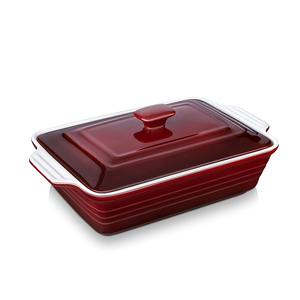
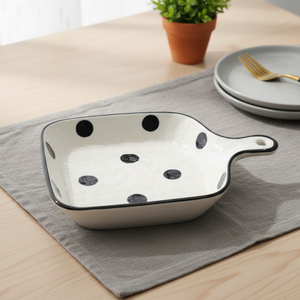
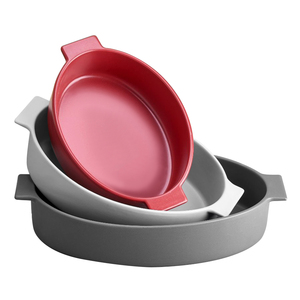
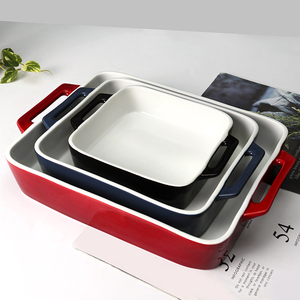
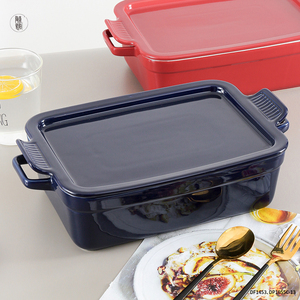
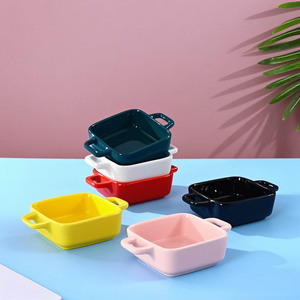
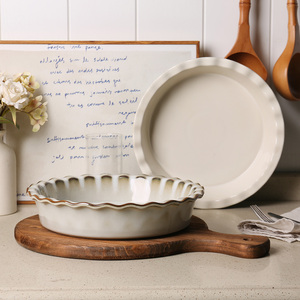
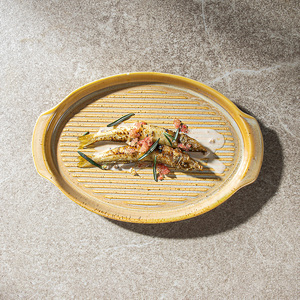
Navigating global ceramic procurement requires identifying manufacturers with authentic industrial scale, in-house technical control, and strict regulatory compliance. Unlike trading companies that aggregate products from decentralized cottage kilns, top-tier Chinese ceramic planter and stoneware factories maintain end-to-end oversight—from raw clay slurry purification to final containerized shipping loading.
Our owned 10,000-square-meter manufacturing infrastructure operates high-capacity tunnel kilns, automated shuttle kilns, and multi-station slip-casting and jiggering lines. This capital-intensive setup minimizes cross-batch thermal variance, ensuring that ceramic planter pots and heavy stoneware vessels meet identical dimensional tolerance specifications batch after batch.
We eliminate external prototyping bottlenecks through an internal plaster moulding laboratory and chemical glaze formulation unit. Whether developing bespoke reactive matte glazes for architectural planters or lead-free non-porous glazes for ovenware, our ceramic engineering team crafts prototype samples in 15–25 working days.
Factory Guarantee: Every ceramic vessel produced within our facility undergoes 100% pre-glaze greenware inspection, followed by AQL 2.5/4.0 post-firing audit covering glaze pinholes, thermal shock vulnerability, structural micro-fissures, and dimensional flatness.
| Technical Parameter | Factory Capability & Standard | B2B Sourcing Advantage |
|---|---|---|
| Body Composition | High-Density Stoneware & Porcelain Formulations | Low water absorption (<0.5% for porcelain, <3% stoneware) prevents outdoor frost cracking. |
| Firing Temperature | 1250°C to 1320°C Continuous Tunnel Kilns | Achieves complete vitrification, superior mechanical strength, and impact resistance. |
| Chemical Safety | FDA, LFGB, EU 2005/31/EC, California Proposition 65 | Guaranteed 100% lead-free, cadmium-free glazes suitable for retail and food service. |
| Production Throughput | 5,000,000+ Units / Year (200+ Personnel) | Stable lead times for high-volume promotional runs and recurring chain store replenishments. |
The global ceramic planter, home decor, and commercial stoneware sectors are undergoing a structural shift driven by sustainability mandates, supply chain diversification, and evolving consumer aesthetics. Corporate buyers, landscape architects, and retail chain category managers must adapt their OEM/ODM procurement strategies to align with these emerging dynamics.
Decarbonization policies across major export destinations (such as the European Union's CBAM legislation) are pushing leading Chinese ceramic exporters to upgrade kiln technology. Modern facilities are transitioning to natural gas micro-computer controlled firing systems and heat-recovery loop kilns, cutting carbon emissions by 25–40%. Furthermore, advanced body formulations now incorporate up to 15% recycled ceramic powder (grog) into raw clay mixtures without compromising structural tensile integrity.
Historically, low-temperature terracotta and porous earthenware dominated the mass-market ceramic planter segment due to low firing costs. However, global buyers are increasingly specifying high-fired stoneware (fired above 1250°C) for architectural planters and residential garden pottery. High-fired stoneware offers superior frost-resistance (freeze-thaw cycle durability in cold climates), zero water leaching, and far higher structural load capacity for large-scale botanicals.
Modern commercial interiors, luxury hotels, and residential landscaping projects are moving away from monochromatic high-gloss finishes toward organic, tactile surface treatments. Reactive glazes—where metal oxides in the glaze react dynamically to kiln atmosphere and cooling curves—produce unique color variations on every single piece. Leading export factories have mastered controlled reactive glazing, delivering bespoke artistic aesthetics with batch-to-batch color stability.
Planters designed with integrated reservoir channels, overflow spouts, and interior ceramic filtration plates for water-saving smart gardening systems.
E-commerce optimized ISTA-3A/6-FEDEX packaging engineered using molded biodegradable pulp shells to achieve zero breakage rates in direct-to-consumer delivery.
Hybrid production lines enabling importers to consolidate multiple planter shapes, glazes, and sizes into a single 40ft HQ container without penalty fees.
Maintaining competitive advantage in ceramic planter and cookware export requires continuous technological innovation on the factory floor. The integration of precision automation with traditional craftsmanship is redefining yield rates, cost structures, and product capabilities.
Traditional slip casting relied heavily on manual clay slurry pouring and gravity drain cycles, leading to wall thickness inconsistencies. Leading China exporter factories now utilize automated high-pressure casting systems. By injecting ceramic slip under 30–50 bar pressure into porous resin molds, factories achieve uniform density, eliminate air pockets, and reduce cycle times from hours to minutes.
For flat shapes, dinnerware, and low-profile planter saucers, Automated Jiggering & CNC Roller Machines ensure perfectly symmetrical rims and base profiles, virtually eliminating warping during thermal drying cycles.
To achieve perfectly uniform glaze coats on complex 3D planter geometry, six-axis robotic arm sprayers are replacing manual hand spraying. These robots track precise distances and movement speeds, ensuring consistent glaze thickness down to the micron. For intricate patterns, modern factories utilize high-temperature ceramic digital printing decals that fuse directly into the vitreous body during the firing cycle, eliminating peeling, scratching, or fading over time.
Technical Information Gain: When sourcing large ceramic planters (>45cm diameter), always verify whether the factory utilizes chamotte (grog) reinforcement in the clay body. Adding 10%–20% calcined clay particles controls shrinkage during kiln firing, reducing thermal distortion risk by over 80% compared to standard unreinforced clay bodies.
From initial design concept to final port delivery, our standardized manufacturing process ensures absolute transparency, quality control, and schedule adherence for international buyers.
Review of 2D/3D technical drawings, clay shrinkage calculations, drainage hole positioning, and glaze matching verification.
In-house master plaster model sculpting and physical prototype sample creation. Samples delivered within 15–25 working days.
Automated slip casting/jiggering, greenware air drying, precise glaze application, and backstamp embossing.
High-temperature firing up to 1320°C, followed by thermal shock, drop testing, heavy metal leaching, and visual AQL inspections.
Essential insights for commercial procurement teams, brand managers, and import buyers looking to partner with top China ceramic planter factories.