Formulated with lead-free glazes, ultra-low porosity, and thermal shock safety up to 250°C. Engineered for demanding oven-to-table hospitality and retail ecosystems.
Selecting the optimal wholesale bakeware supplier requires a rigorous technical evaluation of substrate material performance under commercial thermal stress. In high-volume food service, commercial bakeries, and premium home cooking environments, bakeware experiences violent thermal cycling ranging from freezing storage (-20°C) to direct high-heat baking (250°C).
High-Fired Stoneware (1250°C–1300°C) remains the gold standard for global houseware buyers due to its exceptional thermal mass, uniform heat dissipation, and superior mechanical scratch resistance compared to borosilicate glass or cast iron.
| Material Class | Thermal Shock Limit (ΔT) | Heat Retention Index | Chemical Inertness (Glaze Leaching) | Micro-Crack Resistance | Commercial Durability Rating |
|---|---|---|---|---|---|
| High-Fired Stoneware (ARTWAY Standard) | 220°C - 250°C | Extremely High (0.92 kJ/kg·K) | 100% Inert (Lead & Cadmium 0%) | Superior (Vitrified Clay) | Grade A+ (Hospitality Grade) |
| Low-Temp Earthenware / Terracotta | 110°C - 140°C | Moderate | Moderate (Risk of glaze micro-crazing) | Poor (Porous Body >5%) | Grade C (Retail Household Only) |
| Borosilicate Glass | 160°C - 180°C | Low to Moderate | High | Vulnerable to Sudden Impact | Grade B (Brittle under shock) |
| Enameled Cast Iron | 200°C - 230°C | High | High (Enamel dependent) | Chipping Hazard under drop tests | Grade A (Heavy Weight/High Freight) |
As demonstrated in laboratory thermal-shock testing, low-porosity stoneware manufactured via controlled tunnel-kiln vitrification eliminates micro-voids in the ceramic matrix. This structural density prevents internal pressure buildup caused by moisture entrapment during rapid heating, effectively neutralizing the root cause of thermal shock fracturing.
Operating a fully owned 10,000 m² production facility in Samut Sakhon, ARTWAY Company Limited provides international importers, supermarket chains, and kitchenware brands with complete end-to-end OEM execution.
Custom formulation of reactive glazes, satin matte textures, and underglaze decals. All glazes are rigorously tested lead-free and cadmium-free, complying with FDA, LFGB, and California Proposition 65 standards.
Equipped with plaster modeling and high-precision case mould production. Rapid physical prototype samples delivered within 15–25 working days from artwork or 3D CAD approval.
Shipping directly from Samut Sakhon, Thailand, grants global buyers preferential origin status (GSP/FTA benefits), avoiding punitive tariffs associated with single-source reliance.
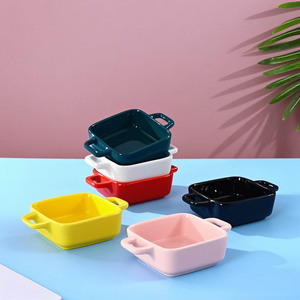
Unlike massive rigid factories, ARTWAY accommodates boutique releases and tiered market rollouts by allowing multi-shape and multi-glaze container consolidation.
Every batch undergoes rigorous dimensional tolerance checks, thermal shock testing cycles, glaze hardness evaluations, and ISTA 1A e-commerce drop testing before loading.
Custom laser-engraved bottom backstamps, branded retail color boxes, barcode stickering, inner foam protection, and drop-ship master carton engineering.
Transparency is the cornerstone of effective cross-border procurement. ARTWAY enforces a strict quality-gated production methodology across every manufacturing order:
Review of CAD drawings, wall thickness uniformity, shrinkage factors, and kiln loading efficiency.
In-house plaster mould fabrication and initial fired sample trial (15–25 days turnaround).
High-density slip casting or automated jiggering followed by precise greenware hand-finishing.
Glaze application via dipping/spraying followed by 1280°C high-temperature tunnel kiln vitrification.
Thermal shock testing, AQL 2.5 visual inspection, drop-test packaging, and FOB loading from Bangkok port.
As global houseware consumers transition toward health-conscious, non-toxic, and aesthetically versatile kitchen products, commercial procurement directors must align their product development roadmaps with key market shifts:
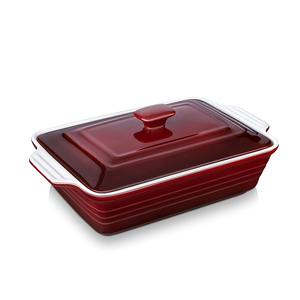
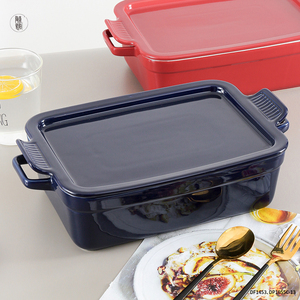
Modern consumers and restaurant operators favor serveware that eliminates intermediate transfers. Ceramic bakeware featuring integrated platter-lids (such as ARTWAY's dual-function rectangular baking tray series) satisfies demand for space-saving, multi-use functionality.
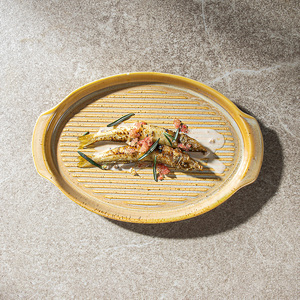
Uniform high-gloss finishes are increasingly yielding market share to speckled satin-matte and reactive glaze effects. These artisanal aesthetics provide a premium, hand-crafted aesthetic suitable for elevated culinary presentation while maintaining industrial dishwasher resistance.
With global e-commerce representing over 35% of total cookware sales, importers now mandate factory-level ISTA-1A drop-test packaging. Custom molded pulp inserts and engineered corrugated buffers prevent transit damage and drastically reduce return rates.
Geopolitical tariffs and supply disruptions have prompted top-tier houseware brands to diversify manufacturing into Southeast Asia. Thailand's mature ceramic infrastructure offers lower trade barriers, stable energy costs, and highly skilled ceramic craftsmanship.
Key technical, logistical, and commercial insights to streamline your bulk ordering process.
Whether you require custom OEM product development, private label retail lines, or high-volume commercial serveware, our engineering and export team responds within 24 hours.
Get a Quote