Navigating the global stoneware and ceramic manufacturing landscape requires more than evaluating aesthetic portfolios; it demands precise technical scrutiny of vitrification points, thermal shock parameters, lead-free glaze stability, and social compliance audits. As global retail chains, hospitality conglomerates, and private-label brands recalibrate their supply chains for maximum resilience and eco-efficiency, identifying top-tier pottery manufacturers becomes a strategic imperative.
This industry report provides an expert analysis of the Top 10 Ceramic Pottery Manufacturers worldwide, evaluating structural engineering capabilities, advanced glaze chemistry, and OEM production scalability. Below, we showcase prime commercial bakeware and tableware lines engineered for high-performance foodservice and retail applications, followed by technical benchmarks, material trend forecasts, and actionable procurement insights.
High-fired stoneware featuring thermal-shock resistance (-20°C to 250°C), zero-porosity body structures, and food-grade non-toxic glazes designed for OEM export programs.
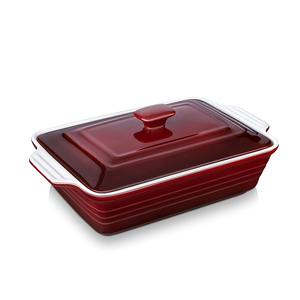
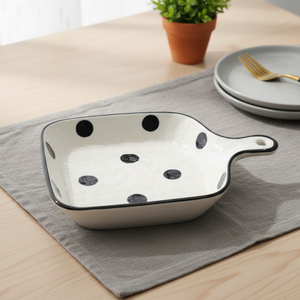
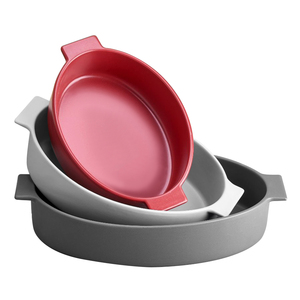
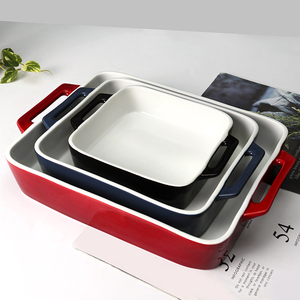
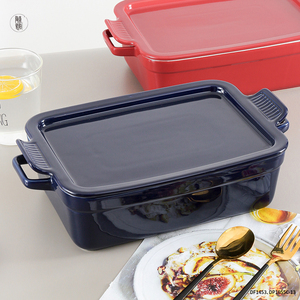
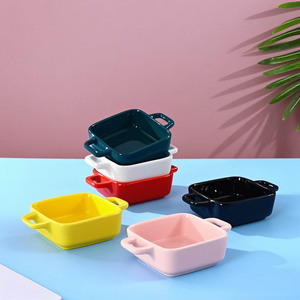
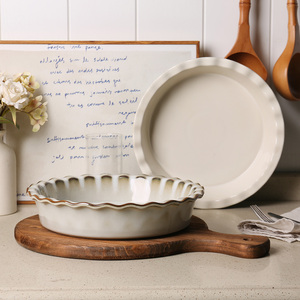
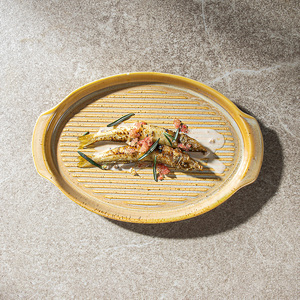
When enterprise procurement teams evaluate global ceramic pottery suppliers, distinguishing between middle-tier processors and true industrial manufacturers involves auditing technical parameters rather than surface aesthetics. High-volume retail channels and hospitality brands demand rigorous quality assurance across several key physical criteria:
Tier-1 factories fire stoneware bodies between 1200°C and 1280°C. This process reduces water absorption to under 0.5%, preventing moisture entrapment, bacterial growth, and micro-cracking in commercial dishwashers.
Premium OEM bakeware must endure rapid temperature swings without structural failure. Leading manufacturers test products from a frozen -20°C environment directly into a 250°C oven without crazing or thermal shock fractures.
International food contact standards (FDA 21 CFR, EU Directive 84/500/EEC, LFGB) mandate zero heavy metal leaching. Advanced manufacturers utilize lead-free, cadmium-free fritted glazes formulated in-house.
Established in 1993 in Samut Sakhon, Thailand, ARTWAY Company Limited operates as an integrated OEM/ODM manufacturer specializing in stoneware tableware, high-performance bakeware, decorative pottery, and bathroom accessories. With a 30-million-baht registered capital and an owned 10,000-square-meter facility, ARTWAY provides international buyers with a reliable alternative to traditional sourcing hubs.
Understanding raw clay compositions and firing profiles enables brand procurement officers to specify the optimal material body for target price points and durability expectations.
| Technical Characteristic | High-Fired Stoneware (ARTWAY Standard) | Commercial Porcelain | Standard Earthenware |
|---|---|---|---|
| Firing Temperature Range | 1200°C – 1280°C | 1300°C – 1400°C | 1000°C – 1150°C |
| Water Absorption Rate | < 0.5% (Non-porous) | < 0.1% (Vitreous) | 3.0% – 10.0% (Porous) |
| Thermal Shock Tolerance | Excellent (ΔT 200°C to 250°C) | Moderate (ΔT 160°C to 180°C) | Poor (Prone to cracking) |
| Mechanical Edge Durability | Very High (Chip Resistant) | High (Brittle on sharp impacts) | Low (Easily chipped) |
| Glaze Surface Options | Reactive, Matte, Satin, Speckled, Gloss | Predominantly Smooth Gloss | Basic Low-Fire Glazes |
| Primary Target Application | Oven-to-Table Bakeware, Premium Tableware | Fine Dining, Hotel Banquet Sets | Low-Cost Seasonal Decor |
As consumer preferences and environmental mandates evolve, global supply chain executives must align with manufacturers investing in modern production techniques and sustainable practices.
Commercial buyers are shifting away from plain monochrome tableware toward organic, hand-finished aesthetic profiles. Modern glaze labs utilize chemical phase-separation glazes that produce unique fluid patterns during high firing while maintaining standardized dimensional tolerances.
Leading manufacturers are adopting computer-controlled shuttle and tunnel kilns equipped with heat recovery systems. By capturing exhaust thermal energy to pre-heat greenware drying rooms, plants reduce carbon emissions per ton of fired ceramic product by up to 25%.
To mitigate geopolitical friction and single-region supply dependencies, major Western importers are actively shifting ceramic orders to Southeast Asian centers. Thailand has emerged as a premier hub due to rich local clay deposits, skilled artisanal heritage, and stable export infrastructure.
A rigorous industrial process converts raw kaolin, feldspar, and quartz into durable, heat-resistant stoneware ready for worldwide distribution. Below is the standard protocol executed in certified OEM facilities:
Precision ball-milling of raw minerals followed by magnetic iron separation and vacuum de-airing.
Automated jiggering for symmetrical plates/bowls; high-density slip casting for complex handles and bakeware.
Initial low-temperature firing (800°C–900°C) to harden the body while retaining porosity for smooth glaze uptake.
Robotic spraying, manual dip-glazing, or decal application matching precise Pantone/RAL reference standards.
Vitrification at 1250°C+ followed by 100% visual inspection, dimensional checks, and drop-test packaging.
Unlike high-volume plants requiring tens of thousands of pieces per SKU, flexible OEMs like ARTWAY accommodate production runs starting at 500 to 1,000 pieces per shape/glaze. For existing open-stock molds, orders can be combined across multiple items to reach economical full-container load (FCL) or less-than-container load (LCL) shipments.
New custom mold development, 3D modeling, plaster casing, and initial fired sample approval typically require 15 to 25 working days. Once pre-production samples are signed off, mass manufacturing takes 35 to 50 days depending on glaze complexity and order volume.
Yes. High-fired stoneware features a fully vitrified body structure and hard-wearing glaze layer. Products are routinely tested for thermal shock durability (-20°C to 250°C), dishwasher chemical abrasion resistance, and microwave safety. Laboratory compliance documentation (SGS, Intertek, TÜV) can be issued per purchase order.
Standard export packaging includes drop-test certified corrugated cartons, molded EPE/EPS foam inserts, cell dividers, and plastic-wrapped wooden pallets. For e-commerce direct-to-consumer fulfillment, individual ISTA-1A/3A mail-order packaging is available upon request.
Absolutely. Private labeling services include underglaze stamped logos, debossed bottom marks, high-fire metallic decals, custom color boxes with inner sleeves, barcoded hangtags, and branded master shipping cartons.
Whether you are launching a private-label bakeware line, sourcing high-durability restaurant serveware, or expanding a retail ceramic collection, our engineering team in Thailand is ready to assist with technical drawings, glaze matching, and rapid quoting.
Send an Inquiry