Engineered for high-volume commercial hospitality, luxury afternoon tea presentation, retail collections, and custom OEM private-label branding.
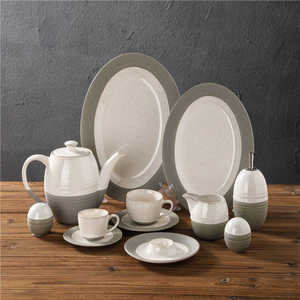
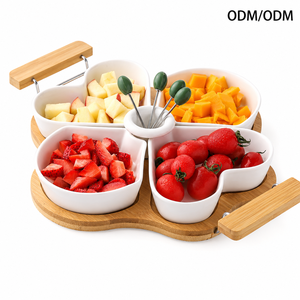

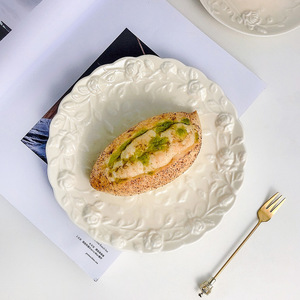
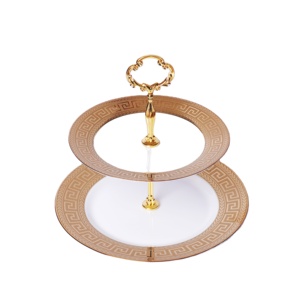
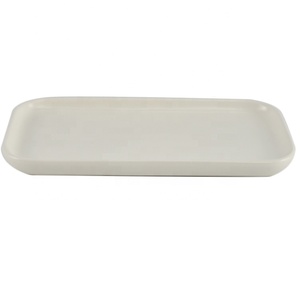
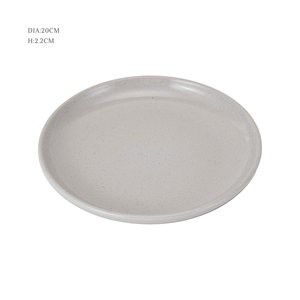
The global market for commercial tableware and residential ceramic serving platters is undergoing a structural transition. Sourcing directors, hospitality procurement groups, and private-label retail buyers are increasingly prioritizing suppliers that demonstrate raw material purity, thermal shock stability, low porosity, and verified ESG environmental compliance. Evaluating international manufacturers requires assessing raw clay compounding, firing kiln temperatures, glaze chemistry safety, and logistics infrastructure.
Below is an analytical overview of the leading ceramic platter manufacturing and export hubs globally, evaluated across key engineering and commercial parameters:
| Country / Region | Primary Material Focus | Thermal Shock Resistance | Glaze Technology | Sourcing Flexibility & MOQs |
|---|---|---|---|---|
| 1. Thailand (e.g., ARTWAY) | High-Fired Stoneware & Vitrified Clay | Superior (ΔT ≥ 180°C) | Lead-Free Reactive & Silk Matte | High (Flexible MOQs, Multi-SKU Containers) |
| 2. China (Chaozhou/Jingdezhen) | Porcelain & Bone China | Moderate to High (ΔT ~ 140°C) | In-Glaze & On-Glaze Decal | Mass Volume (High Container Minimums) |
| 3. Portugal | Artisan Terracotta & Stoneware | High (ΔT ~ 160°C) | Single-Fired Color Glazes | Moderate (European Lead Times) |
| 4. Italy | Earthenware & Majolica Decor | Standard Decorative (ΔT ~ 120°C) | Hand-Painted Artisan Glazes | Low Volume / Premium Cost |
| 5. Vietnam | Porcelain & Basic Stoneware | Moderate (ΔT ~ 130°C) | Dip Glaze & Clear Spray | High Volume OEM Focus |
| 6. Turkey | Vitrified Porcelain & Tile Clay | High Commercial Rating | Digital Printing & Solid Colors | Moderate Regional Sourcing |
| 7. Germany | Hard-Paste Commercial Porcelain | Extreme (ΔT ≥ 200°C) | High-Abrasion Clear Glaze | Strict Bulk Orders / Premium Pricing |
| 8. United Arab Emirates | Alumina-Enriched Porcelain | High Commercial Grade | Vitreous Gloss Glazes | Large Scale Hospitality Supplies |
| 9. India (Khurja/Gujarat) | Bone China & Stoneware | Moderate (ΔT ~ 130°C) | Colored Body Slips & Decals | High Capacity / Variable Tolerances |
| 10. Indonesia | Stoneware & Dolomite Ceramics | Standard Home Use (ΔT ~ 120°C) | Reactive Sprayed Glazes | Export Focused OEM Lines |
Technical Insight for Buyers: High-fired stoneware produced at temperatures between 1,250°C and 1,300°C achieves a water absorption rate under 0.5%. This degree of vitrification prevents bacteria absorption, micro-cracking during commercial dishwashing, and thermal shock degradation during oven-to-table service.
Established in 1993 in Samut Sakhon, Thailand, ARTWAY Company Limited operates an owned 10,000 square meter integrated ceramic production facility. With over 30 years of specialized manufacturing experience, a registered capital of 30 million Baht, and a workforce exceeding 200 skilled craftsmen and ceramic engineers, ARTWAY produces over 5 million pieces annually for global retail chains, hospitality importers, and high-end lifestyle brands.
From custom 3D model prototyping and plaster mold creation to glaze batch formulation and high-temperature tunnel kiln firing, all manufacturing steps are executed under one roof to guarantee strict dimensional and aesthetic tolerance.
Every ceramic platter glaze is formulated lead-free and cadmium-free, complying fully with FDA food-contact standards, California Proposition 65, and European Regulation (EC) No 1935/2004.
Unlike rigid mass-production factories, ARTWAY supports emerging brands and specialized hospitality projects with lower initial order thresholds, permitting multi-shape and multi-glaze container mixing.
Stoneware platter bodies undergo rigorous Modulus of Rupture (MOR) testing, ensuring resistance to edge chipping, impact fractures, and repeated mechanical stress in automatic commercial dishwashers.
As commercial dining concepts evolve and direct-to-consumer houseware brands seek market differentiation, procurement executives must align their product development pipelines with key emerging trends in ceramic serving platters:
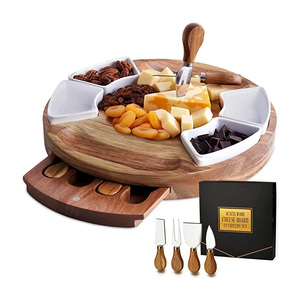
The convergence of natural materials is driving significant volume growth in the servingware sector. Platters combining high-density vitrified ceramic inserts with FSC-certified Acacia, Walnut, or Bamboo bases offer elevated visual contrast while protecting tabletop surfaces from heat transfer. Technical success in this category requires precision shrinkage control during stoneware firing to ensure seamless fitments with CNC-milled wooden bases.
Traditional high-gloss plain white hotelware is giving way to tactile matte textures, speckled earth tones, and reactive glazes. Reactive glazes utilize metallic oxide reactions during firing to yield unique, non-identical color variations on every piece. Commercial buyers must partner with factories maintaining strict chemical batching protocols to ensure that while each piece has organic character, overall color parameters remain within acceptable batch-to-batch tolerances.
With modern kitchen storage space at a premium in both commercial kitchens and modern residential urban housing, platters engineered with low-profile stacking rims and reinforced foot rings are experiencing increased demand. Rolled edges and reinforced rim geometries significantly reduce physical chipping losses in high-turnover hospitality environments.
International regulations and corporate ESG mandates are forcing buyers to audit supply chain emissions. Preferred ceramic platter exporters are those adopting heat-recovery gas kilns, solar-assisted drying rooms, zero-wastewater recycling loops, and 100% recyclable drop-tested corrugated packaging without expanding polystyrene (EPS) foams.
Selecting the appropriate ceramic body is critical to balancing product longevity, aesthetic appeal, and unit landed cost. The three primary ceramic material classifications used in commercial platter production present distinct engineering trade-offs:
For custom OEM shapes requiring new plaster mold development, standard MOQs at ARTWAY typically begin at 500 to 1,000 pieces per design/glaze combination. Existing factory shapes with custom glaze colors can often be ordered in lower quantities, provided total container order volumes are met.
3D CAD renderings and physical plaster sample molds are completed within 15 to 25 working days following design sign-off. Upon sample approval and deposit confirmation, mass production typically takes 35 to 50 days, depending on glaze complexity and kiln schedule capacity.
Yes. All products are manufactured using non-toxic, lead-free, and cadmium-free glazes. High firing temperatures fully vitrify the ceramic body, rendering platters safe for microwave heating, commercial dishwasher washing, and oven heating up to 220°C.
Yes. We offer complete private-label execution including debossed or raised backstamps, under-glaze or in-glaze logo decal transfers, full-color gift box packaging, barcode labeling, and ISTA-tested e-commerce drop-ship packaging.
Platters are packed using heavy-duty double-wall corrugated outer cartons, internal partition dividers, bubble cushioning, and edge protectors. Master cartons are stacked on ISPM-15 heat-treated wooden pallets, shrink-wrapped, and strapped to prevent movement during sea freight shipping.
We routinely export under FOB Bangkok or FOB Laem Chabang port terms, as well as CIF and EXW arrangements. Our export logistics division handles full export documentation, Certificate of Origin (Form E / Form A), and customs documentation for seamless global clearance.
Partner directly with Thailand's premier stoneware manufacturer. Work with our engineering team to develop custom shapes, specialized reactive glazes, and private-label packaging tailored to your brand's specifications.
Get a Quote