Explore our top-performing OEM stoneware catalog lines. Fired at 1280°C for exceptional mechanical strength, thermal endurance, and food-safe daily service.
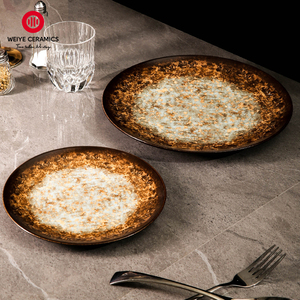
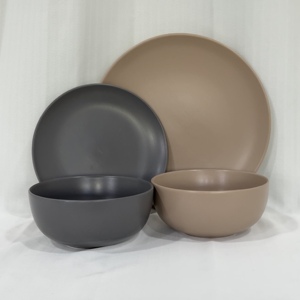
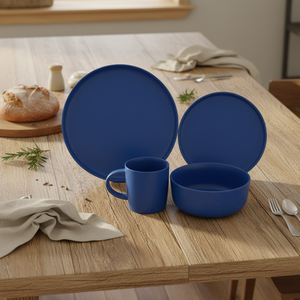
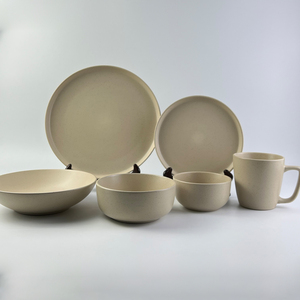
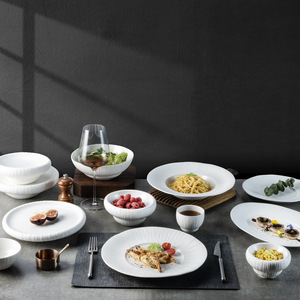
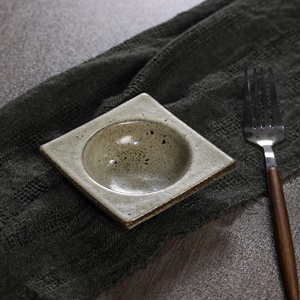
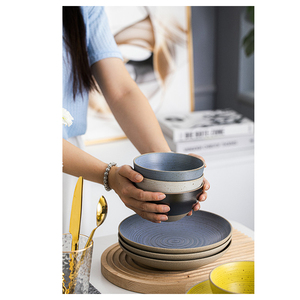
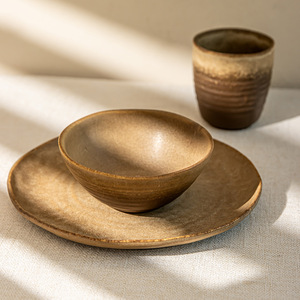
Built upon three decades of ceramic engineering, our integrated plant operates under strict ISO QA/QC protocols to serve volume buyers worldwide.
Eliminate supply chain friction. From raw clay refinement to custom glaze formulation and automated tunnel firing, we manage every ceramic production vector in-house.
Our dedicated mold laboratory translates 2D CAD files and 3D renders into plaster master molds within 15–25 working days. Precision shrinkage calculations ensure tight dimensional tolerances across complex geometric serveware.
Develop proprietary matte, high-gloss, crackle, or organic reactive glazes. All formulations are guaranteed 100% lead-free, cadmium-free, and compliant with US FDA, EU 84/500/EEC, and California Proposition 65 standards.
Fired in computer-monitored shuttle and tunnel kilns above 1280°C. Our stoneware body achieves water absorption levels under 0.5%, yielding superior chip resistance, mechanical strength, and thermal shock tolerance (ΔT ≥ 180°C).
Complete turn-key OEM services including customized backstamps, laser engraving, full-color gift boxes, mail-order drop-test inner cartons, barcode stickers, and palletized shipping ready for retail distribution.
Understanding material performance characteristics is essential for commercial purchasing officers. The table below outlines how our high-fired OEM stoneware compares with standard commercial ceramics.
| Technical Parameter | ARTWAY OEM High-Fired Stoneware | Standard Earthenware / Low-Temp Ceramic | Fine Porcelain / Bone China |
|---|---|---|---|
| Firing Temperature | 1250°C – 1290°C (Vitrified) | 1000°C – 1150°C (Non-vitrified) | 1300°C – 1400°C |
| Water Absorption Rate | < 0.5% (Non-porous) | 3.0% – 10.0% (Porous) | < 0.1% (Vitrified) |
| Thermal Shock Resistance | Oven-to-Table Safe (ΔT 180°C) | Low (Prone to crazing/cracking) | Moderate to High |
| Dishwasher & Microwave Safe | 100% Commercial Grade Safe | Limited (Glaze degrade over time) | Yes (Without metallic rims) |
| Edge Chip Resistance | High (Reinforced Rim Geometry) | Low (Soft body matrix) | Moderate (Brittle thin edges) |
| Surface Glaze Hardness | Mohs 6.5+ (Cutlery Mark Resistant) | Mohs 4.0 – 5.0 | Mohs 7.0 |
| Glaze Safety Compliance | Lead & Cadmium Free (FDA, Prop 65) | Varies by supplier | Lead & Cadmium Free |
In the contemporary global tabletop and houseware ecosystem, stoneware serveware has transitioned from a traditional utilitarian category into a strategic focal point for retail buyers, hospitality purchasing directors, and brand developers. As consumer preferences shift toward authentic, tactile, and aesthetically expressive dining experiences, procurement managers face a dual challenge: maintaining rigorous commercial durability standards while fulfilling demand for bespoke, artisan-inspired designs.
This comprehensive technical white paper analyzes the material engineering, production innovations, procurement trends, and quality verification frameworks required to successfully execute OEM (Original Equipment Manufacturing) and ODM (Original Design Manufacturing) stoneware serveware programs on a global scale.
Stoneware occupies a unique metallurgical position within ceramic classification. Characterized by a dense, vitrified body composed of natural ball clay, kaolin, feldspar, and quartz, high-fired stoneware achieves its physical properties through liquid-phase sintering during high-temperature kiln cycles.
Unlike earthenware—which remains porous and requires thick glazes to prevent fluid absorption—stoneware fired between 1250°C and 1290°C undergoes chemical phase transformation. The glass-forming feldspar melts, filling intermolecular voids between quartz crystals and clay silicate matrices. The result is a ceramic structure with a water absorption rate under 0.5%, conferring superior mechanical density and chemical inertness.
Global ceramic tableware procurement is undergoing structural realignments driven by supply chain diversification, trade policies, and evolving sustainability standards. Professional buyers must navigate several macro trends when selecting OEM/ODM partners:
A. Regional Diversification & Tariff Risk Mitigation: Global importers are actively establishing secondary manufacturing bases outside traditional single-source regions to hedge against geopolitical tariffs, anti-dumping duties, and freight bottlenecks. Thailand has emerged as a premier ceramic manufacturing hub due to its rich natural clay reserves, established ceramic infrastructure, skilled artisan labor force, and favorable international trade agreements.
B. The Rise of Micro-Textured & Reactive Glazes: Modern foodservice operators and retail consumers are abandoning uniform, high-gloss white ceramic plates in favor of organic textures, satin matte glazes, and reactive glaze effects. Reactive glazing involves metal oxide interactions (such as iron, copper, cobalt, and titanium) during the cooling phase of firing, producing unique color gradations on every piece while maintaining identical structural specs.
C. Sustainability & Closed-Loop Clay Reclamation: Enterprise buyers now mandate environmental accountability throughout the manufacturing lifecycle. Leading stoneware factories implement closed-loop water filtration, heat recovery systems on continuous tunnel kilns, and zero-waste greenware recycling—where unfired clay scraps are re-slurried and reintroduced into slip-casting tanks.
Executing a custom stoneware serveware program requires meticulous project staging to guarantee that physical production matches digital design intent without compromising yield rates or unit costs.
Analysis of 3D CAD models, target unit weight, rim thickness, stackability index, and shrinkage rates (typically 12–15%).
In-house creation of plaster working molds, glaze swatch matching against Pantone / physical references, and pilot kiln firing.
Automated forming or slip casting, spray glazing, high-temperature firing, AQL 2.5 inspection, and drop-test packaging.
By establishing rigorous quality gates between each phase, brand owners prevent costly re-tooling delays and ensure high mass-production yields.
Answers to common commercial, technical, and logistical questions from professional buyers and importers.
Our factory supports low MOQs compared to massive commodity plants. Standard OEM runs begin at 500 to 1,000 pieces per shape and glaze finish. Existing factory shapes can be mixed within a single container load to optimize shipping efficiency and reduce unit landed costs.
Plaster mold development and initial fired sample approval typically require 15 to 25 working days after 2D/3D design confirmation. Mass production normally takes 35 to 50 days, depending on glaze complexity, decoration techniques (such as decals or hand painting), and total order volume.
Yes. All raw clay formulations and glazes are 100% lead-free, cadmium-free, and engineered for food contact safety. Our high-fired stoneware is fully certified for commercial dishwashers, microwave ovens, and conventional baking ovens up to 220°C (425°F). Formal lab test reports (SGS, Intertek, Bureau Veritas) are provided per order.
We utilize computer-controlled automated glaze slurry mixing tanks, digital viscosity meters, and spectrophotometer color analysis. Archived physical color master tiles are preserved for every OEM client, ensuring strict batch-to-batch color matching across initial runs and re-orders.
We offer customized packaging solutions ranging from heavy-duty bulk master cartons with corrugated cell dividers to ISTA-certified 3A drop-test e-commerce mail-order packaging. All master pallets are corner-boarded and stretch-wrapped for maritime container loading.
Absolutely. OEM serveware can be customized with underglaze or overglaze backstamp logos, laser-etched branding, custom glaze colors, hung tags, barcoded color stickers, and fully printed 4-color retail gift boxes according to your exact brand guidelines.
Partner directly with an established ceramic manufacturer. Send us your CAD drawings, reference images, or project target pricing—our engineering team will deliver a comprehensive OEM production quote within 24 hours.