Precision-engineered bakeware produced in our Samut Sakhon factory. Designed for optimal thermal stress management, extreme durability, and modern aesthetic presentation.
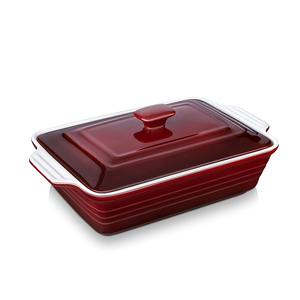
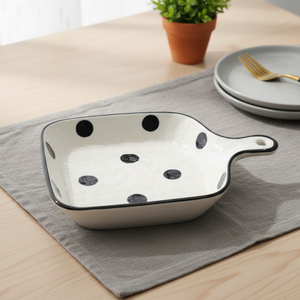
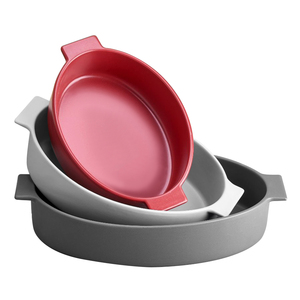
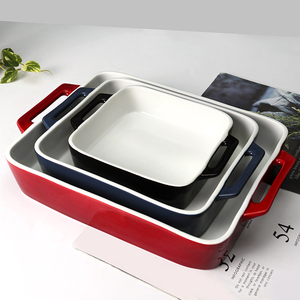
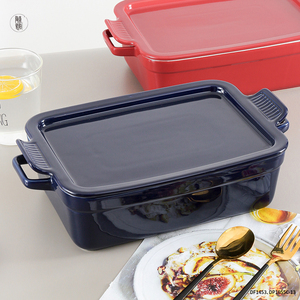
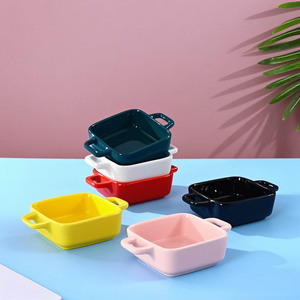
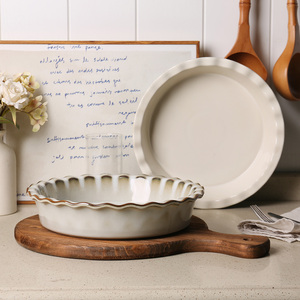
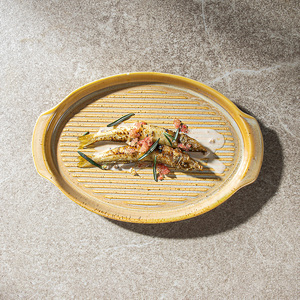
In the global tabletop and bakeware supply chain, selecting a certified custom OEM ceramic dish factory requires rigorous auditing of raw material control, thermal processing technology, and regulatory compliance. ARTWAY Company Limited, established in 1993 with a registered capital of 30 million Baht, operates a state-of-the-art 10,000 square meter manufacturing plant situated in Samut Sakhon, Thailand. Unlike trading intermediaries or fragmented assembly workshops, ARTWAY delivers completely integrated, in-house production ranging from initial 3D mold sculpting and raw kaolin purification to automated glaze spraying and high-temperature tunnel kiln firing.
Operating with a workforce of over 200 skilled ceramic technicians and ceramic engineers, ARTWAY yields an annual production capacity surpassing 5 million premium stoneware and ceramic pieces. Our specialized focus centers on professional OEM and private-label programs for global retail chains, kitchenware importers, and hospitality supply distributors across Europe, North America, Japan, Australia, and the Middle East. By maintaining total ownership of our physical infrastructure and glaze laboratories, we eliminate the supply chain vulnerabilities, quality drift, and cost markups common in outsourced manufacturing networks.
| Manufacturing Parameter | ARTWAY Factory Standard | B2B Sourcing Advantage |
|---|---|---|
| Primary Material Composition | High-density stoneware ceramic clay body | Extreme mechanical strength, resistance to micro-cracking and chipping. |
| Firing Temperature Range | 1250°C – 1280°C (High-Temperature Vitrification) | Porosity under 0.5%, non-absorbent to oils, moisture, or food colors. |
| Thermal Shock Resistance | Delta T = 180°C to 220°C water quench test | Safe for direct freezer-to-oven transitions without structural failure. |
| Heavy Metal Compliance | Lead-Free & Cadmium-Free Glazes | Exceeds FDA CPG 7117.06/07, California Prop 65, EU 2005/31/EC standards. |
| OEM Tooling Lead Time | 15 – 25 Working Days (3D Model to Physical Prototype) | Accelerated go-to-market cycle for private-label seasonal collections. |
Key technological, environmental, and design shifts driving global buyer demand in the stoneware and bakeware manufacturing sector over the next decade.
Global consumer awareness regarding chemical leaching has forced a total migration away from heavy-metal fluxes. Modern OEM factories must utilize advanced mineral glazes formulated with natural feldspar, quartz, and organic oxides to ensure 100% lead and cadmium toxicity elimination while preserving brilliant chromatic depth.
Future kitchenware demands bakeware that effortlessly transitions from -20°C freezer storage directly into 250°C convection ovens. By blending lithium-bearing minerals like spodumene into our stoneware formulation, ARTWAY reduces the coefficient of thermal expansion (CTE), setting a new baseline for shatterproof bake dishes.
Uniform mono-color glazes are rapidly giving way to organic, multi-layered reactive glazes and tactile semimatte finishes. Through dual-stage dip and spray application techniques, ceramic dish factories can achieve bespoke, hand-crafted aesthetic variances across mass-produced commercial batches.
With direct-to-consumer sales expanding rapidly, traditional bulk wooden crate shipping is insufficient. Modern OEM factories must integrate structural packaging engineering, delivering items in ISTA-certified drop-test cartons featuring expanded polyethylene (EPE) custom molded inserts.
To mitigate geopolitical risk and punitive tariff exposure, international buyers are rebalancing procurement portfolios toward established manufacturing hubs in Southeast Asia. Thailand's rich natural kaolin deposits and mature port logistics position it as a premium alternative for reliable ceramic production.
Modern consumers seek versatile kitchen tools. Leading ceramic factories now integrate silicone seal rims, bamboo hot-pads, and stainless steel server handles into ceramic casserole sets, demanding precise dimensional tolerance control (+/- 1.5mm) during high-temperature firing.
Manufacturing high-performance ceramic bakeware differs fundamentally from producing decorative novelty items or basic earthenware table accessories. Baking dishes, casserole pans, and au gratin pans are subjected to aggressive cyclic mechanical strain, moisture exposure, and extreme heat shock. At ARTWAY's Samut Sakhon factory, our OEM development process follows a strict 6-stage engineering protocol:
Raw ball clay, kaolin, quartz, and feldspar are wet-milled in continuous ball mills to achieve a fine particle distribution (less than 325 mesh residue <0.5%). De-airing pug mills compress the clay mass to extract microscopic air pockets that would otherwise cause explosive structural fracture during kiln firing.
For complex geometry dishes featuring integrated handles or asymmetrical rims (such as 9x13 casserole pans with lid channels), high-density gypsum slip casting is deployed. Flat baking trays and uniform square dishes utilize automated RAM pressing or jiggering to guarantee exact dimensional uniformity and consistent wall thickness (+/- 1.0mm).
Formed pieces undergo an initial low-temperature burn to vaporize organic binder residues, chemically drive off bonded water molecules, and harden the greenware body into a porous 'biscuit'. This stage creates the precise capillary structure necessary to absorb liquid glaze evenly.
Biscuits are glazed via automated robotic sprayers or precision hand-dipping to maintain a controlled glaze coating thickness of 0.3mm to 0.5mm. For speckling, polka-dot decals, or multi-tone reactive finishes, secondary glazes or high-fire ceramic decals are applied prior to glost firing.
Items pass through a 60-meter continuous tunnel kiln over a 14-hour thermal cycle. Firing at 1280°C induces complete body vitrification, fusing silica and clay minerals into a dense, non-porous, stone-like matrix with zero open porosity.
Fired pieces undergo 100% visual defect grading (eliminating pinholes, glaze crawling, or warping), followed by AQL 2.5 major / 4.0 minor sampling for thermal shock testing (220°C oven to 20°C water bath), metal marking resistance, and ISTA 3A packaging validation.
Direct technical and commercial answers for OEM buyers, importers, brand managers, and quality assurance directors.
ARTWAY provides highly flexible MOQ options compared to rigid mass-production plants. For custom shapes requiring new mold development, our standard starting threshold is typically 1,000 to 2,000 pieces per shape/glaze. However, for existing catalog shapes with custom glaze colors or logo decals, we can accommodate runs starting at 500 pieces per item. Furthermore, multiple SKUs can be mixed within a single 20-foot or 40-foot container load to minimize inventory holding costs for developing brands.
Once technical 2D/3D CAD drawings are approved, physical plaster molds and initial fired sample prototypes require 15 to 25 working days. Mass production lead times generally range between 35 and 50 days following sample confirmation and deposit receipt, depending on glaze complexity, decal application, and total order volume. Repeat orders utilizing archived tooling can be expedited significantly.
Yes, absolutely. All stoneware formulations and glazes manufactured at our Thailand plant are rigorously formulated without lead, cadmium, or toxic heavy metals. Our bakeware fully complies with international food-contact safety frameworks including US FDA CPG 7117.06/07, California Proposition 65, EU Regulation (EC) No 1935/2004, and German LFGB. Products are fully rated safe for high-temperature ovens (up to 260°C / 500°F), microwave ovens, dishwashers, and commercial freezers. Official lab testing documentation from SGS or TÜV is provided upon request per shipment batch.
Glaze color drift is a common challenge in ceramic production. We mitigate this through precise digital glaze batching, automated specific gravity and viscosity measurement of raw liquid glazes, and computer-controlled multi-zone temperature monitoring inside our kilns. Every production run is matched against an archived master color tile under standardized D65 lighting environments, keeping delta E color variance well within commercial tolerance standards.
Yes. We provide complete private-label packaging solutions, including 4-color printed offset gift boxes, mail-order brown corrugated cartons, custom EPE foam inserts, barcode labeling, and hangtags. Our packaging configurations undergo rigorous internal ISTA 1A/3A drop tests (dropping cartons from heights up to 76cm across 10 impact points) to guarantee zero transit damage during drop-shipping or international container transport.
Located in Samut Sakhon, Thailand, our factory is strategically positioned near major maritime export terminals, specifically Bangkok Port (Klong Toey) and Laem Chabang Deep Sea Port. We support standard international trade terms including FOB Bangkok/Laem Chabang, CIF destination port, or EXW factory floor. Our dedicated export documentation department handles all Form E, Certificate of Origin, bill of lading, and customs declarations efficiently.
Request our latest product catalog, factory audit documentation, or schedule a technical drawing consultation with our ceramic engineering team today.