Enterprise OEM Manufacturing Capabilities: The ARTWAY Ceramic Advantage
Established in 1993 with a registered capital of 30 million THB, ARTWAY Company Limited has operated at the forefront of technical ceramics and stoneware production for over three decades. Headquartered in Samut Sakhon, Thailand, our facility spans 10,000 square meters of integrated manufacturing space, encompassing CAD/CAM mold tooling, specialized clay formulation, semi-automated slip-casting, high-pressure jiggering, environmental glazing chambers, and computer-controlled tunnel kilns.
Unlike trading intermediaries, ARTWAY manages an end-to-end proprietary supply chain. Our engineering team collaborates directly with global housewares brands, commercial culinary distributors, and high-volume retail chains across North America, Europe, Australia, and Japan. By controlling every stage of manufacturing—from raw ball clay refining to final AQL 2.5 Master Carton packing—we guarantee precise dimensional stability, flawless glaze adhesion, and zero heavy metal leaching in high-temperature culinary applications.
Information Gain Insight: The structural reliability of a ceramic casserole dish relies on matching the Coefficient of Thermal Expansion (CTE) between the ceramic body and the vitreous glaze. ARTWAY’s in-house laboratory controls glaze formulation down to ±0.02% CTE variance, preventing micro-crazing and thermal shock fractures up to 250°C (482°F).
High-Density Stoneware Body
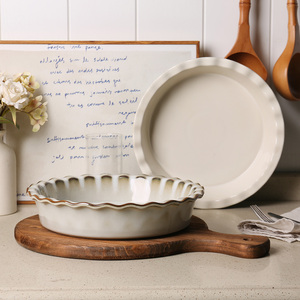
Fired at 1250°C to 1300°C, our stoneware achieves a water absorption rate under 0.5%, making it non-porous, oven safe, freezer safe, and impervious to food odor absorption.
Non-China Sourcing Benefits
Produced in Samut Sakhon, Thailand. Global buyers benefit from favorable tariff structures, zero anti-dumping duties in key markets, and complete supply chain transparency.
Certified Food Safety
100% lead-free and cadmium-free formulations compliant with U.S. FDA 21 CFR, California Proposition 65, EU Directive 84/500/EEC, and German LFGB regulations.
Future Manufacturing Trends & Technical Innovations in Ceramic Bakeware
The global ceramic bakeware market is undergoing a structural transition driven by changes in consumer cooking habits, culinary aesthetics, and stringent international safety standards. B2B procurement teams must align their OEM strategies with these key industry shifts:
1. Thermal Shock Engineering (Delta T ≥ 220°C)
Modern consumers demand seamless "Freezer-to-Oven-to-Table" transitions. ARTWAY addresses this by incorporating spodumene and petalite minerals into clay bodies to lower thermal expansion. This guarantees structural integrity when moving a casserole dish from a -20°C freezer environment straight into a 200°C convection oven.
2. Reactive & Matte Glaze Chemistry
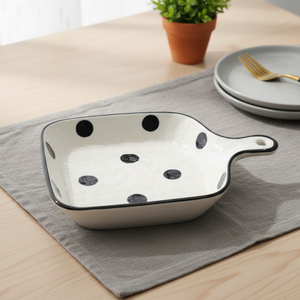
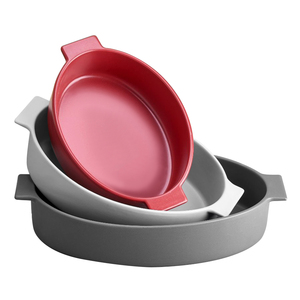
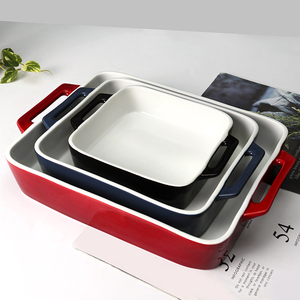
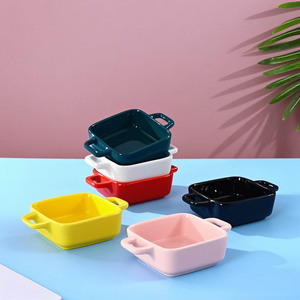
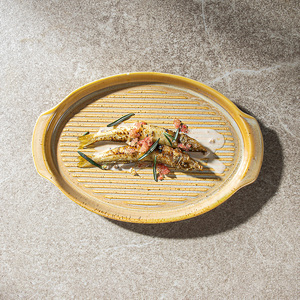
Commercial tableware is shifting away from flat, glossy monoculture glazes toward organic, semi-matte, and speckle reactive glazes. Through controlled phase separation during the cooling cycle in our kilns, ARTWAY delivers unique artisan textures with commercial-grade scratch resistance.
3. Multi-Functional Ergonomic Tooling
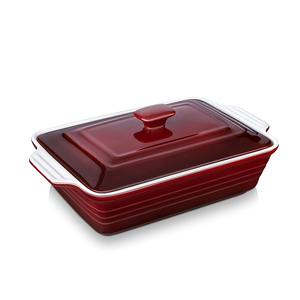
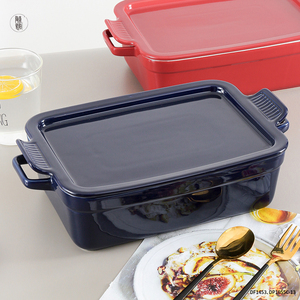
Multi-use bakeware designs—such as casserole dishes featuring precision-fitted platter lids that double as serving trays or trivets—reduce storage footprints. Engineered oversized loop handles ensure safe gripping even with bulky thermal oven mitts.
4. Sustainable Kiln Technology
Regulatory frameworks in Europe and North America prioritize green supply chains. ARTWAY operates energy-efficient heat recovery kilns, recycles 95% of unfired clay body waste, and utilizes closed-loop water treatment systems, reducing carbon intensity per unit.
Material Performance Matrix: Ceramic Stoneware vs. Alternatives
Selecting the optimal material for commercial bakeware requires balancing thermal performance, weight, durability, and customization capabilities. Below is an engineering comparison matrix for procurement decision-makers:
| Performance Metric |
ARTWAY High-Fired Stoneware |
Standard Porcelain |
Enameled Cast Iron |
Borosilicate Glass |
| Thermal Shock Tolerance |
High (Up to 220°C ΔT) |
Moderate (120°C - 150°C) |
High (Requires slow heat) |
Very High (200°C+ ΔT) |
| Heat Retention Index |
Superior (Dense mass) |
Moderate |
Maximum |
Low to Moderate |
| Weight-to-Volume Ratio |
Balanced / Ergonomic |
Lightweight |
Extremely Heavy |
Moderate |
| OEM Design Flexibility |
Unlimited Glaze & Shapes |
Limited Glazes / High Temp |
Limited Mold Complexity |
Forming Restricted |
| Commercial Dishwasher Wear |
Excellent (Non-scratch glaze) |
Good |
Chipping Prone Edges |
Prone to Etching |
| Food Leaching Safety |
100% Inert Glaze (Lead-Free) |
Inert |
Enamel degradation risk |
Inert |
Structured OEM/ODM Manufacturing Process
To ensure total risk mitigation and product consistency, ARTWAY executes a rigorous 5-stage quality management protocol for every custom manufacturing contract:
01
Design & 3D CAD
Feasibility analysis, shrinkage calculation, and 3D digital modeling.
02
Mold Tooling
Precision plaster master molds and case mold development.
03
Lab Glazing
Glaze matching, dip spraying, and initial thermal chamber testing.
04
High Firing
1280°C firing for optimal vitrification and structural strength.
05
AQL 2.5 QC
Strict dimensional check, thermal shock testing, and export packing.