Precision-engineered high-fired ceramic bakeware, casserole dishes, and oven-to-table serveware certified for international retail chains and hospitality buyers.
An executive analysis of thermal dynamics, clay formulation, and global procurement strategies for enterprise pottery buyers.
The global ceramic cookware and tableware market is undergoing a structural evolution. Importers, tier-one retail conglomerates, and commercial hospitality suppliers are balancing unit economics with strict food safety compliance (FDA, EU 1935/2004, LFGB, California Proposition 65). Leading manufacturing hubs—most notably China’s industrial clusters in Chaozhou, Liling, and Dehua—have consolidated raw material supply chains, automated slip-casting, and continuous tunnel kiln operations. This technical integration allows premier OEM factories to deliver exceptional thermal shock tolerance and glaze consistency at high-volume price points.
Concurrently, strategic manufacturing diversification across regions like Southeast Asia (including Thailand) offers specialized stoneware production capabilities. Industrial infrastructure in these regional centers excels in artisanal reactive glazes, semi-matte finishes, and hand-painted decorative porcelain. For commercial buyers, understanding raw material physics—specifically the balance between Kaolin clay, Feldspar, and Quartz—is vital for procuring ceramic lines capable of surviving commercial kitchen dishwasher cycles and high-temperature oven baking.
To optimize product development and margin structures, global buyers must distinguish between the core ceramic body classifications:
Quantitative benchmark matrix for evaluating high-performance commercial ceramic bakeware and tableware.
| Performance Parameter | Stoneware Bakeware Standard | Commercial Porcelain Standard | Testing & Compliance Protocol |
|---|---|---|---|
| Firing Temperature | 1250°C - 1300°C (High Vitrification) | 1280°C - 1380°C | Pyrometric Cone Verification (ISO 10545-1) |
| Water Absorption | ≤ 0.5% (Non-porous body) | ≤ 0.1% (Fully vitrified) | Vacuum Water Absorption Test (ASTM C373) |
| Thermal Shock Resistance | Withstands ΔT of 220°C (Oven to Freezer safe) | Withstands ΔT of 180°C | Quenching Test (BS EN 1183) |
| Heavy Metal Leaching | Lead: < 0.05 mg/L | Cadmium: < 0.01 mg/L | Lead: Non-detectable | Cadmium: Non-detectable | Atomic Absorption Spectrometry (FDA CPG 7117.06) |
| Dishwasher Abrasion | 5000+ Cycles (Zero Glaze Micro-fissuring) | 10000+ Cycles | Commercial Dishwasher Simulation (EN 12875) |
| Microwave Compatibility | Non-reactive mineral glazes (Zero arcing) | Zero metallic oxides | Microwave Radiation Safety Test (BS EN 15284) |
Key market shifts shaping product development, aesthetic finishes, and supply chain sustainability over the next decade.
Consumer demand is moving away from uniform high-gloss monochromatic glazes toward organic, tactile finishes. Industrial glaze labs are utilizing reactive mineral formulations—incorporating iron oxides, rutile, and cobalt—that produce unique speckled color variations during high-fire reduction, delivering bespoke artisan aesthetics at scale.
Major European and North American buyers require transparent ESG metrics. Modern ceramic manufacturing centers are replacing traditional coal burners with natural gas tunnel kilns, waste-heat recycling systems, and reclaimed clay filtration systems, reducing embodied carbon per piece by up to 35%.
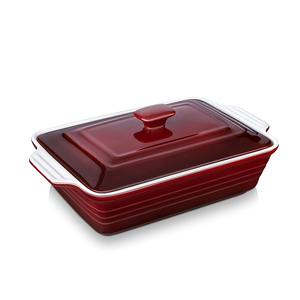
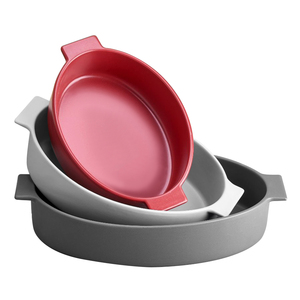
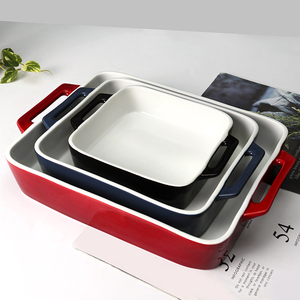
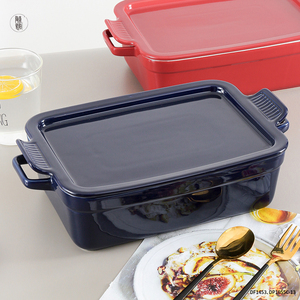
Driven by compact urban living and hospitality labor optimization, functional bakeware designs must perform seamlessly across hot-prep ovens, microwave warming, cold storage, and direct tabletop presentation. Features such as wide-grip handles, nesting profiles, and dual-purpose platter lids (as seen in our 9x13" casserole systems) lead order volumes.
With the rise of e-commerce home delivery (Amazon FBA, Wayfair, Target.com), factory packaging engineering has shifted from standard bulk master cartons to ISTA-6A drop-test certified gift boxes, utilizing molded pulp shell supports and double-wall corrugated buffers to minimize transit breakage.
Inside our integrated production facility: How end-to-end manufacturing oversight safeguards brand integrity.
Our facility houses an independent master-mould tooling shop staffed by ceramic sculptors and CAD engineers. By utilizing 3D-printed master models and high-density plaster case moulds, we shorten sample development cycles from 45 days down to 15–25 working days. Whether reproducing precise client technical drawings or developing new geometric contours, tooling dimensions are calculated with exact shrinkage coefficients (typically 10%–14% depending on clay body composition).
Glaze integrity is paramount for food-contact ceramic cookware. Our chemical engineers mix raw mineral glazes free of lead, cadmium, and hazardous heavy metal solubles. Every glaze batch undergoes strict X-ray fluorescence (XRF) spectrographic screening. We maintain archived physical glaze tiles for every OEM production run, guaranteeing 100% color matching and sheen consistency across repeat orders years apart.
Quality assurance is embedded at every station along our continuous production line:
Clear, technical answers to common queries regarding minimum order quantities, compliance, OEM tooling, and international logistics.
Our standard MOQ for custom OEM shapes and exclusive glazes ranges from 1,000 to 3,000 pieces per design, depending on physical size and mold complexity. For existing factory-owned shapes with custom color glazes or logo backstamps, lower MOQs (500–1,000 units per colorway) are supported. Mixed-item full container loads (FCL 20GP/40HQ) can be consolidated across multiple product lines to optimize freight costs.
The timeline spans three key phases: (1) Technical drawing approval and 3D mold setup takes 5–7 days. (2) Plaster mold creation, bisque firing, glaze matching, and sample delivery requires 15–25 working days. (3) Upon client sample approval and deposit confirmation, mass production and high-temperature kiln firing takes 35–50 days, depending on seasonal kiln schedule and total order volume.
Yes. All raw clay bodies and glazes are 100% lead-free, cadmium-free, and comply strictly with US FDA CPG 7117.06/07, European Regulation (EC) No 1935/2004, German LFGB, and California Proposition 65 standards. Products fired at 1280°C exhibit near-zero porosity (< 0.5%), rendering them safe for conventional ovens up to 500°F (260°C), commercial dishwashers, microwave heating, and freezer storage without risk of cracking or glaze crazing.
Absolutly. We offer full private-label customization including laser-etched bottom backstamps, underglaze decal logos, debossed branding, custom Pantone color glaze matching, and bespoke retail packaging. Our packaging options include color gift boxes, mail-order e-commerce packaging with high-density EPE foam, hangtags, and barcoded inner/master cartons compliant with major retail warehousing standards.
We engineer our export packaging to maintain transit breakage rates under 0.5%. Every shipment undergoes ISTA-1A/6A packaging drop tests before container seal. In the rare event of damage or non-conforming items upon container discharge, our quality assurance team provides immediate root-cause evaluation and issues free replacements or credit refunds per our standard formal B2B quality guarantee agreement.
We regularly execute contracts under FOB (Shenzhen, Guangzhou, Ningbo, Qingdao, or Bangkok/Laem Chabang depending on production facility base), CIF, CFR, and DDP terms. Our export documentation team manages full customs clearance papers, Certificates of Origin (Form E, Form F, Form A), bill of lading issuance, and third-party laboratory test report attestations (SGS, TUV, Intertek).
Contact our technical sales engineers for instant wholesale pricing, custom OEM mold consultations, and complimentary factory sample kits.
Send an Inquiry