
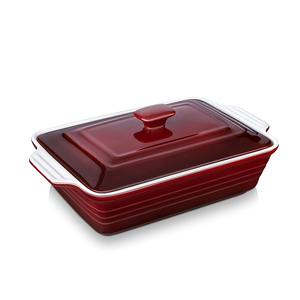
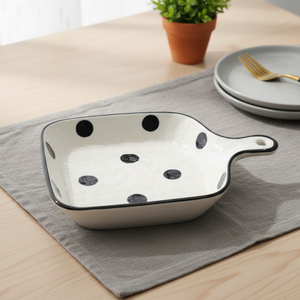
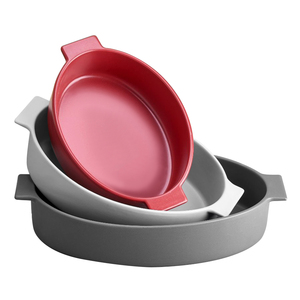
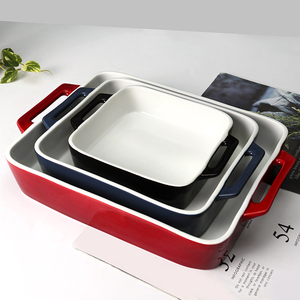
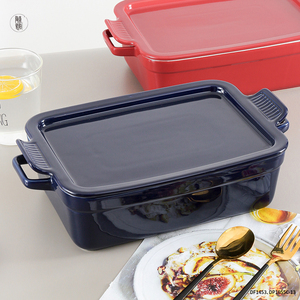
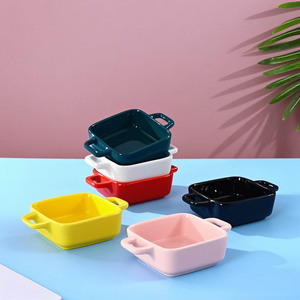
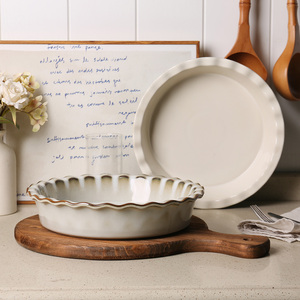
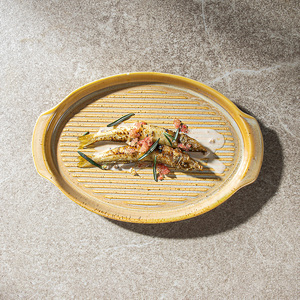
1. Global Supply Chain Dynamics in High-Fired Stoneware & Ceramic Bakeware
In the contemporary B2B houseware procurement ecosystem, international buyers face complex supply chain dynamics driven by rising consumer demand for eco-friendly, non-toxic, and aesthetic oven-to-table cookware. Navigating OEM (Original Equipment Manufacturer) and ODM (Original Design Manufacturer) partnerships requires a granular understanding of raw material composition, firing physics, and glaze chemistry. As a premier kitchenware manufacturing hub, China’s industrial ceramic infrastructure provides unmatched scalability, material purity, and cost-efficiency.
Custom stoneware kitchenware differs significantly from standard earthenware or low-fired ceramics. Stoneware is fired at ultra-high temperatures ranging between 1200°C and 1350°C. This thermal vitrification process fuses the clay body into a dense, non-porous structure with water absorption rates strictly under 0.5%. Consequently, high-fired stoneware offers superior mechanical strength, chip resistance, and thermal endurance—making it the material of choice for commercial baking dishes, hospitality tableware, and luxury retail collections.
2. Material Science: Glaze Chemistry, Thermal Shock Resistance, and Safety Standards
To withstand direct thermal shock (such as transitioning a 9x13 inch casserole dish directly from a freezer into a 230°C preheated oven), precise formulation of the ceramic body and matching glaze thermal expansion coefficients (COE) is required. Misalignments between body COE and glaze COE lead to structural defects such as crazing, shivering, or catastrophic thermal stress failure.
Our in-house ceramic engineering division utilizes computer-controlled raw material batching of refined kaolin, feldspar, and quartz silica. Glaze formulations are engineered without lead, cadmium, or toxic heavy metal fluxes, ensuring full regulatory compliance with US FDA 21 CFR 175.300, California Proposition 65, European Commission Regulation No 1935/2004, and German LFGB food contact requirements. Advanced reactive glazes, semi-matte finishes, and custom decal application methods are systematically controlled using digital spectrographic color matching to guarantee zero color variance between mass production batches.