Direct OEM factory exports with custom glazes, high thermal shock tolerance, and food-safe certifications
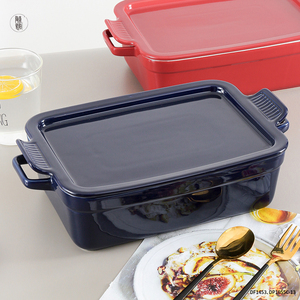
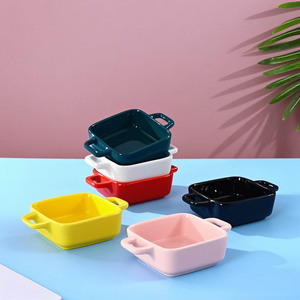
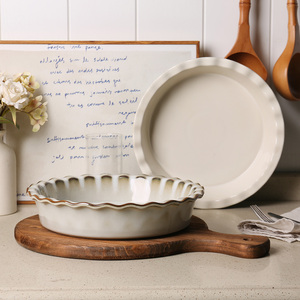
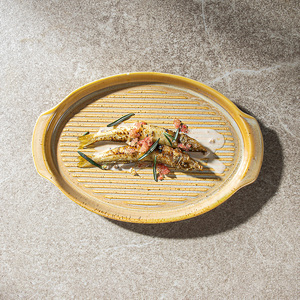
An Engineering Perspective on Sourcing Premium Ceramic & Stoneware Bakeware
The global cookware and bakeware sector is undergoing a profound paradigm shift. Modern consumers and commercial food service operators are moving away from traditional synthetic non-stick chemical coatings toward non-toxic, high-performance ceramic and stoneware solutions. Sourcing teams seeking the China Best Custom Cookware Manufacturers & Factories face the critical challenge of evaluating OEM partners not merely on unit cost, but on material purity, thermal shock resilience, glaze integrity, and ethical compliance.
Core Information Gain Insight: Unlike standard earthenware ceramics fired at temperatures below 1100°C, commercial-grade custom stoneware requires high-temperature vitrification between 1250°C and 1320°C. This sintering process eliminates porosity (water absorption < 0.5%), yielding zero-absorption bodies that withstand severe thermal shock delta-T (ΔT ≥ 200°C) without micro-crazing or structural degradation.
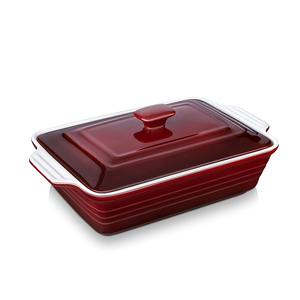
When procuring custom stoneware bakeware, rectangular casseroles, au gratin dishes, and ceramic dinnerware sets, international importers must audit factory capabilities across five key technical dimensions: raw clay refinement, glaze chemistry stabilization, precision mold engineering, automated pressure casting/jiggering, and controlled tunnel-kiln atmosphere management.
Why leading global retailers, houseware brands, and hospitality distributors partner with our manufacturing ecosystem
From initial CAD modeling and gypsum case mold making to custom glaze chemistry synthesis and high-heat firing, every manufacturing stage is controlled under one 10,000 sqm facility. Eliminating subcontracting guarantees strict color batch matching and dimensional consistency.
All body clay formulations and glazes are 100% lead-free, cadmium-free, and compliant with FDA, EU Regulation No. 1935/2004, LFGB, and California Proposition 65 standards. Batch samples undergo regular acid-leaching laboratory testing prior to shipment authorization.
Our glaze technicians specialize in complex aesthetic finishes including reactive speckle glazes, silk-touch semi-matte surfaces, high-gloss vitrified porcelain glazes, embossed relief work, and custom-printed high-fire ceramic decals engineered not to fade after thousands of commercial dishwasher cycles.
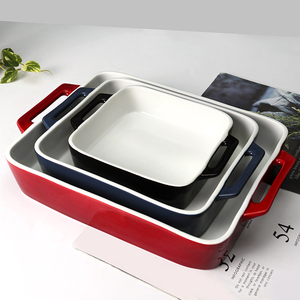
We break the rigid high-volume barrier typical of traditional mass-production ceramic plants. By offering flexible MOQs and enabling multi-item container consolidation across diverse bakeware shapes and colorways, we empower both boutique lifestyle brands and global chain stores.
Ceramic export requires advanced packaging structural design. We supply mail-order drop-test pass inner boxes, custom high-density EPE foam cushions, barcode-labeled color gift packaging, and heavy-duty corrugated master cartons configured for optimal pallet loading efficiency.
Strategic insights for procurement directors aligning product lines with emerging consumer preferences
Global regulatory bans on PTFE, PFOA, and forever chemicals are accelerating the consumer shift toward naturally inert ceramic stoneware. High-fired stoneware bakeware provides completely non-reactive cooking surfaces that preserve pure food flavor without chemical leaching risk at elevated temperatures.
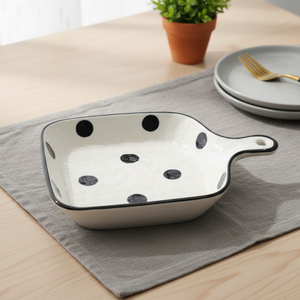
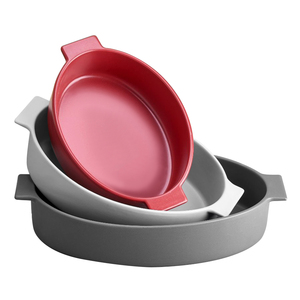
Modern lifestyle trends prioritize multi-functional cookware that seamlessly transitions from baking in 260°C ovens to elegant tabletop presentation, and straight to the freezer. Features like integrated wide handles, platter lids (double-duty serving trays), and space-saving stackable profiles dominate buyer specifications.
Consumers demand the handcrafted visual texture of studio pottery combined with commercial durability. Advanced mass-production reactive glaze techniques—utilizing mineral crystallization during kiln cooling—create unique glaze variations on each piece while maintaining strict physical dimensional tolerance.
High-density stoneware bodies retain heat significantly longer than thin-walled metal bakeware. Modern factory body formulations optimize wall thickness to achieve uniform heat distribution, preventing hot spots and reducing energy consumption during extended baking cycles.
In response to global logistics fluctuations, major importers are prioritizing OEM factories that support flexible mix-and-match ordering. Sourcing multiple bakeware shapes, colors, and dinnerware SKUs within a single 40ft HQ container minimizes inventory holding costs while maximizing market responsiveness.
Comprehensive comparative data for professional sourcing managers evaluating ceramic cookware categories
| Performance Parameter | High-Fired Stoneware (Our Standard) | Standard Earthenware | Commercial Porcelain | Cast Iron / Enamel |
|---|---|---|---|---|
| Firing Temperature | 1250°C – 1320°C (High Vitrification) | 900°C – 1100°C | 1300°C – 1400°C | 1200°C (Metal Melting) |
| Water Absorption Rate | < 0.5% (Impermeable) | 3.0% – 10.0% (Porous) | < 0.1% (Non-porous) | 0% (Metal) |
| Thermal Shock Tolerance (ΔT) | 200°C to 220°C Shock Resistant | < 120°C (Prone to Cracking) | 150°C to 180°C | High, but thermal shock breaks enamel |
| Microwave & Oven Safe | Yes (up to 260°C / 500°F) | Limited (Microwave heating risk) | Yes | No (Microwave forbidden) |
| Dishwasher Abrasion Resistance | 5000+ Cycles No Glaze Dullness | Low (Glaze crazing occurs) | High | Hand wash recommended |
| Chemical / Acid Leaching Safety | Passes FDA & LFGB Lead/Cadmium | Requires frequent testing | Passes FDA & LFGB | Acidic foods may react with iron |
| Aesthetic Customization Range | Reactive, Matte, Gloss, Decal, Carving | Basic Glaze & Low-temp Decals | Mostly White/Smooth Glaze | Limited Color Enamels |
A transparent, milestone-driven process from technical blueprint to final port departure
Clients submit technical drawings, 3D STEP files, or sample concepts. Our engineers assess shrinkage ratios (10-14%), handle stress loads, and thermal draft angles to optimize mass production feasibility.
Precision plaster models and production case moulds are fabricated in our internal toolroom. First fired samples with matched target glazes are delivered within 15–25 working days for physical evaluation.
Our chemical laboratory formulates custom glazes to match Pantone color codes or physical color swatches. Test tiles undergo thermal shock cycling and abrasion checks before client approval sign-off.
Formed clay bodies pass through automated drying lines into computer-controlled tunnel kilns. Strict AQL Level II inspection protocols check body weight, dimensions, pinhole defects, and glaze tone.
Products are wrapped in protective packaging, fitted into drop-tested retail boxes, packed into master cartons, and palletized for FOB/CIF shipment via ocean freight out of major export ports.
Direct technical answers to common inquiries raised by international buyers and procurement heads
For custom-developed shapes requiring new plaster mold creation, our typical starting MOQ ranges between 1,000 to 2,000 pieces per shape/color combination. However, for existing factory shapes where only glaze color or private label backstamp branding is customized, we support flexible lower MOQs (from 500 pieces), allowing buyers to mix multiple SKUs within a single container load.
Food safety is guaranteed through raw material control and high-temperature vitrification. We formulate glazes strictly using non-toxic mineral components free from lead, cadmium, or heavy metal frits. Every production batch is subjected to leach testing according to FDA guidelines (21 CFR 175.300) and EU Directive 84/500/EEC, with official third-party test reports (SGS, TUV, Intertek) provided per order.
3D CAD modeling and plaster sample mold setup require approximately 7 to 10 days. Fired prototype samples with custom glazes are typically completed within 15 to 25 working days. Once pre-production samples are approved and deposit confirmed, mass production standard lead time is 35 to 50 days, depending on order volume and decoration complexity.
Our ceramic body clay is engineered with specialized low-thermal-expansion minerals (such as spodumene and cordierite additions). This allows our stoneware dishes to safely withstand sudden temperature shifts of up to ΔT = 200°C. Users can safely take a prepared dish from a refrigerated environment (+4°C) directly into a preheated oven up to 260°C (500°F) without risk of thermal stress fractures.
Yes. We have dedicated structural packaging designers who engineer ISTA-1A and ISTA-3A certified mail-order packaging. Options include heavy-duty honeycomb card protection, custom-fit high-density molded EPE foam shells, corrugated drop-test pass inner boxes, and full-color offset printed retail boxes with custom branding and scannable barcodes.
We routinely work under FOB, CIF, CFR, EXW, and DDP trade terms. Major export loading ports include Shenzhen, Ningbo, Qingdao, and specialized ceramic export hubs, offering direct container shipping routes to major ports across North America, Europe, Australia, Japan, and the Middle East.