Catalogue Portfolio
Oven-to-Table Stoneware Cookware Collections
Explore our CE-compliant, high-fired stoneware bakeware and cookware engineered for commercial durability, thermal shock resistance, and non-toxic food service.
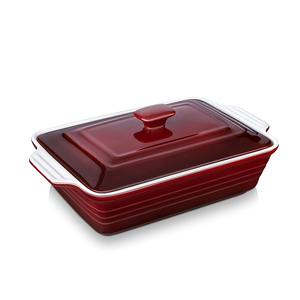
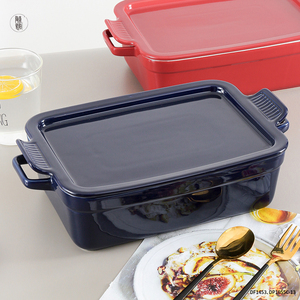
9x13 Inch Rectangular Ceramic Casserole Pan Oven Safe Stoneware Casserole Dish with Lid
Get a Quote
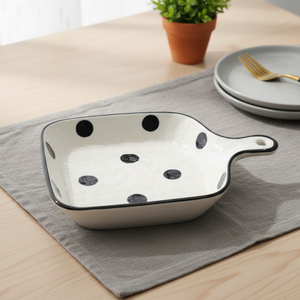
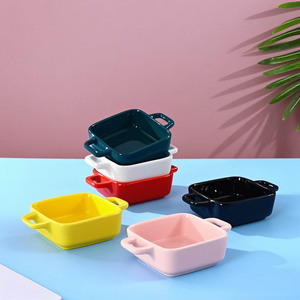
Ceramic Stoneware Square Baking Dish with Handle Black Polka Dot Design Heat Resistant 9 Inch
Get a Quote
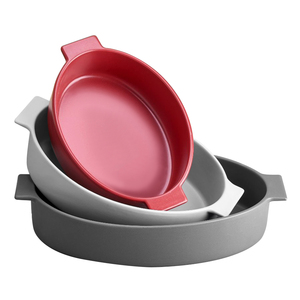
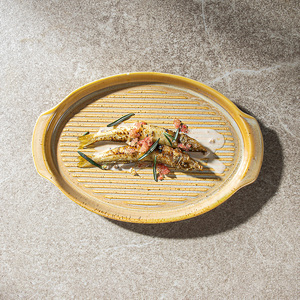
Manufacturer Stoneware Oval Semimatte Au Gratin Dish Baking Pan Ceramic Bakeware Set With Handle
Get a Quote
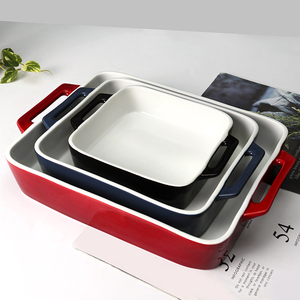
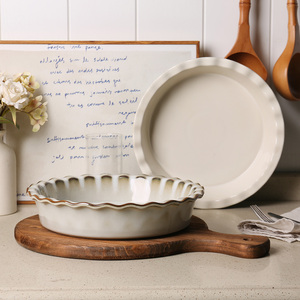
Custom Kitchen Bakeware Set Rectangular Casserole Stoneware Baking Tray Oven Ceramic Dishes
Get a Quote
Rectangular Baking Pan Stoneware Tray Bakeware Set Ceramic Baking Dish with Platter Lid
Get a Quote
Modern Kitchen Dual Handle Design Colorful Stoneware Ceramic Baking Pan Wholesale Baking Dishes
Get a Quote
Wholesale Custom Stoneware Ceramic Bakeware Set Kitchen Baking Tray Cookware Stoneware Dishes
Get a Quote
Premium 11" Oval Stoneware Bakeware Ceramic Baking Pasta Pan With Handles Speckle Glaze Dishes
Get a Quote
30+
Years Industry Expertise (Est. 1993)
10,000m²
Owned Manufacturing Complex
5,000,000+
Annual Piece Production Capacity
100%
CE / EU Food-Contact Compliant
Industry White Paper
CE Certification & Technical Compliance for Global Ceramic Import
Navigating international regulatory frameworks for food-contact materials requires total control over chemical composition, thermal dynamics, and mechanical durability.
Information Gain Insight: The CE mark on stoneware cookware guarantees that the product complies with strict EU directives regarding lead and cadmium migration, thermal shock safety (EN 13834 / ISO 6486 standards), and structural integrity under prolonged thermal expansion.
For global procurement officers, hospitality chains, and retail buyers, importing stoneware bakeware involves stringent risk management. Non-compliant ceramic cookware poses immense liabilities due to heavy metal leaching (Lead $Pb$ and Cadmium $Cd$) when exposed to acidic food products under elevated baking temperatures. As a premier CE-certified stoneware cookware manufacturer based in Thailand, our production architecture is built from the ground up to guarantee absolute compliance with Regulation (EC) No 1935/2004, EU Directive 84/500/EEC, and amended Directive 2005/31/EC, as well as US FDA 7345.001 and LFGB guidelines.
| Compliance Parameter |
EU / CE Standard Requirement |
ARTWAY Factory Testing Threshold |
Methodology / Certification Body |
| Lead (Pb) Migration |
< 1.5 mg/L (Category 2 Category 3 containers) |
Below Detection Limit (< 0.1 mg/L) |
ICP-OES Heavy Metal Spectrometry (SGS / TUV) |
| Cadmium (Cd) Migration |
< 0.1 mg/L |
Below Detection Limit (< 0.01 mg/L) |
Atomic Absorption Spectrometry (AAS) |
| Thermal Shock Resistance |
$\Delta T = 180^\circ\text{C}$ without thermal cracking |
$\Delta T = 220^\circ\text{C}$ ($250^\circ\text{C}$ Oven to $30^\circ\text{C}$ Water) |
BS EN 1183 Standard Test Method |
| Water Absorption (Porosity) |
< 1.0% for Vitrified Stoneware |
< 0.3% High-Density Vitrification |
ISO 10545-3 Vacuum Immersing Method |
| Dishwasher Abrasion Resistance |
500 Commercial Cycles without loss of glaze gloss |
1,500+ High-Alkaline Cycles Pass |
EN 12875-1 Mechanical Dishwashing Test |
| Microwave & Oven Safety |
No localized dielectric heating hot-spots |
Pass (Max Temperature 280°C / 536°F) |
EN 15284 Materials and Articles in Contact with Foodstuff |
Factory Architecture
OEM & ODM Manufacturing Excellence from Thailand
Operating from our owned 10,000 m² industrial facility in Samut Sakhon since 1993, ARTWAY combines legacy ceramic craftsmanship with automated kiln technology.
Fully Integrated Facilities
Unlike trading intermediaries, we control raw material blending, mould engineering, slip-casting, automated jiggering, glaze formulation, and high-fire tunnel kilns entirely under one roof.
Proprietary Glaze Lab
Our in-house ceramic chemists develop custom reactive glazes, semi-matte au gratin finishes, speckle glaze formulations, and vibrant non-fading colours matched to Pantone / RAL standards.
AQL 1.5/4.0 Quality Assurance
Every production batch undergoes strict quality control checks: dimensional variance tests, rim impact resistance checks, pinhole & glaze defect screening, and ISTA 3A transit drop testing.
Technology Forecast
Evolution & Material Science Trends in Stoneware Cookware
Understanding how advances in clay body synthesis, energy-efficient firing, and functional glaze chemistry are reshaping commercial ceramic bakeware.
The global ceramic cookware market has undergone a dramatic technological pivot over the past decade. Traditional earthenware—notorious for high moisture absorption, micro-cracking, and thermal weakness—has been overwhelmingly superseded by high-fired stoneware. Modern consumers and commercial chefs demand multi-functional cookware capable of seamlessly transitioning from freezer storage ($-20^\circ\text{C}$) to high-temperature convection baking ($250^\circ\text{C}$) and directly onto high-end restaurant tabletop presentations.
1. High-Density Microstructure Vitrification
By refining kaolin clay, ball clay, feldspar, and silica to particle sizes under 45 microns, high-pressure slip casting eliminates air voids. Firing at 1250°C–1300°C creates a dense, non-porous vitreous matrix that prevents oil absorption, bacterial harbouring, and odor retention.
2. Zero-Lead Reactive Glaze Synthesis
Historical ceramic production relied on lead fluxes to achieve smooth gloss and low-temperature glaze flow. Modern glaze engineering utilizes complex calcium-magnesium-alumino-silicate systems, creating artistic reactive glaze flows and speckled textures without toxic heavy metals.
3. Ergonomic Oven-to-Table Aesthetics
B2B retail buyers increasingly prioritize dual-function design. Modern stoneware casserole dishes now integrate reinforced ergonomic handles, platter lids that double as serving trays, and sleek stackable profiles engineered to optimize container shipping volumes.
Supply Chain Strategy
Future Sourcing & Procurement Trends for International Buyers
Strategic insights for brand owners, importers, and retail buyers navigating global supply chain diversification and ESG mandates.
Strategic Purchasing Advantage: Diversifying ceramic cookware supply chains away from high-tariff regions to established manufacturing hubs like Thailand offers stability, zero-punitive-tariff advantages in major Western markets, and enhanced intellectual property protection.
Key Procurement Shifts Driving the 2025-2030 Horizon:
-
1
Supply Chain China+1 & Regionalization: Major European and North American home cookware brands are actively reducing reliance on single-origin sourcing. Thailand has emerged as the premier choice due to its deep ceramic heritage, rich local raw material deposits, and favorable international trade agreements.
-
2
ESG-Driven Clean Energy Kilns: Commercial procurement policies now require supplier carbon footprint disclosures. Forward-thinking factories are adopting heat-recuperative gas tunnel kilns, solar-assisted drying systems, and zero-wastewater recycling loops for clay slip reclamation.
-
3
Flexible Low-MOQ OEM Customization: Traditional ceramic factories demanded 5,000+ pieces per shape/colour, locking out niche e-commerce brands. Modern agile production protocols allow buyers to mix multiple existing shapes within a single 20ft/40ft container, lowering inventory holding risks.
-
4
Mail-Order Packaging Standardization (ISTA 6-Amazon): With e-commerce ceramic sales expanding rapidly, B2B buyers now mandate transit-tested packaging directly from the manufacturer—including molded pulp trays, double-wall corrugated cartons, and drop-tested inner boxes.
Buyer Guidance
Frequently Asked Questions for Sourcing & OEM Procurement
Detailed technical and commercial answers designed to streamline your sourcing decision process.
What specific testing and certification documentation comes with CE-certified stoneware?
Our CE certification package includes comprehensive laboratory test reports from accredited third-party inspectors (such as SGS, TUV, or Bureau Veritas). Documents specify Lead and Cadmium leachability limits compliance under EU Directive 84/500/EEC and Regulation (EC) No 1935/2004. Additionally, physical safety test reports covering thermal shock resistance ($\Delta T = 220^\circ\text{C}$) and microwave/dishwasher safety certificates are provided with every OEM mass production order.
What is your Minimum Order Quantity (MOQ) for custom OEM stoneware bakeware?
We offer highly flexible MOQ structures compared to traditional volume manufacturers. For standard existing moulds with custom glaze colours or logo backstamps, our MOQ starts from 500 to 1,000 pieces per item. For complete custom OEM shape development (new plaster mould tooling), initial production runs typically start from 2,000 pieces per design. Multiple SKUs can be consolidated into a single 20ft or 40ft container load to optimize sea freight costs.
How long does the prototyping and mass production timeline take?
Upon receipt of 2D/3D technical drawings or physical samples, initial 3D resin models are prepared within 5-7 working days. Once approved, master plaster molds and fired ceramic prototypes with custom glaze matching are delivered within 15-25 working days. Full mass production typically requires 35-50 days after sample sign-off, depending on order volume and glaze complexity.
How do you prevent breakage during international container transit and e-commerce delivery?
We implement engineered packaging solutions tailored to your sales channel. For retail store delivery, we utilize master cartons with internal corrugated dividers and reinforced corner protectors. For direct-to-consumer e-commerce brands, we design custom drop-tested packaging utilizing molded EPE foam or eco-friendly biodegradable pulp clamshells that pass ISTA 3A / ISTA 6-Amazon testing guidelines, keeping breakage rates below 0.3%.
What are the key technical advantages of stoneware over porcelain and earthenware cookware?
Stoneware is fired at higher temperatures (1200°C - 1300°C) than earthenware (900°C - 1050°C), resulting in full vitrification and a water absorption rate under 0.5%. Earthenware remains porous and mechanically fragile. Compared to standard porcelain, stoneware features a thicker body wall structure with superior heat retention properties, making it ideal for slow-baking casseroles, au gratins, and oven-to-table presentation without rapid cooling.
Can you match custom brand glaze colors, backstamps, and custom gift box packaging?
Yes, complete OEM brand customization is our core specialization. We match glaze tones to Pantone/RAL references or physical swatches. Logos can be applied via laser engraving on raw bases, underglaze backstamps, or high-temperature decal firing. We also offer full retail-ready packaging design, including 4-color offset printed gift boxes, barcode labeling, and FSC-certified eco-friendly paper wrapping.
Partner with a Leading CE Certified Stoneware Manufacturer
Request factory direct pricing, technical product specifications, or initiate custom OEM sample development today. Our export engineering team responds within 24 hours.
Get a Quote