Engineered in our owned 10,000 sqm Thailand manufacturing hub with lead-free glazes, exceptional thermal resistance, and global compliance testing.
In the contemporary global houseware market, international procurement officers, supermarket chain buyers, and luxury hospitality brands face increasingly complex regulatory demands and supply chain challenges. Navigating international safety directives, such as the European Union's CE safety declarations, Regulation (EC) No 1935/2004 for materials intended to come into contact with food, and strict FDA compliance standards, requires more than basic vendor selection—it demands strategic partnership with proven, technically proficient manufacturers.
This technical whitepaper examines the critical quality parameters, material science advancements, future sourcing trends, and factory operational benchmarks necessary when procuring high-fired ceramic drinkware, stoneware tableware, and thermal-shock-resistant bakeware from certified export facilities.
"Information Gain Insight: True regulatory compliance in ceramic drinkware goes beyond standard heavy metal leaching tests. It requires precise control over raw material mineralogy, glaze vitrification temperatures above 1250°C, and structural resilience under repeated commercial dishwashing cycles."
Modern commercial ceramic manufacturing relies on a precise balance between natural kaolin clay compounds, feldspar flux, and silica minerals. To attain full CE compliance and international food safety certification, ceramic drinkware and bakeware must undergo rigorous high-temperature vitrification. High-fired stoneware, fired between 1250°C and 1320°C, achieves an exceptionally low water absorption rate (under 0.5%), creating a non-porous, highly hygienic body that resists bacteria absorption, crazing, and thermal shock.
Regulatory frameworks across the European Union, North America, and Asia-Pacific mandate rigorous laboratory validation for heavy metal extraction. Key compliance requirements include:
Strict adherence to EU Directive 84/500/EEC and Commission Directive 2005/31/EC, ensuring lead leaching levels remain strictly below 0.1 mg/L and cadmium below 0.01 mg/L.
Engineered to endure immediate temperature differentials exceeding 180°C to 200°C without micro-fracturing, enabling seamless freezer-to-oven-to-table functionality.
Formulated with non-toxic, cadmium-free glaze recipes that resist surface scratching from stainless steel cutlery and commercial chemical sanitizers.
Selecting the optimal material specification is essential for balancing unit production cost, weight, aesthetic versatility, and durability in commercial applications. The table below highlights key performance metrics across primary ceramic classifications:
| Performance Characteristic | High-Fired Stoneware (ARTWAY Spec) | Standard Earthenware | Commercial Porcelain |
|---|---|---|---|
| Firing Temperature Range | 1250°C – 1320°C | 1000°C – 1150°C | 1300°C – 1400°C |
| Water Absorption Rate | < 0.5% (Vitrified) | 3.0% – 10.0% (Porous) | < 0.1% (Fully Vitrified) |
| Thermal Shock Resilience | High (200°C Delta T) | Low (Risk of cracking) | Moderate to High |
| Mechanical Chip Resistance | Exceptional (Thick body flexibility) | Low | High (Rigid) |
| Glaze Decorative Potential | Reactive, Speckle, Matte & Gloss | Basic Gloss Decals | Smooth Mono-color / Decals |
| CE & Food-Contact Safety | 100% Certified Lead/Cadmium Free | Requires Heavy Coating Testing | 100% Certified Lead/Cadmium Free |
As the international ceramic market evolves, retail buyers and OEM procurement directors must realign their supply networks with key emerging macro trends. Enterprise buyers who proactively adopt these trends gain a distinct competitive advantage in consumer appeal and operational margins.
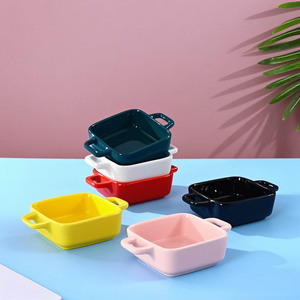
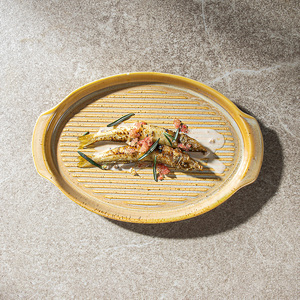
Modern consumers are shifting away from mass-produced, uniform, flat white porcelain toward organic, artisanal aesthetics. High-temperature reactive glazes—where metallic minerals react dynamically inside the kiln—create subtle, unique variations across each piece. Fulfilling this trend while maintaining strict batch-to-batch color harmony demands sophisticated kiln atmosphere control and standardized mineral raw material sourcing.
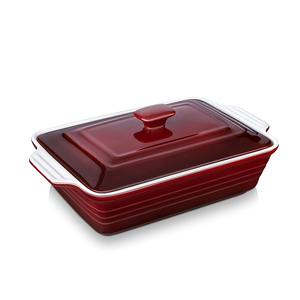
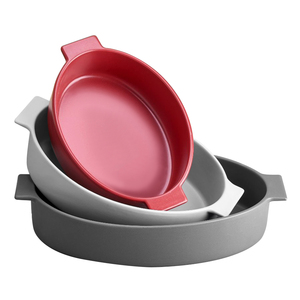
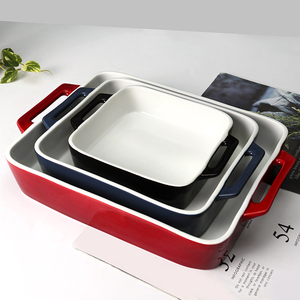
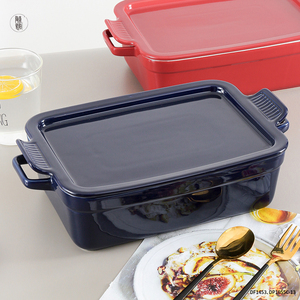
Spatial constraints in modern urban homes and operational efficiency demands in commercial kitchens are driving the popularity of multi-functional ceramic drinkware and bakeware. Items equipped with ergonomically designed handles, stackable profiles, and dual-purpose ceramic platter lids allow seamless transitions from food preparation and baking to elegant table presentation and airtight refrigeration.
To mitigate tariff risks, trade disruptions, and single-region supply bottlenecks, global importers are increasingly shifting production to Southeast Asian manufacturing hubs. Thailand has established itself as an elite manufacturing destination for high-end ceramics, offering rich natural clay resources, highly skilled ceramic artisans, competitive trade agreements, and reliable export logistics through major sea ports like Bangkok and Laem Chabang.
Founded in 1993 with a registered capital of 30 million baht, ARTWAY Company Limited stands as a premier Thailand-based manufacturer and exporter of stoneware, ceramic tableware, drinkware, bakeware, and home accessories. Operating from an owned 10,000 square meter industrial facility in Samut Sakhon, ARTWAY integrates every phase of production under one roof—eliminating third-party outsourcing risks and ensuring strict quality control from raw clay to loaded sea container.
Our dedicated mold engineering team turns technical 2D CAD files and 3D renderings into precise plaster working molds within 15 to 25 working days, supporting low MOQs for custom developments.
Our master glaze chemists create custom color palettes, matte glazes, reactive crystal effects, and food-safe formulations matched precisely to target Pantone codes or client master samples.
Equipped with automated slip casting systems, hydraulic press machinery, automated jiggering units, and high-capacity continuous tunnel kilns supported by over 200 skilled ceramic technicians.
"Our Quality Promise: Every manufacturing batch undergoes rigorous AQL Level II inspection covering dimensional variance, glaze thickness, thermal shock resistance, and drop-test packaging integrity before export certification."
Contact our engineering and export trade department today to request technical product specifications, custom glaze samples, or a comprehensive FOB factory quotation.
Send an Inquiry