Stoneware Restaurant Serveware has moved beyond basic plate selection. It now influences food presentation, table durability, replacement costs, and brand perception. Fortune Business Insights estimated the global tableware market at approximately USD 19.45 billion in 2023. The report also projects continued growth through 2032, supported by hospitality expansion and premium dining demand. These figures cover broader tableware categories, not stoneware alone. That limitation matters.
Grand View Research reported that the global foodservice equipment market reached about USD 37.6 billion in 2022. It forecast a 6.1% compound annual growth rate from 2023 to 2030. Restaurant serveware benefits from this wider investment cycle. Operators increasingly compare heat retention, glaze consistency, stacking efficiency, and breakage rates. A matte charcoal bowl may frame ramen beautifully, yet reveal scratches quickly. A heavy reactive-glaze plate may feel premium, but slow service teams during peak hours.
Thomas Keller, chef and restaurant operator, described the plate as “the canvas for the food.” His observation explains why serveware decisions require both culinary judgment and operational testing. In practice, buyers should inspect rim strength, dishwasher performance, footprint, and replacement availability. They should also request samples before committing to large quantities. Supplier claims can sound convincing. Real kitchens are less forgiving. Stoneware Restaurant Serveware may improve perceived value, but it cannot correct weak menu design or poor handling systems. This guide compares leading suppliers through product quality, customization, certifications, delivery reliability, and total ownership cost. Some conclusions may remain imperfect, because regional pricing and restaurant usage vary considerably.
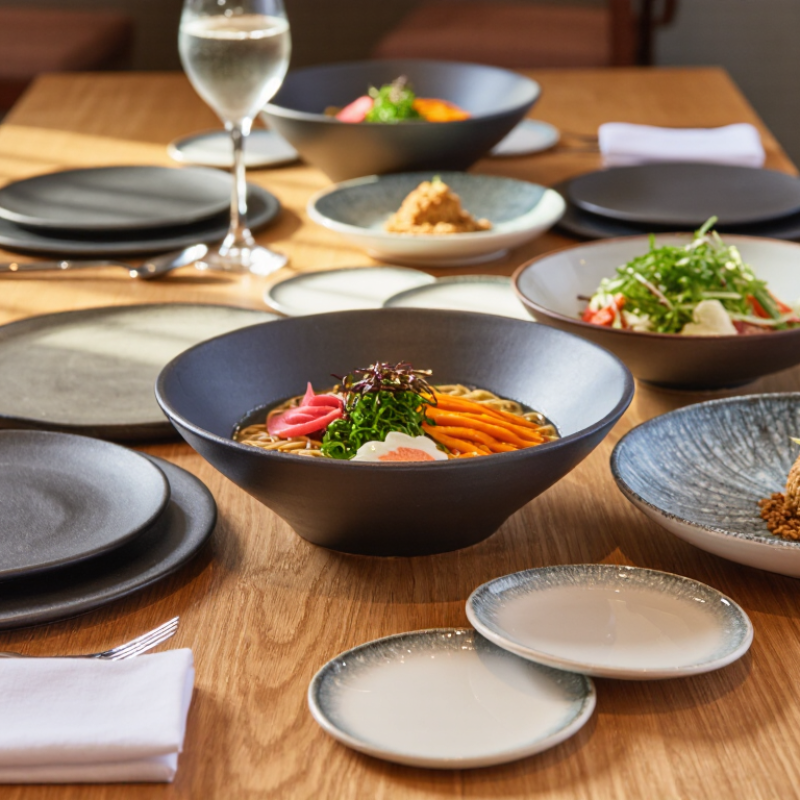
Stoneware restaurant serveware is tableware made from fired clay, usually at high temperatures for strength and durability. It includes plates, bowls, ramekins, platters, and serving trays. Unlike fine porcelain, stoneware often has a heavier body and a warmer, handmade appearance. Its slightly textured surface can make roasted vegetables, pasta, or soup feel more inviting.
In a busy dining room, useful stoneware must tolerate repeated washing, daily handling, and sudden temperature changes. Restaurant buyers should check the clay body, glaze quality, rim strength, and stackability. A smooth, fully fired glaze helps resist stains and supports safer cleaning. However, no piece is indestructible. Hairline cracks may appear after rough stacking or thermal shock. I have found that heavier pieces feel dependable, but they can slow service when staff carry several plates at once. That trade-off deserves honest testing before a large order.
Tips: Ask suppliers for samples and run them through your real washing routine. Test heat retention with common dishes, then inspect edges under bright light. Compare replacement availability, carton protection, and consistent sizing. Slight color variation may suit an artisan concept, but it can look uneven across a formal table. Keep a small reserve for breakage; even excellent serveware eventually needs replacement.
| Data Dimension | Verified Stoneware Information | Restaurant Serveware Implication | Supplier Specification to Check |
|---|---|---|---|
| Material definition | Stoneware is a ceramic body fired at a relatively high temperature until it becomes dense and durable. It is not made from natural stone. | Suitable for plates, bowls, mugs, serving platters, and other food-service pieces. | Request the clay-body description, firing range, and technical product data sheet. |
| Firing temperature | Commercial stoneware is commonly fired at approximately 1,100–1,300°C, depending on the formulation and manufacturing process. | Higher-temperature firing generally supports a dense body, but firing temperature alone does not prove chip resistance or thermal-shock performance. | Verify the actual firing range and request independent durability or thermal-shock test results. |
| Water absorption | Stoneware is generally less porous than earthenware, but absorption varies by clay body, firing cycle, and glaze system. | Lower absorption can improve stain resistance and cleaning performance. | Ask for the tested water-absorption percentage and the test method used. |
| Strength and durability | Stoneware is typically stronger and denser than earthenware, although durability differs significantly between product designs. | Thicker rims, reinforced edges, and well-controlled production can reduce breakage during daily service and dishwashing. | Check rim strength, edge-chip testing, breakage-rate records, and replacement-part availability. |
| Glaze performance | A glaze creates a glass-like surface that can add color, smoothness, stain resistance, and protection to the ceramic body. | Glaze quality affects scratching, staining, metal marking, and the long-term appearance of tableware. | Request tests for glaze durability, crazing, staining, scratching, and discoloration. |
| Food-contact safety | Ceramic serveware intended for food must comply with the food-contact requirements applicable in its destination market. | Safe use depends on the complete product, including the ceramic body, glaze, decoration, and production controls. | Obtain current heavy-metal migration reports and food-contact compliance documentation. |
| Dishwasher suitability | Many stoneware products are dishwasher-safe, but suitability depends on the product design, glaze, decoration, and manufacturer’s testing. | Important for restaurants because repeated washing exposes serveware to heat, detergents, impact, and stacking pressure. | Require written dishwasher-use instructions and repeated-cycle test results where available. |
| Microwave suitability | Stoneware may be microwave-safe, but metallic decoration, trapped moisture, uneven heating, or product-specific limitations can make microwave use unsafe. | Useful for reheating and kitchen-to-table service only when the product is specifically approved for microwave use. | Confirm microwave instructions for each shape, glaze, and decorative finish. |
| Oven suitability | Oven suitability is product-specific. Sudden temperature changes can cause thermal shock and breakage in ceramic ware. | Oven-to-table use requires clearly defined temperature limits and handling instructions. | Verify maximum and minimum operating temperatures, preheating requirements, and thermal-shock guidance. |
| Shape and stacking | Rim profile, foot-ring design, wall thickness, and dimensional consistency affect stacking and storage efficiency. | Consistent stacking can save storage space and improve handling speed during table setup. | Request nesting diagrams, packed dimensions, piece weight, and dimensional tolerances. |
| Design consistency | Hand-finished or reactive-glaze products may show intentional variation in color, texture, and pattern. | Variation can support a handcrafted appearance but may be unsuitable when uniform presentation is required. | Define acceptable color, size, glaze, and surface-variation tolerances before placing an order. |
| Customization capability | Customization may include shape, color, glaze, embossed details, printed decoration, or packaging configuration. | Custom pieces can support a restaurant’s presentation style but may require additional tooling, sampling, and production time. | Confirm sample approval, mold charges, minimum order quantity, lead time, and artwork requirements. |
| Commercial supply capability | A reliable supplier should provide stable specifications, batch-quality control, protective packaging, and a documented replacement process. | These controls help reduce inconsistent deliveries, transit damage, and difficulty replacing broken or discontinued items. | Evaluate production capacity, quality-inspection procedures, packaging tests, delivery schedule, reorder policy, and after-sales support. |
It is fired-clay tableware for plates, bowls, ramekins, platters, and trays. It usually feels heavier than porcelain. Its warm, slightly textured surface suits soup, pasta, and roasted vegetables.
Stoneware offers a durable feel and a handmade appearance. It can support repeated washing and daily handling. Still, no piece is indestructible.
Check the clay body, glaze, rim, foot, underside, and base. The glaze should feel smooth and fully fired. Inspect edges under bright light.
Request several samples before ordering in bulk. Wash them using your normal routine. Test hot food, stacking, wet handling, and dry handling.
Yes, hairline cracks can follow rough stacking or sudden temperature changes. Thin rims may chip quickly. Test thermal shock resistance carefully.
Heavy pieces may feel dependable and premium. They can also increase staff fatigue during long shifts. I once underestimated this trade-off.
Compare unit price, minimum order, packaging, shipping, fees, and expected breakage. A cheap plate may cost more after frequent replacement. Keep spare pieces.
Ask about lead times, replacement procedures, customization limits, and production consistency. Confirm future batches will match size, weight, and color. Vague answers are warning signs.
Glossy surfaces often make cleaning easier. Matte finishes can hide small scratches. However, darker glossy colors may conceal sauce stains during inspection.
Measure diameter, stack height, and available storage space. Confirm oven compatibility with the kitchen team. Attractive serveware may still slow service if stacks become awkward.
Stoneware Restaurant Serveware is a practical and attractive choice for commercial dining environments, combining durability, heat retention, and a refined presentation. This article explains what stoneware serveware is and how restaurants can evaluate suppliers based on product consistency, manufacturing capabilities, customization options, delivery reliability, and customer support. It also reviews common supplier types, from specialized tableware manufacturers to broad foodservice distributors, along with the product ranges they may offer, including plates, bowls, platters, cups, and serving accessories.
When selecting commercial stoneware, buyers should consider resistance to chipping, glaze quality, oven and dishwasher suitability, functional design, and compliance with applicable safety standards. A thoughtful comparison of quality, total cost, minimum order quantities, lead times, replacement policies, and after-sales service can help businesses make informed purchasing decisions. By balancing appearance, performance, budget, and supplier dependability, restaurants can build a serveware collection that supports efficient operations and creates a consistent dining experience.