0%

Finding a reliable Ceramic Kitchenware Exporter requires more than comparing prices. It demands evidence from the factory floor, shipping records, and product samples.

Grand View Research estimated the global ceramic tableware market at approximately USD 10.47 billion in 2022. Its report also projected a 6.5% compound annual growth rate from 2023 to 2030. Fortune Business Insights reported a market value of about USD 10.72 billion in 2023. These figures show strong demand, but they do not prove that every exporter is dependable. Growth can hide inconsistent quality.

Ceramics consultant John Baymore has often emphasized a practical principle: “The kiln is the final judge.” This idea matters when evaluating an exporter. Ask for firing-temperature records, glaze specifications, food-contact test results, and recent inspection reports. Request samples from different production batches. One perfect mug proves very little.

Look closely. Check the rim for roughness. Inspect the handle joint. Compare color consistency under natural light. A professional Ceramic Kitchenware Exporter should explain clay sources, quality-control stages, packaging methods, and replacement procedures without avoiding difficult questions.

Certifications help, but paperwork is not everything. A certificate may be outdated, incomplete, or unrelated to the actual production line. That is an uncomfortable reality. Supplier selection still involves judgment.

Reliable cooperation also depends on communication. Confirm lead times, carton strength, labeling details, and response speed before placing a large order. Small pilot shipments can reveal hidden weaknesses. They cost more initially. They may prevent much larger losses later.
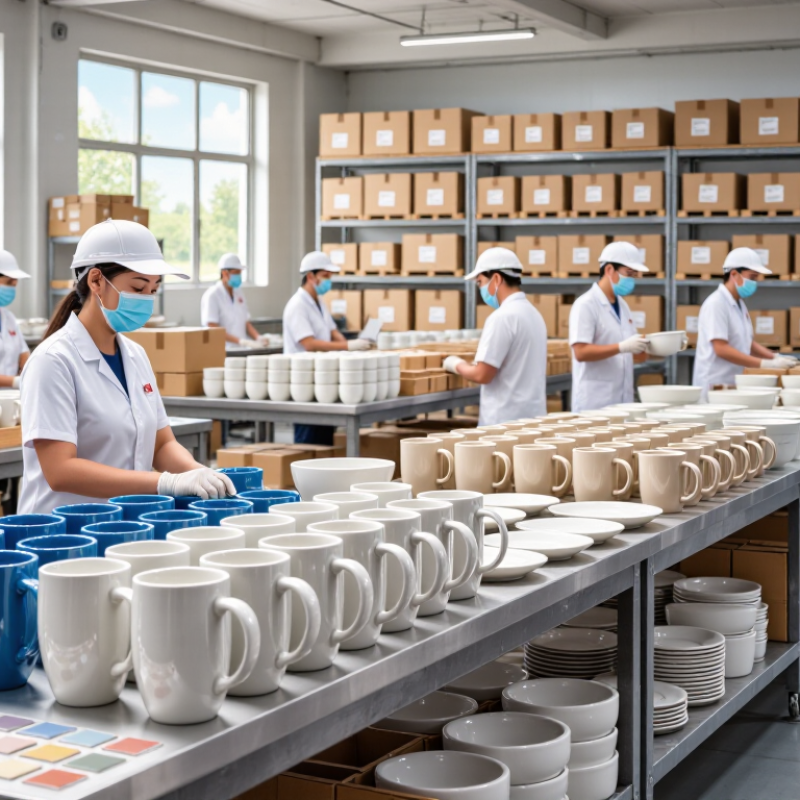
How to Find a Reliable Ceramic Kitchenware Exporter?

Define Product Scope Using HS 6912 Ceramic Tableware Trade Data

How to Find a Reliable Ceramic Kitchenware Exporter?

HS 6912 ceramic tableware trade data can narrow your supplier search quickly. This code commonly covers ceramic kitchenware and household articles other than porcelain or china. Review shipment volumes, destination markets, declared values, and export frequency. A steady record over several years is more useful than one unusually large shipment. Compare quantities with reported values. Extremely low prices deserve questions.

I have found that trade data works best as a screening tool, not final evidence. Check whether the exporter regularly ships plates, bowls, mugs, or serving dishes matching your needs. Then request recent samples, production photos, packaging details, and realistic lead times. Ask for food-contact test reports required in your target market. Confirm glaze quality, rim smoothness, dimensions, and carton protection through physical inspection.

The data is not perfect. HS codes can be applied broadly, and some records may omit important product details. I would cross-check shipment history with factory capacity and buyer references. A supplier with strong records may still struggle with color consistency or breakage control. Discuss acceptable defect rates in writing. Small test orders reveal more than impressive spreadsheets. Ceramic expertise shows in details: even glaze coverage, stable firing results, and packaging that survives a rough warehouse transfer.

Screen Exporters Through ISO 9001, Factory Capacity, and Audit Records

How to Find a Reliable Ceramic Kitchenware Exporter?

Screen Exporters Through ISO 9001, Factory Capacity, and Audit Records

When screening a ceramic kitchenware exporter, request its current ISO 9001 certificate. Check the certificate scope, factory address, issuing body, and expiration date. The document should cover relevant production activities, not only office management. Ask for the certificate number and verify it independently. ISO 9001 shows controlled processes, but it does not guarantee perfect products.

Factory capacity needs physical evidence. Review kiln sizes, monthly output, molding equipment, decoration lines, and packing areas. During a factory visit, observe unfinished pieces beside finished cartons. Ask how many kilns operate during peak seasons. Compare stated capacity with recent order records. A large number on paper proves little. Production schedules can change quickly.

Audit records reveal daily discipline. Request recent internal audit reports, corrective action logs, inspection sheets, and batch traceability examples. Sensitive details may be removed, but dates and follow-up actions should remain visible. Look for repeated defects, overdue corrections, or empty forms. Those details matter.

I once treated a clean audit file as strong evidence, but later noticed missing operator signatures. That weakness changed the review. Ask who closed each corrective action and whether effectiveness was checked. A reliable exporter can explain gaps without hiding them.

Verify Food Safety Against FDA, EU, and GB 4806 Ceramic Standards

How to Find a Reliable Ceramic Kitchenware Exporter?

Food safety should be checked before price, design, or delivery speed. Ask the exporter which ceramic items are intended for food contact. Glazes, painted rims, and printed surfaces may release lead or cadmium if poorly controlled. Request recent migration test reports for the exact product, not a similar sample. Reports should identify the material, tested surface, batch, testing method, and laboratory.

Tips: Compare the exporter’s documents with FDA food-contact requirements, relevant EU ceramic food-contact rules, and GB 4806.4 requirements. Use an independent laboratory accredited to ISO/IEC 17025 where possible. Check testing for the finished product. A glaze sample alone may not represent a fired plate. Ask how the factory controls kiln temperature, decoration, raw materials, and batch consistency. Keep written answers.

A dependable exporter should explain limits honestly. FDA compliance may depend on intended use and extractable substances. EU requirements commonly examine lead and cadmium migration. GB 4806.4 also sets requirements for ceramic food-contact articles. These systems are related, but they are not interchangeable. Do not accept one certificate as universal proof. Request production samples and compare them with the tested version. Inspect sharp edges, pinholes, uneven glaze, and decoration near the food area. No factory is perfect. That admission matters. Reliable suppliers record defects, investigate causes, and repeat testing when materials or firing conditions change.

Compare Quality Using AQL Sampling Levels and Defect-Rate Data

How to Find a Reliable Ceramic Kitchenware Exporter?

A reliable exporter should provide inspection records, not only attractive product photos. Ask for the AQL sampling level used for each shipment. General Inspection Level II is common for ceramic kitchenware. It determines the sample size according to the lot quantity. For example, inspectors may check 200 pieces from a large production lot. Do not guess. The inspection plan must be agreed before production starts.

Compare defect categories separately. Critical defects, such as glaze contamination on food-contact surfaces, normally require zero acceptance. Major defects may include cracks, sharp edges, unstable bases, or serious color differences. Minor defects can involve small pinholes or slight shade variation. A supplier might use AQL 2.5 for major defects and AQL 4.0 for minor defects. These figures are examples, not universal rules. Your product specification should define them clearly.

Defect-rate data reveals more than one inspection report. Request results from several recent lots, including inspected quantity, rejected quantity, and defect type. A carton with chipped rims needs different corrective action from one with uneven glaze. Numbers need context. Check whether defects repeat across sizes, kilns, or production dates. A low sampled defect rate can still hide problems when the sample is too small. This method is useful, but not flawless. I would also inspect packed cartons, because vibration during transport can create damage unseen at the factory. Photographs, measurement records, and signed reports make supplier claims easier to verify.

Assess Total Cost with Incoterms, MOQ, Lead Time, and Freight Data

A reliable ceramic kitchenware exporter should disclose the complete landed-cost structure, not only the factory price. Request quotations under FOB, CIF, and DDP terms, then compare insurance, export clearance, destination fees, duties, and inland delivery. Incoterms 2020 clarifies which party bears transport risks, but it does not set freight prices. Confirm the transfer point in writing. Small wording differences can become expensive.

Use measurable purchasing data. The 2023 World Bank Logistics Performance Index shows that international shipments still face delays from border and logistics processes. UNCTAD’s Review of Maritime Transport 2024 also reports continued freight-rate volatility after major route disruptions. Ask for recent freight quotations, container type, sailing frequency, transit time, and validity dates. A 40-foot container may look cheaper per unit, yet fragile ceramics can require dividers, stronger cartons, and more loading space. Calculate breakage allowance too. It is often forgotten.

MOQ deserves equal attention. A low unit price with a 5,000-piece MOQ can trap cash and create slow-moving designs. Ask whether mixed colors or shapes are allowed. For lead time, separate sample approval, production, inspection, and port waiting time. In practical sourcing, an announced 35-day lead time may exclude vessel delays. I would challenge that number. Request a shipment history covering at least three orders, including promised and actual dates. The final comparison should show cost per sellable piece, not cost per produced piece. That distinction is imperfect, but it is more honest.

FAQS

What does HS 6912 trade data reveal about ceramic kitchenware exporters?

It can show shipment volumes, destinations, declared values, and export frequency. Steady records matter. One unusually large shipment proves little. Check whether products match your needs.

How can I screen a ceramic kitchenware exporter?

Look for repeated shipments of plates, bowls, mugs, or serving dishes. Compare quantities with declared values. Extremely low prices need investigation. Then request recent samples, factory photos, packaging details, and realistic lead times. Trade data helps screen suppliers, not approve them.

What should I inspect in ceramic samples?

Check glaze coverage, rim smoothness, dimensions, pinholes, sharp edges, and decoration placement. Hold the plate under bright light. Uneven areas become easier to spot. Also test carton protection through physical inspection. A polished sample may not represent mass production.

Which food-safety documents should I request?

Request recent migration test reports for the exact finished product. The report should identify the material, tested surface, batch, method, and laboratory. Ask for testing from an independent laboratory with suitable accreditation. One certificate is not universal proof.

Why must testing cover the finished ceramic product?

A glaze sample may not represent a fired plate. Kiln temperature, decoration, raw materials, and batch changes can affect results. Request reports for the actual product and tested surface. Keep written answers. Records matter.

How should I compare the total purchasing cost?

Request quotations under FOB, CIF, and DDP terms. Confirm insurance, export clearance, destination fees, duties, and inland delivery. Clarify the risk-transfer point in writing. Then calculate cost per sellable piece, including breakage. Not merely the factory price.

What details should I confirm about MOQ and lead time?

Ask whether mixed colors or shapes are allowed. Separate sample approval, production, inspection, and port waiting time. A stated 35-day lead time may exclude vessel delays. Request promised and actual dates from at least three previous orders. I would still challenge optimistic estimates.

How can I reduce breakage during transport?

Ask for dividers, stronger cartons, and loading photos. Confirm the container type and available space. A larger container may reduce unit freight cost but increase packing requirements. Include a realistic breakage allowance. It is often forgotten.

Conclusion

Finding a reliable Ceramic Kitchenware Exporter begins with clearly defining your product scope and researching relevant HS 6912 ceramic tableware trade data. This helps you identify suitable product categories, market demand, pricing patterns, and potential supply regions. Next, evaluate exporters through ISO 9001 certification, factory capacity, production equipment, quality-control procedures, and documented audit records. A supplier with transparent operations and consistent manufacturing resources is more likely to support long-term cooperation.

Food safety should be verified against applicable FDA, EU, and GB 4806 ceramic standards, including glaze, heavy-metal, and material safety requirements. Compare quality performance using AQL sampling levels, inspection reports, and historical defect-rate data rather than relying only on product samples. Finally, assess total purchasing cost by reviewing Incoterms, MOQ, lead time, packaging, inland transport, and freight data. A dependable exporter should offer clear communication, stable quality, realistic delivery schedules, and a complete cost structure that supports informed sourcing decisions.


Seraphina

Seraphina

Seraphina is a skilled marketing professional with a deep understanding of the company’s products, customers, and industry landscape. Through a thoughtful combination of market research, clear communication, and strategic content planning, she helps connect the company’s solutions with the people......