Choosing Custom Ceramic Storage Jars can shape how customers remember your brand. The right jar protects products, supports daily use, and communicates quality before the lid opens. A matte white finish may suggest calm simplicity. A deep green glaze can create a richer, natural impression. Small details matter, including lid fit, surface texture, label space, and opening comfort.
Your decision should begin with the product, not only the appearance. Powders, teas, spices, creams, and dry foods may require different interior finishes and closure systems. Ceramic thickness also affects shipping weight, shelf stability, and breakage risk. Experienced buyers usually request samples before approving a large production run. They test the jar under real conditions, including stacking, washing, handling, and repeated opening.
A beautiful sample is not enough.
Reliable suppliers should explain clay composition, glazing methods, firing temperatures, dimensional tolerances, and quality inspections. They should also provide clear information about suitable product contact and packaging protection. Ask how color variation is controlled, because handmade-looking surfaces may change between batches. That variation can feel authentic, but it may weaken a strict visual identity.
Brand teams often focus heavily on logos and overlook usability. Customers notice awkward lids, sharp edges, difficult cleaning, and weak packaging quickly. A practical specification sheet can prevent expensive misunderstandings. It should record dimensions, capacity, finish, closure style, decoration placement, and acceptable defects.
There is no perfect choice.
The strongest Custom Ceramic Storage Jars balance brand character with dependable performance. Your first concept may need revision after testing. That is not failure. It is evidence that the final product is being developed responsibly, with customer experience and long-term trust in mind.
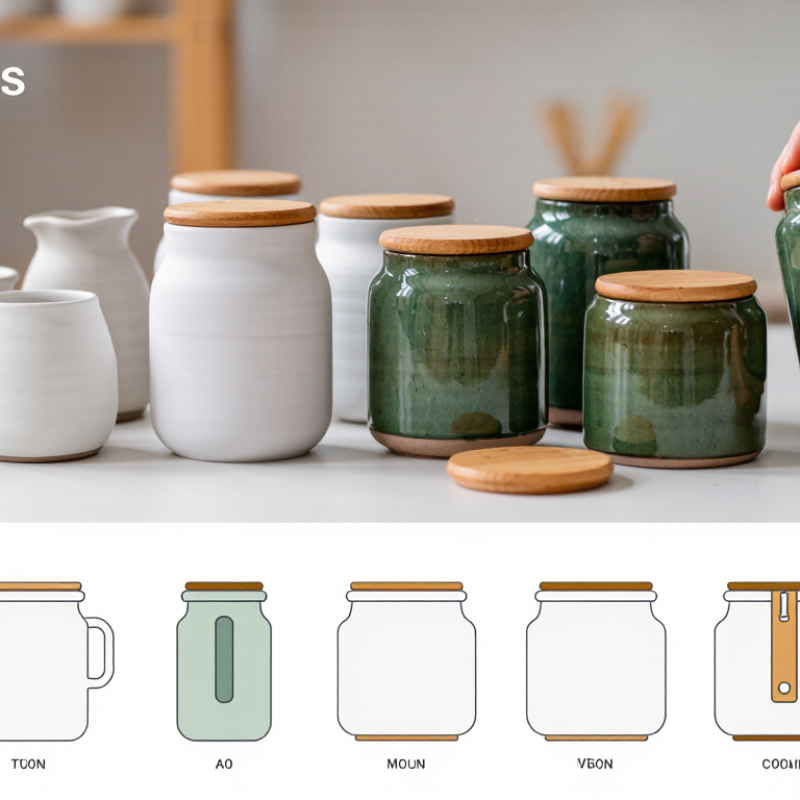
How to Choose Custom Ceramic Storage Jars for Your Brand
Define your brand’s purpose before choosing a ceramic jar. Is it designed for refillable food storage, bathroom organization, or gift presentation? Each purpose changes the required size, glaze, lid, and cleaning performance. A 250 ml jar may suit spices, while a 1-liter vessel feels better for grains or bath salts. Ceramic should feel substantial, not unnecessarily heavy. My sampling experience shows that attractive prototypes often fail when lids loosen after repeated washing.
Packaging data supports this practical approach. Eurostat reported 186.5 kilograms of packaging waste per European resident in 2022. Reusable ceramic can reduce replacement frequency, but only when customers actually reuse it. The jar needs a stable base, comfortable grip, and a seal that remains reliable. Check food-contact suitability, glaze consistency, edge smoothness, and breakage rates through documented testing. The U.S. Environmental Protection Agency reported that containers and packaging represented 28.1% of municipal solid waste in 2018. Better durability matters. Still, ceramic is not automatically sustainable; shipping weight and damage can weaken its environmental value.
Tips: Write a simple requirement sheet before requesting samples. Include capacity, opening diameter, lid material, decoration area, carton protection, and target price. Test filled jars on a damp counter and inside a cupboard. Then test them again. A small flaw may become expensive at scale. Also compare two or three wall thicknesses, because the thinnest option may look elegant but break during delivery. Specification decisions should serve the product’s purpose, not only its appearance.
| Requirement Dimension | Brand Purpose to Define | Recommended Ceramic Jar Specification | Practical Benchmark | Why It Matters |
|---|---|---|---|---|
| Primary Product Use | Decide whether the jar will store dry food, cosmetics, candles, bath products, or decorative items. | Use a glazed, non-porous interior for food, powders, salts, and moisture-sensitive products. | Specify a smooth interior with no visible pinholes, cracks, exposed clay, or glaze defects. | The intended contents determine the required surface, sealing method, cleaning performance, and compliance testing. |
| Capacity | Match the jar size to the normal quantity customers use or refill. | Small: 150–300 ml; medium: 400–700 ml; large: 800–1,200 ml. | Leave approximately 10–15% headspace below the lid for easy filling and opening. | Correct capacity improves usability, shipping efficiency, shelf presentation, and portion consistency. |
| Jar Shape and Footprint | Define whether the product should look compact, premium, playful, minimal, or suitable for repeated display. | Choose a stable cylindrical or gently tapered body with a flat base. | Keep the height-to-width ratio near 1:1 to 1.5:1 for practical stability and shelf visibility. | The silhouette affects storage, stacking, label placement, shipping cartons, and perceived value. |
| Opening Diameter | Determine whether customers will scoop, pour, reach in, or remove a full product item. | Use an opening of approximately 70–100 mm for general-purpose storage jars. | Provide enough clearance for the hand, scoop, or measuring spoon used with the product. | A practical opening reduces spills and makes the container easier to clean and refill. |
| Lid and Closure | Choose between visual appeal, frequent access, odor control, and protection from humidity. | Consider a ceramic lid with a silicone or food-contact gasket for a tighter everyday seal. | Check lid fit, gasket compression, opening force, odor retention, and leakage under normal use. | A well-matched closure protects contents while maintaining a consistent premium experience. |
| Ceramic Body and Glaze | Set the desired balance between durability, weight, color, texture, and handmade appearance. | Use a dense stoneware or porcelain body with a uniform, fully matured glaze. | Request samples that are free from sharp edges, structural cracks, crawling glaze, and unstable bases. | Material and glaze quality influence strength, cleanability, moisture resistance, and visual consistency. |
| Decoration and Identification | Decide how the jar will communicate product type, collection style, and key information. | Use one primary decoration method, such as screen printing, decal, embossing, or a contrasting glaze area. | Test decoration for legibility, rub resistance, dishwasher exposure, and compatibility with the glaze. | Clear identification supports product recognition without compromising the ceramic surface or design. |
| Food-Contact and Safety Needs | Identify whether the finished jar will directly contact food, beverages, cosmetics, or household materials. | Require documentation and testing against the food-contact regulations applicable to the selling market. | Review glaze migration results, material declarations, and test reports before production approval. | Safety requirements vary by market and product category, so they should be confirmed before tooling. |
| Handling and Shipping | Define acceptable weight, drop resistance, packaging efficiency, and customer handling expectations. | Select a wall thickness that feels substantial without creating unnecessary shipping weight. | Validate packed units with transport simulation, edge protection, and drop testing appropriate to the shipment. | Ceramic is rigid but breakable; packaging design is essential for reducing transit damage. |
| Customization and Production Control | Determine which features must remain consistent across sizes, colors, and future product collections. | Document dimensions, tolerances, glaze references, decoration placement, lid fit, and inspection criteria. | Approve a production sample and retain a reference standard for color, shape, finish, and packaging checks. | Clear specifications reduce variation and make future reorders easier to reproduce. |
Measure the product volume, headspace, and utensil clearance before selecting a jar. A 250-gram product may need a different footprint than 60 tea sachets. The jar should feel full without lifting the lid. Test the actual product.
Cylindrical jars are easy to label, clean, and handle. Square jars can use shelf space more efficiently. Sharp corners may chip during transport. Choose practical geometry over visual novelty.
Prepare three physical prototypes and fill them with the real product. Open each jar with dry hands and check spoon access. Place them beside similar products on a shelf. Review lid alignment after 50 opening cycles.
Stoneware offers strength and moderate heat resistance. Porcelain feels lighter and smoother but may need more careful handling. Earthenware provides a handmade appearance but is usually more porous. Appearance can mislead.
Check the rim, inner walls, and base under bright light. Look for pinholes, rough patches, fingerprints, and uneven glaze. Glossy finishes wipe clean easily but show marks quickly. Matte surfaces may need more cleaning than expected.
Request absorption data, firing temperatures, and samples from the supplier. For food contact, ask for migration tests covering relevant substances. Keep approved samples, batch references, and test reports together. Verbal promises are not enough.
Test seal performance, thread alignment, odor retention, and opening comfort. Check logos after washing and repeated handling. Bamboo, metal, and ceramic lids create different feelings and maintenance needs. The first choice may still be wrong.
Use molded pulp inserts, accurate cavities, and edge protection around the shoulder. Review drop-test results, carton dimensions, and packing labor. Oversized walls and unnecessary inserts increase material use. Less packaging is not always safer.
Choosing the right Custom Ceramic Storage Jars begins with understanding your brand’s purpose, target customers, and product requirements. Consider the jar’s ideal size, shape, capacity, and functional features, such as wide openings, secure lids, easy cleaning, and convenient stacking. These choices should match how the product will be used while supporting a consistent and practical customer experience.
Next, evaluate ceramic materials, surface finishes, durability, and safety standards to ensure reliable product quality. Personalize the jars with suitable colors, logos, lid styles, labels, and packaging details that reflect your visual identity. Finally, compare suppliers based on pricing, production capabilities, quality control, minimum order quantities, communication, and delivery times. A careful balance of design, safety, cost, and service will help you select storage jars that strengthen product presentation and provide lasting value.