0%

Buyers looking for China Top 10 Ceramic Casserole Dish Wholesale Suppliers need more than a list of factory names. They need evidence of consistent production, clear specifications, and reliable communication. Grand View Research estimated the global cookware market at about US$27.7 billion in 2023, with projected growth of 6.7% annually from 2024 to 2030. This broad market figure offers useful context, but it does not measure ceramic casserole dishes alone. That distinction matters.

For sourcing teams, the practical questions are more specific. Can a supplier maintain even glaze coverage across a production run? Are dish dimensions, capacity, and packing details documented clearly? Ask how samples are checked and how defects are handled. Request product specifications and confirm that any performance claims are supported by relevant testing records. Small details matter. A carton corner crushed in transit can turn a good-looking sample into a costly order.

This guide introduces ten Chinese suppliers and the points buyers can compare, including product range, customization, minimum order quantities, and export experience. Ceramic Casserole Dish Wholesale decisions should weigh verified information over polished catalog language. Supplier websites can help, but they are not independent proof. I would not treat a ranking as a final recommendation; buyers should verify current capabilities directly, compare samples, and confirm commercial terms before committing. Some information may change between publication and inquiry. That is an inconvenient limit, but an honest one.
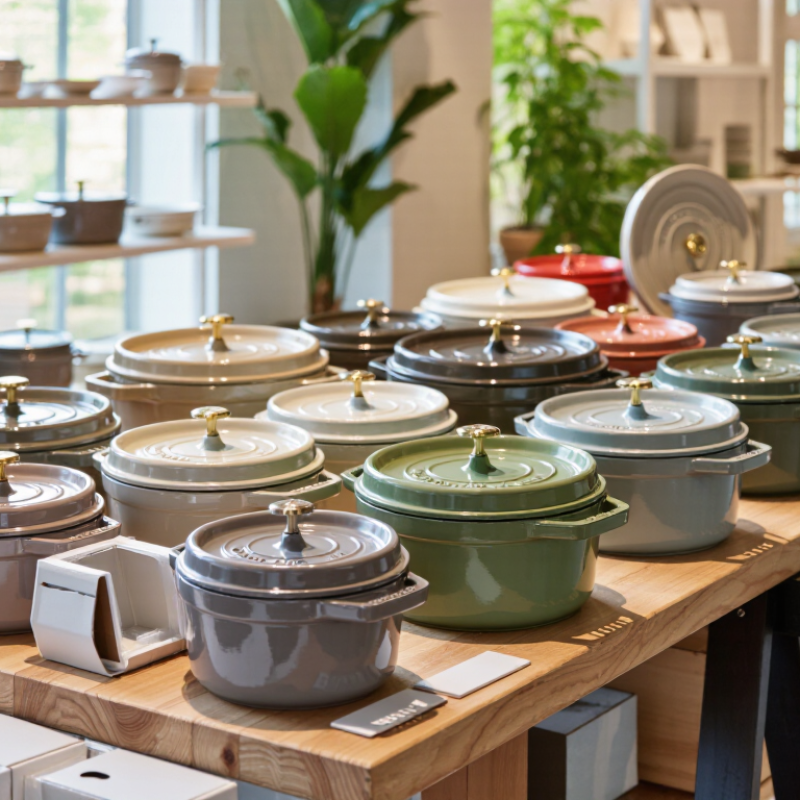
China Top 10 Ceramic Casserole Dish Wholesale Suppliers

China’s Ceramic Casserole Dish Wholesale Market at a Glance

China’s ceramic casserole dish wholesale market sits within a broader tableware sector. Grand View Research estimated the global ceramic tableware market at US$10.37 billion in 2022 and forecast 6.5% annual growth from 2023 to 2030. This is not a casserole-only figure, so treat it as context, not a China market-size estimate. China’s supplier base serves buyers seeking varied capacities, glazes, and price points. But a glossy sample tells little about performance after repeated heating.

For wholesale buyers, compare usable capacity, lid fit, base thickness, and packaging protection. Ask suppliers for product specifications and test samples under the heating conditions your customers will use. Confirm whether quoted prices include export cartons, and request packing details before placing a bulk order. Small differences matter: a loose lid can spill during handling, while weak cartons may arrive crushed. Supplier claims deserve checking; I would not rely on catalog photos alone.

Tips: Request samples from several suppliers. Test them, then compare defect rates, lead times, and replacement terms.

China Top 10 Ceramic Casserole Dish Wholesale Suppliers — China’s Ceramic Casserole Dish Wholesale Market at a Glance

A technical sourcing reference: typical firing-temperature ranges for common ceramic bodies.

Firing temperatures vary with the clay body, glaze, and production process. These indicative ranges provide product context for wholesale sourcing; they do not rank suppliers or represent market-share data.

How to Evaluate Ceramic Casserole Dish Suppliers

A reliable ceramic casserole dish supplier should be assessed through samples, records, and clear communication—not price alone. Request a production sample and inspect its rim, glaze, base, and stated dimensions. Check for pinholes, uneven coloring, sharp edges, or wobbling on a flat counter. Small flaws matter when dishes are stacked or displayed.

Ask how the supplier checks heat resistance, glaze durability, and dimensional consistency. Request relevant test reports, then confirm that they cover the exact clay body and glaze offered. A document is only useful when its details match the product. If possible, test samples under the cooking and cleaning conditions your customers are likely to use. Results can vary; one sample cannot represent every production batch.

Discuss minimum order quantities, production lead times, carton protection, and replacement terms before placing an order. A useful supplier should explain how dishes are packed, especially around handles and rims, where transport damage often starts. Compare written quotations line by line, including sample fees and packaging costs. Notice how quickly questions are answered, too. Clear replies help, but they do not guarantee consistent quality. Requesting batch photos or a pre-shipment inspection may add time, yet it can reveal problems before the goods arrive.

Profiles of China’s Top 10 Ceramic Casserole Dish Wholesale Suppliers

China’s ceramic casserole suppliers differ more in production control than catalogue size. Grand View Research estimated the global ceramic tableware market at USD 10.5 billion in 2023; this figure signals demand, not supplier quality. The ten profiles worth comparing include high-volume kiln operators, export-focused factories, OEM producers, stoneware specialists, porcelain makers, hand-finished workshops, hotelware suppliers, casserole-and-lid specialists, gift-packaging providers, and small-batch manufacturers. Each serves a different purchasing need. A large kiln may offer steady volume, while a smaller workshop may allow closer glaze adjustments.

Ask each supplier for firing-temperature records, food-contact test documents, and samples from a current production run. Check lid fit, base flatness, glaze consistency, and carton protection. Small details matter. A lid that rocks on a sample can become a costly complaint across a full order. UN Comtrade’s trade data can help buyers examine ceramic household-article flows under HS code 6912, but that category is broader than casserole dishes. Treat it as market context, not proof of any factory’s performance. One useful weakness in many supplier comparisons is overreliance on polished samples; repeatability deserves equal attention.

Comparing Supplier Products, Pricing, and Production Capacity

For China’s top ceramic casserole suppliers, compare like with like: body material, usable capacity, lid fit, glaze, and oven-temperature limits. Grand View Research estimated the global ceramic tableware market at USD 10.3 billion in 2023, with a projected 6.4% annual growth rate from 2024 to 2030. This covers tableware broadly, not casserole dishes alone, so it signals market context rather than guaranteed demand. Ask each supplier for test records, sample lead times, and clear specifications. A glossy finish is not proof of thermal-shock performance.

Price comparisons need the same product and order assumptions. Request unit quotes at several quantities, with packaging, tooling, inspection, and freight listed separately. A casserole dish with a fitted lid and reinforced handles may cost more than a plain vessel. Small details matter. Compare sample results for glaze consistency, rim chips, and lid movement after heating and cooling. Then check production capacity using monthly output for your exact item, not a factory-wide headline figure. Ask for current utilization, minimum order quantity, and peak-season lead times. That comparison is imperfect: suppliers may report capacity differently, and forecasts can change. Record the basis for every figure before choosing a partner.

China Top 10 Ceramic Casserole Dish Wholesale Suppliers - Comparing Supplier Products, Pricing, and Production Capacity

Illustrative sourcing benchmarks only—not verified supplier-specific quotations or a ranked supplier directory. Confirm specifications, prices, capacity, certifications, and lead times directly with prospective manufacturers.
Supplier Profile Typical Product Focus Common Material & Capacity Indicative Wholesale Price (USD/unit, EXW) Typical MOQ Indicative Monthly Output Band Typical Lead Time Best Suited For
Profile 1 — Core-volume producer Round casserole dishes, basic solid colors Stoneware; about 1.0–3.0 L $3.00–$6.00 500–1,000 pcs per design 20,000–50,000 pcs 30–45 days Standard retail and food-service programs
Profile 2 — Small-batch custom producer Custom colors, shapes, and decal decoration Stoneware or porcelain; about 0.8–2.5 L $4.50–$9.00 300–800 pcs per design 5,000–15,000 pcs 35–55 days Smaller private-label launches and seasonal collections
Profile 3 — Large-format cookware specialist Family-size oval and rectangular casseroles Stoneware; about 2.5–4.0 L $5.50–$10.00 800–1,500 pcs per design 10,000–30,000 pcs 35–50 days Family cookware ranges and larger serving pieces
Profile 4 — Porcelain-focused producer Lightweight oven-to-table dishes with refined finishes Porcelain; about 0.8–2.5 L $4.00–$8.50 600–1,200 pcs per design 10,000–25,000 pcs 30–50 days Retailers prioritizing lighter-weight tableware
Profile 5 — Reactive-glaze specialist Decorative glazed casseroles with varied surface effects Stoneware; about 1.0–3.0 L $5.00–$10.00 800–1,500 pcs per color 8,000–20,000 pcs 40–60 days Design-led collections and gift retail
Profile 6 — Entry-price producer Simple round dishes and basic single-color finishes Stoneware; about 0.8–2.0 L $2.50–$4.50 1,000–2,000 pcs per design 30,000–80,000 pcs 25–40 days High-volume, price-sensitive orders
Profile 7 — Premium finishing producer Detailed forms, upgraded glazes, and gift-ready options Fine stoneware or porcelain; about 1.0–3.0 L $7.00–$14.00 500–1,000 pcs per design 5,000–15,000 pcs 45–65 days Premium homeware and gift assortments
Profile 8 — Multi-size range producer Coordinated small, medium, and large casserole sets Stoneware; about 0.5–3.5 L $3.50–$9.00 600–1,200 pcs per size or set 15,000–40,000 pcs 30–50 days Buyers seeking coordinated size assortments
Profile 9 — Export-packaging capable producer Standard casseroles with customized retail packaging Stoneware or porcelain; about 1.0–3.0 L $4.00–$9.50 800–1,500 pcs per design 10,000–30,000 pcs 35–55 days Importers requiring retail-ready packing
Profile 10 — Flexible development producer Sampling, shape adjustments, and mixed design projects Stoneware or porcelain; about 0.8–3.0 L $4.50–$11.00 300–800 pcs per design after approval 5,000–18,000 pcs 40–60 days New product development and test orders

Pricing and production bands are broad planning estimates for comparison. Actual costs vary with dimensions, clay body, glaze, decoration, packaging, order quantity, testing requirements, and shipping terms. “EXW” excludes freight, insurance, duties, and other logistics costs.

Key Steps for Sourcing Ceramic Casserole Dishes from China

China Top 10 Ceramic Casserole Dish Wholesale Suppliers

Key Steps for Sourcing Ceramic Casserole Dishes from China

Begin with a precise product brief. Specify dish capacity, dimensions, clay body, glaze color, lid fit, and intended oven use. Include photos or a simple drawing. Ask each supplier to confirm these details in writing. Request samples made with the proposed materials, not just display pieces. Check weight, finish, lid movement, and packaging. A sample can look excellent, yet differ from a later production run.

Verify the supplier’s role and manufacturing capacity. Ask whether production is handled in-house or subcontracted, and request relevant quality records and food-contact test reports for your target market. Compare quotations carefully: tooling, packing, inspection, and shipping may be excluded. Agree on acceptable defect levels and inspection timing before placing a larger order. A small trial order can reveal packing weaknesses, though it may not represent peak-season production. That limitation is easy to overlook.

FAQS

What does the market estimate tell wholesale buyers?

The global ceramic tableware market was estimated at US$10.37 billion in 2022. Forecast annual growth was 6.5% from 2023 to 2030. This is not a China casserole-dish market estimate. Useful context, not a sales promise.

Which product details should buyers compare?

Compare body material, usable capacity, lid fit, glaze, and oven-temperature limits. Check base thickness and handle design, too. A 1.5-liter dish may hold less usable food than its stated capacity suggests.

Are catalog photos enough to judge quality?

No. Ask for samples and product specifications. Check glaze consistency, rim chips, and lid movement after heating and cooling. Photos can hide small defects.

How should buyers test casserole samples?

Test samples under the heating conditions customers will use. Compare how dishes handle repeated heating and cooling. One sample may still be misleading, so I would check more than one.

What should a wholesale price quote include?

Request prices at several order quantities. List packaging, tooling, inspection, and freight separately. Compare the same product and order assumptions; otherwise, the figures may not mean much.

How can buyers check production capacity?

Ask for monthly output for the exact casserole model, not just the factory’s total output. Confirm current utilization, minimum order quantity, and peak-season lead times. Forecasts can change.

What packaging details matter?

Confirm whether export cartons are included in the quoted price. Request packing details before ordering. Weak cartons can arrive crushed, even when the dishes look fine at the factory.

How can buyers compare suppliers fairly?

Request samples from several suppliers, then compare test results, defect rates, lead times, and replacement terms. Record what each capacity or output figure means. Supplier reports may use different assumptions.

Conclusion

This guide offers a practical overview of China’s Ceramic Casserole Dish Wholesale market, including the kinds of products, manufacturing capabilities, and sourcing options buyers may encounter. It explains how to assess suppliers by reviewing product quality, material and glaze consistency, customization options, communication, production capacity, and quality-control processes. Supplier profiles provide a structured way to compare potential partners without relying on a single factor when making a decision.

The guide also outlines how to compare product ranges, pricing, minimum order quantities, lead times, and capacity to meet larger or repeat orders. Buyers can use the suggested sourcing steps to clarify specifications, request samples, confirm packaging and delivery details, and agree on inspection expectations before placing an order. Together, these considerations help businesses make informed purchasing decisions and build dependable supply arrangements for ceramic casserole dishes.


Aveline

Aveline

Aveline is a highly skilled marketing professional dedicated to helping businesses understand products, markets, and evolving customer needs. With a strong background in strategic communication, content development, and digital marketing, Aveline brings clarity, insight, and practical value to......