Custom Glazed Stoneware Tableware brings color, texture, and everyday function to the same table. Each piece begins with a clay body, a glaze choice, and a firing process. Together, they shape its surface and feel. Design researcher Don Norman offers a useful perspective: “Attractive things work better.” His observation is not specific to ceramics, but it helps explain why appearance matters alongside comfort and use. A softly speckled bowl can make breakfast feel considered. A broad, glazed rim may feel smoother in the hand. Small details count.
Custom work also lets restaurants, retailers, and homeware brands refine dimensions, colors, and finishes around a clear design brief. The glaze may look different across forms, even within one collection. Kiln placement, glaze thickness, and the clay beneath it can affect the final result. That variation is part of the craft. It can also be frustrating. Samples are essential.
Ask makers how they test glaze consistency, durability, and suitability for intended food-contact use. Request production samples under realistic lighting, and compare them with the approved reference piece. A photograph cannot show a bowl’s weight, edge, or surface quite like holding it can. Nor does a custom finish guarantee perfection in every batch. Thoughtful specifications and clear quality checks help reduce surprises. For buyers seeking distinctive tableware with practical character, Custom Glazed Stoneware Tableware offers meaningful choices—but the best choice is tested, not assumed.
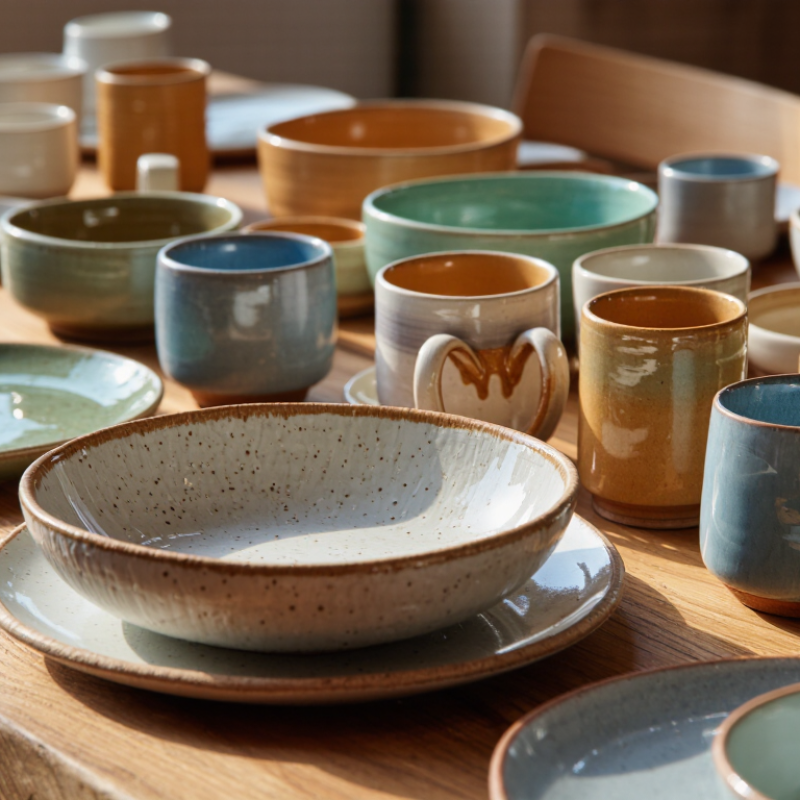
Stoneware reaches maturity when its clay body becomes dense and less porous, often near 1,200°C. Orton Ceramic Foundation’s pyrometric cone chart places cone 5–6 around 1,185–1,225°C, depending on heating rate. This range is a guide, not a magic number. Clay composition, kiln atmosphere, and soak time can all affect the final result.
At this heat, a well-matched glaze can melt into a smooth, glass-like surface. Picture a soup bowl with a softly satin rim, warm from the kiln and solid in the hand. But temperature alone cannot confirm safety or durability. ASTM C738 outlines a laboratory method for measuring lead and cadmium release from ceramic ware. A glossy finish is not proof. Glaze formulation and suitable testing still matter.
Custom glazing allows practical choices, such as a smooth interior for easier cleaning and a textured exterior for grip. Still, variation happens. Small kiln differences can change color, glaze fit, or surface texture between batches. I would not promise every piece will match perfectly; that is a real trade-off. Ask makers about firing ranges, glaze-fit checks, and relevant migration-test results before ordering a full set.
Custom glazed stoneware tableware can be tailored to a restaurant’s atmosphere, serving style, and everyday routines. Glaze choice changes more than appearance. It affects how light moves across a plate and how food colors stand out. A glossy finish reflects window light and gives sauces a crisp, polished look. It can also show fingerprints and fine scratches more clearly. Matte glaze feels quieter and softens reflections, though textured surfaces may need extra attention during cleaning.
Color sets the mood. Warm ivory and muted green make roasted vegetables feel inviting, while deep blue can frame pale foods with strong contrast. Always test samples under the lighting where the tableware will be used. Layering glazes adds depth, but results can vary around rims and curves. That variation may be part of the appeal—or an unwanted surprise. Small differences matter. Ask for finished samples, not just color chips, and check how pieces stack and feel in hand.
Tips: Compare gloss and matte samples beside actual dishes. Photograph them in daylight and evening light. Keep layered effects subtle on frequently used plates, since busy patterns can compete with food. Test before ordering. If a finish looks beautiful but proves awkward to wash or stack, rethink it.
Custom glazed stoneware should be judged by more than its glossy surface. Glaze can resist staining, but it does not reveal how much water the fired clay body absorbs. ASTM C373 provides a recognized method for measuring ceramic water absorption: weigh a dry specimen, saturate it, then compare the two masses.
The calculation is (saturated mass − dry mass) ÷ dry mass × 100.
Small details matter. Consistent drying and saturation help make results comparable.
For context, ANSI A137.1 sets a maximum absorption of 0.5% for porcelain tile. That figure is a useful industry benchmark, not a pass-or-fail rule for tableware. A laboratory report should identify the test method, sample condition, and measured percentage; a single result should not be treated as proof that every piece will perform identically. Custom production can vary between kiln loads. That is worth checking.
When reviewing a sample, ask whether the test represents the finished body and firing schedule. Look closely at foot rings and unglazed edges, where exposed ceramic may absorb water or show wear. ASTM C373 data can help compare batches, but it cannot measure glaze scratches, impact resistance, or long-term dishwasher performance. Not the whole story. A practical quality record pairs absorption results with inspection of the actual finished ware.
Custom glazed stoneware offers control over shape, color, and surface finish. But appearance alone cannot confirm food-contact safety. A glossy glaze may look smooth while still requiring careful testing.
Ask for lead and cadmium release testing under the relevant parts of ISO 6486. The standard provides methods for assessing these metals released from ceramic foodware under specified test conditions.
Testing should use finished pieces, not just a glaze sample. That matters because clay body, glaze thickness, firing temperature, and surface defects can affect the result.
Request a report identifying the tested items, method, and measured results. Check that the samples represent the actual production process. One attractive sample is not enough.
I would also ask how often production batches are verified; this step can be overlooked when a design changes slightly. A pass result is useful, but it does not prove every piece will behave identically.
Chips, cracks, or worn surfaces deserve attention, too. Customization is valuable, yet safety depends on repeatable materials and firing, backed by clear test records.
For custom glazed stoneware tableware, the minimum order quantity is only useful when you know what it covers. One supplier may set a minimum per shape, while another counts all pieces together. Ask whether each glaze color, plate size, or bowl style starts a separate production run. Small runs feel safer. But setup, testing, and kiln time can make each piece more expensive.
Compare batch sizes alongside the quoted MOQ. A batch might need enough cups or plates to fill a kiln efficiently, and different glaze colors may require separate firing plans. Ask for pricing at several quantities, such as 300, 600, and 1,000 pieces. Check whether the quote includes glaze samples, packaging, and expected breakage allowances. That matters. A low MOQ can still lead to a high unit cost.
Forecast demand with real sales or event estimates, not only optimistic hopes. If your first order is too large, cartons may sit in storage while tastes change. Too small, and a reorder may require another setup or a longer wait. Request the production lead time and confirm whether repeat batches can match the original glaze. Exact color matching is not always realistic; kiln placement and glaze thickness can shift the finish slightly. Ask how those variations are checked before approving production.
Gloss reflects window light and makes sauces look polished. It can also reveal fingerprints and fine scratches. Matte feels quieter, but textured surfaces may take more care to clean.
Warm ivory or muted green can make roasted vegetables feel inviting. Deep blue creates strong contrast around pale foods. Test colors beside actual dishes.
A glaze may look different in daylight and evening light. Photograph samples in both settings, especially where the tableware will be used. Small differences matter.
Look closely at rims and curves, where layered effects may vary. Keep patterns subtle on frequently used plates. Test before ordering.
Ask for testing under the relevant parts of ISO 6486. The report should identify tested finished pieces, the method, and measured results.
The clay body, glaze thickness, firing, and surface defects can affect results. A glaze sample alone may not represent the finished piece. That matters.
Ask whether the minimum applies per shape, color, or combined order. Compare prices at several quantities, such as 300, 600, and 1,000 pieces.
Kiln placement and glaze thickness can shift the finish slightly. Ask how variations are checked before production. I might be overvaluing an exact match; real batches can differ.
Custom Glazed Stoneware Tableware combines practical performance with the freedom to shape a coordinated look. Stoneware typically matures at firing temperatures of about 1,200°C, while glaze choices can range from glossy to matte finishes, varied colors, and layered effects. These options allow the appearance of a collection to be planned alongside its intended use.
Performance and production details also matter. Water absorption can be measured using ASTM C373 to help assess porosity and durability, and lead and cadmium release can be verified under ISO 6486 for food-contact safety. Before placing an order, compare minimum order quantities and batch sizes to ensure the production plan fits your needs. Considering firing, glaze design, testing, and order scale together can help you make a more informed choice.